

Cover 3: Why It Dominated for Decades
Why it still works, where it breaks, and what that means for your offense

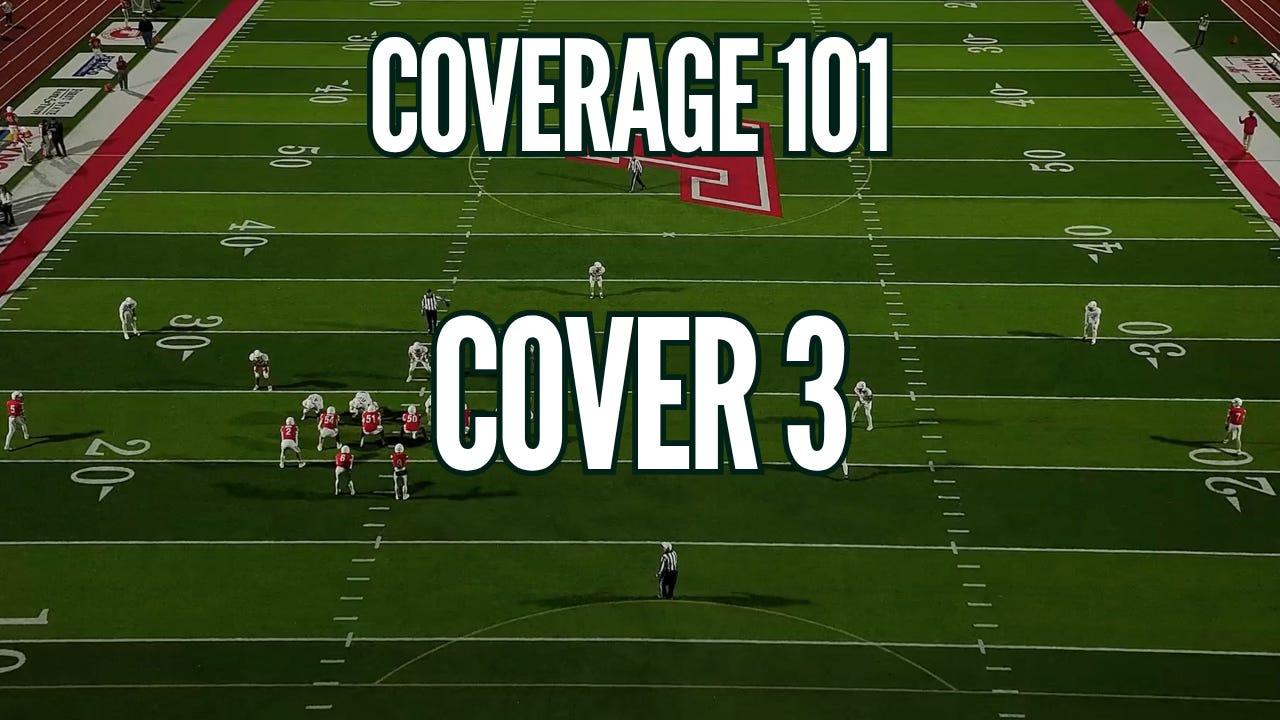
Last week we broke down Cover 2. Missed it? Start there:

If I wrote this series 20 years ago, Cover 3 would have been the first installment.
Before the spread changed everything, Cover 3 was the default answer for most defensive coordinators at every level.
And at the youth, middle school, and high school level it is a staple in many systems.
Even at the highest levels, Nick Saban and Pete Carroll built their defense around variations for decades.
It gives you three deep defenders to take away the big play while still letting you crowd the box against the run.
Understanding it is not optional for an offensive coordinator.
What Cover 3 Is
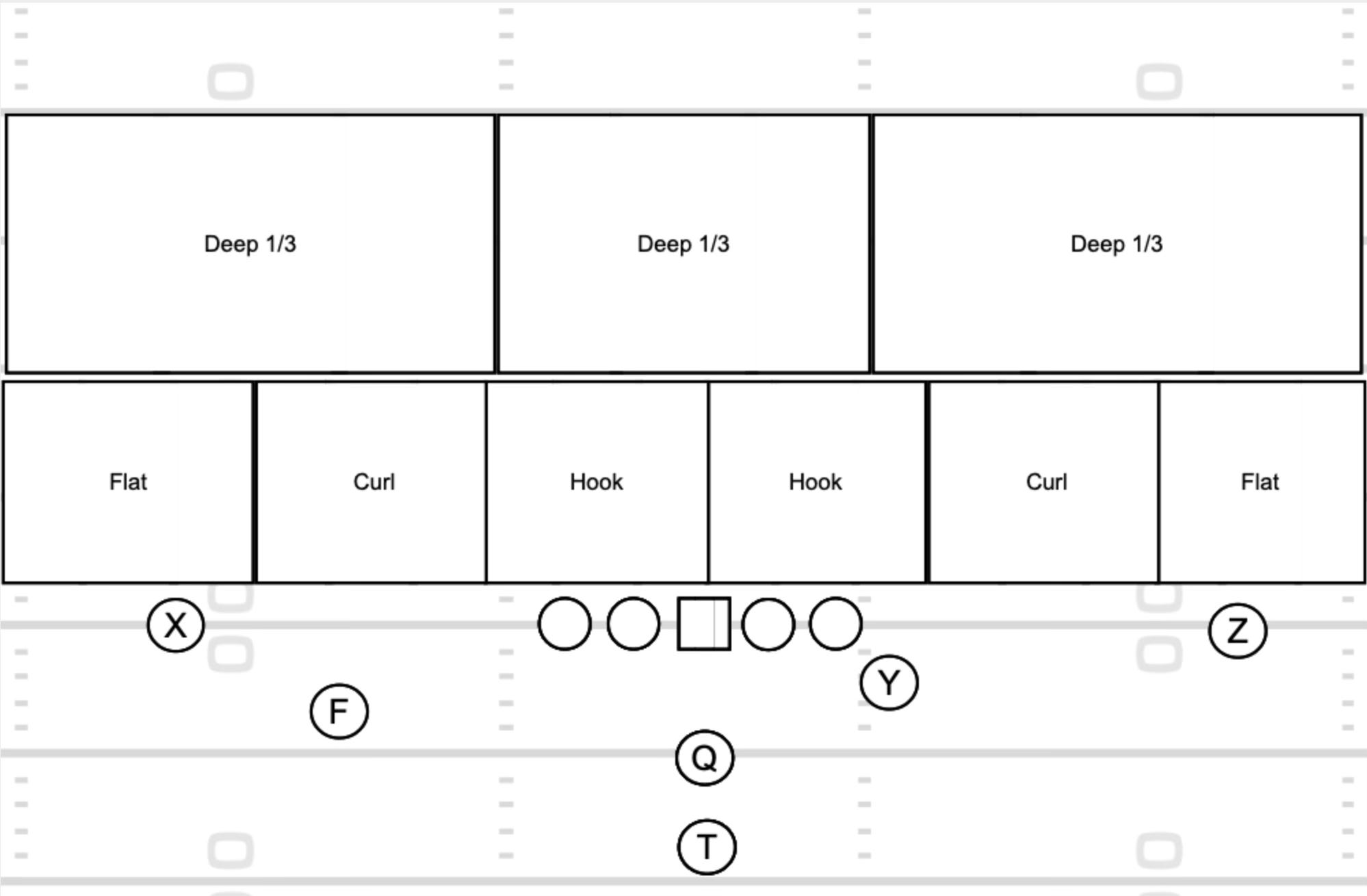
Cover 3 is a three-deep, four-under zone coverage.
Three defenders split the deep part of the field into thirds. Four defenders handle the underneath zones.
One extra player, typically a safety, rolls down to play closer to the line of scrimmage.
That rolled-down safety is what makes Cover 3 so flexible, it’s how defenses get eight men in the box.
Position Responsibilities
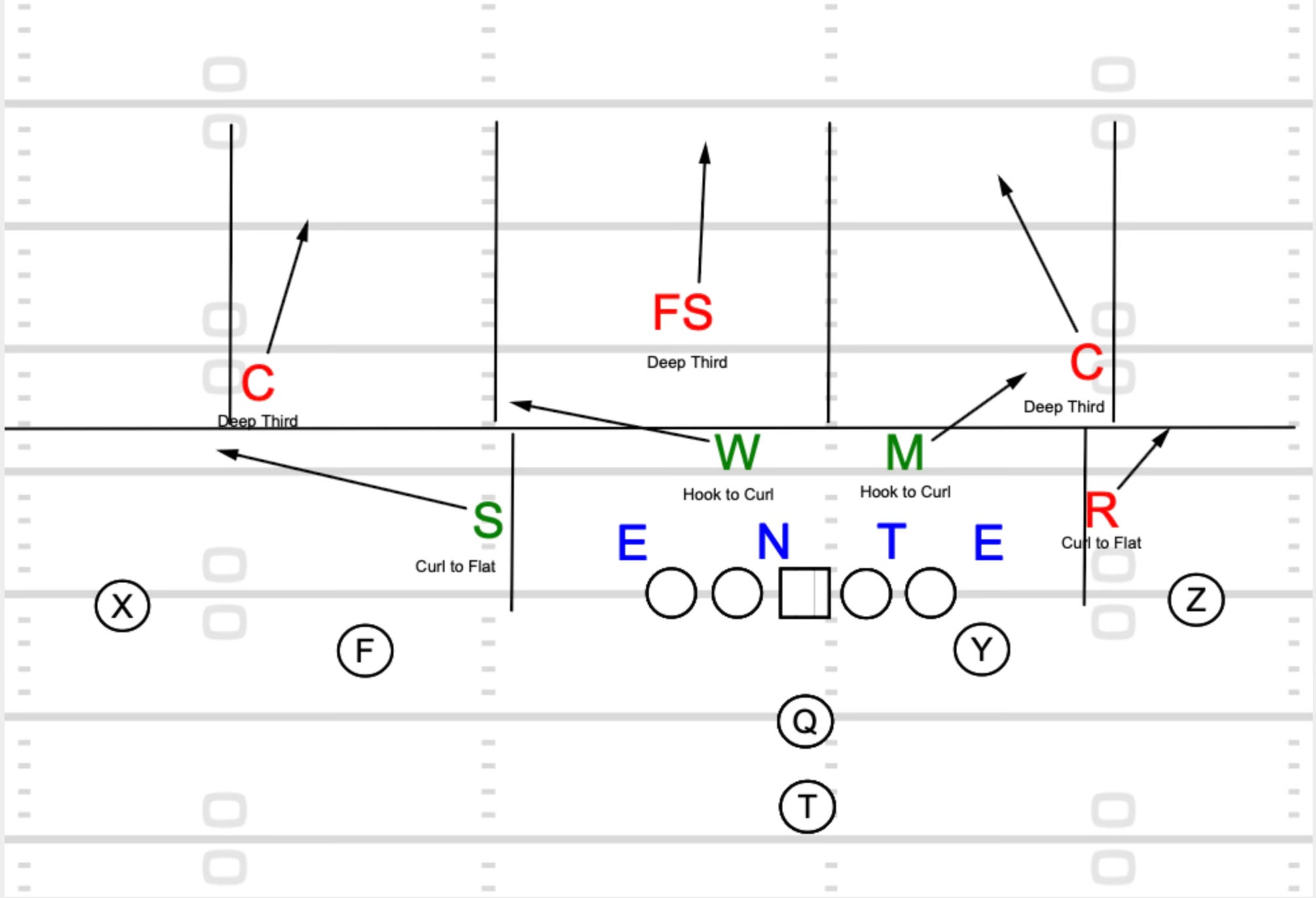
Corners
Own the deep outside third on their side. From the sideline to the hash
Bail at the snap, backpedaling or shuffling to get depth
Do not press in base Cover 3; they are getting depth, not jamming
Stay on top of any vertical threat in their third; they chase anything that tries to run past them
First responsibility is always the deep route, even if something opens underneath
Free Safety
Owns the deep middle: hash to hash
Aligns in the middle of the field pre-snap, typically 10 to 12 yards deep
At the snap, drops to protect the middle of the field
Defenses coach him to stay “deeper than the deepest”; he does not break until the ball is thrown
Outside Linebackers/Strong Safety
Curl to flat zone on each side
Run first player
Not expected to carry routes deep; their job is to take away the intermediate window from hash to sideline
Inside Linebackers
Owns the hook to the curl zone
Most critical assignment is walling vertical threats coming across the middle. Seam routes, digs, crossing routes that try to split the field
A good play fake can pull him out of his drop and open the middle behind him, or leave the outside linebacker isolated.
What Cover 3 Does Well
Eight defenders near or at the line of scrimmage make Cover 3 one of the best run coverages available.
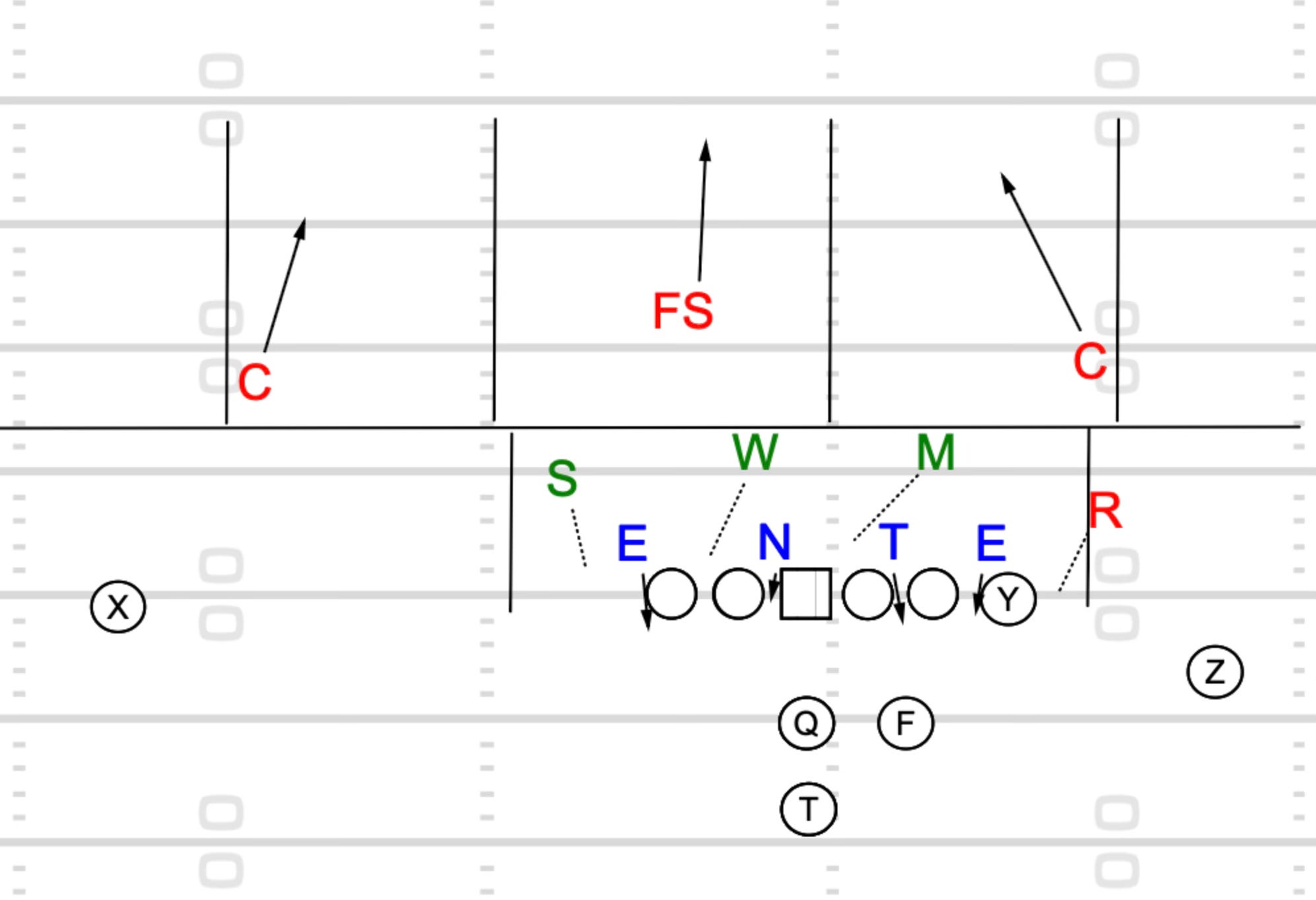
Against a two-back, tight end offense, Cover 3 outnumbers every gap. That is why it dominated for decades before the spread pushed defenses to find other answers.
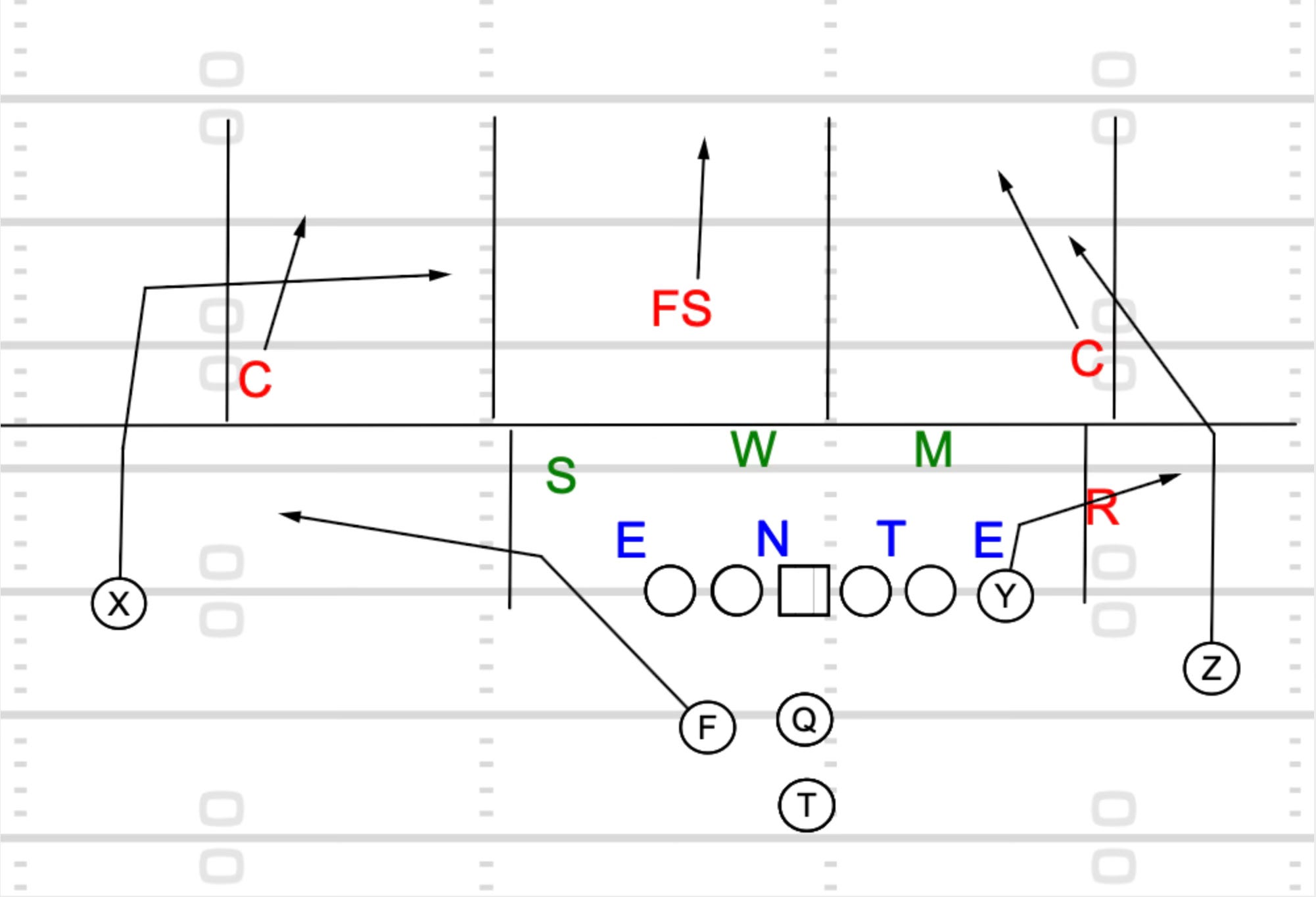
Against the pass, three deep defenders mean there is always someone in position to take away the back half of the field. Even if they get an intermediate pass completed, 3 guys are there to limit the damage.
Against quick game, the underneath structure still holds. Four defenders can swarm short routes before they turn into yards after the catch. The defense has numbers in the area where most quick-game concepts try to attack.
It forces you to throw to the least likely spot on the field, the outside 3rd. With the width of the High School hash, this is a nearly impossible task.
That is the appeal of Cover 3. It does not ask you to be perfect. It gives you margin for error in both the run game and the pass game.
Where It Gets Stressed
The Flat
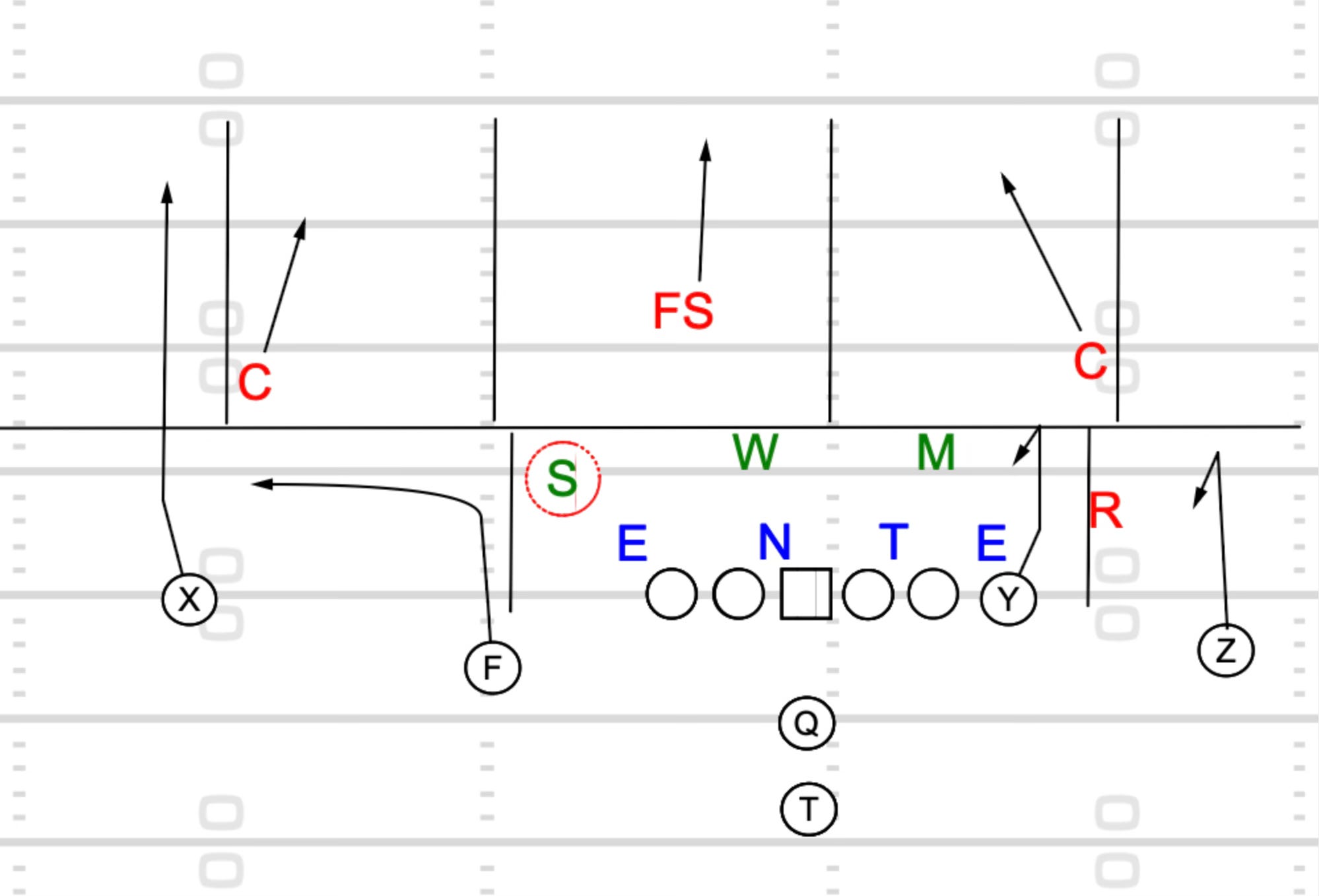
Corners are bailing to the deep third. Which means the flat behind them is open early in the route.
A hitch, an arrow, a quick out, any route that attacks the area vacated by the corner can find space before the defense adjusts.
RPOs
Cover 3 can get eight into the run fit.
The problem is what that costs on the perimeter.
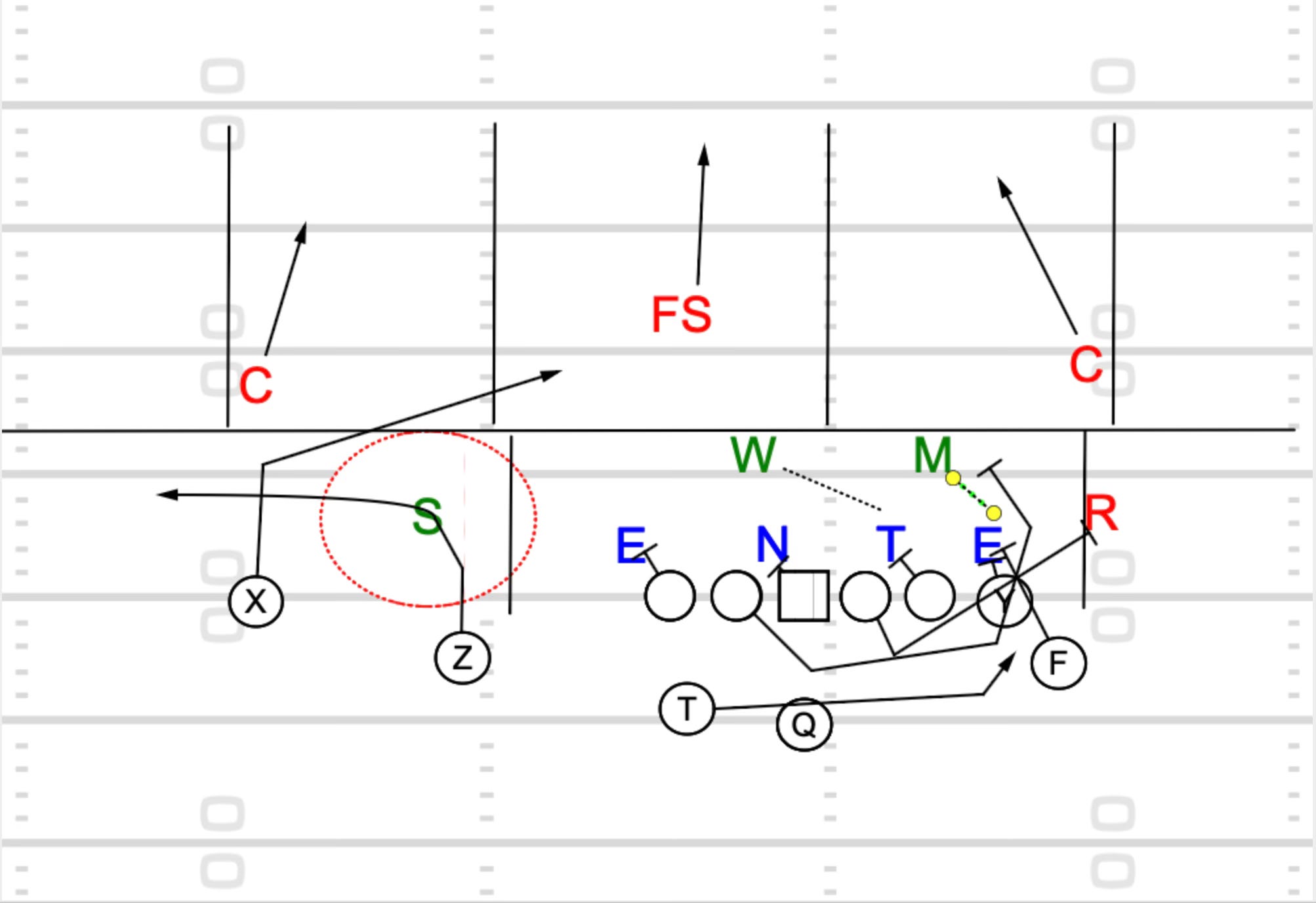
The run threat pulls a minimum of six defenders toward the box. Corners are bailing. Safeties are deep. That leaves the flat defender covering a wide open area by himself.
That tension is a big reason you see fewer teams sitting in base Cover 3 at the upper levels. The defense can stop the run or defend the perimeter. It struggles to do both at the same time.

Most coaches have plays. Few have a system.
Core Playbook fixes that. One North Star play. Everything else built off it.
The Seam
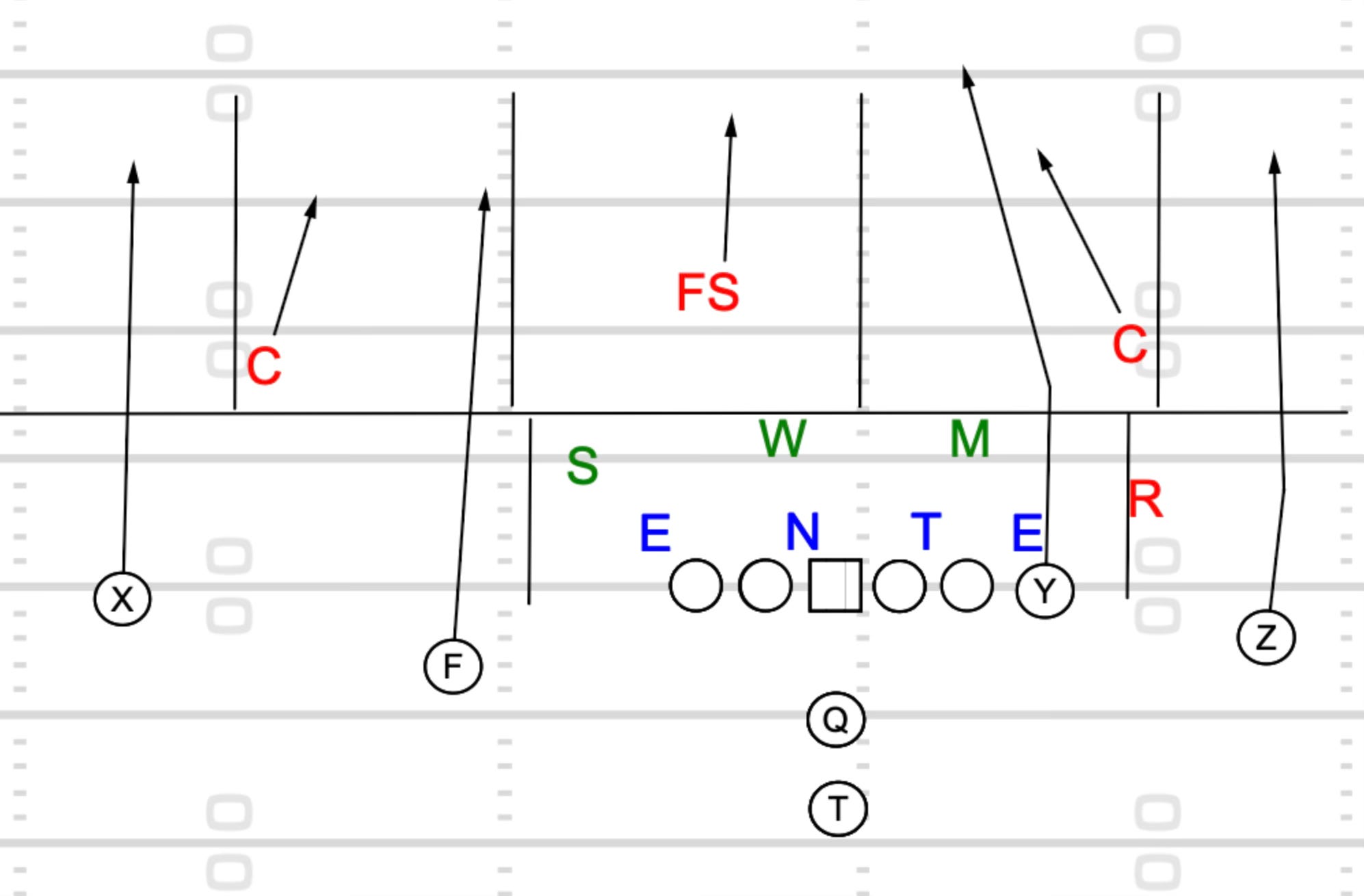
Four verticals is the classic answer to Cover 3.
The concept puts four receivers running vertical routes against three deep defenders. Someone is uncovered.
Now, Cover 3 teams know this weakness, and in the next article will dive into how they protect themselves from 4 Verts while still maintaining Cover 3 principles.
Next…
We go into the Xs and Os.
Now that we know its strengths and weaknesses, how do we game plan to attack it?