

Cover 4: Why Every Defense Is Running It and Where It Breaks Down
The most used coverage in high school football, and what you need to know before we attack it.

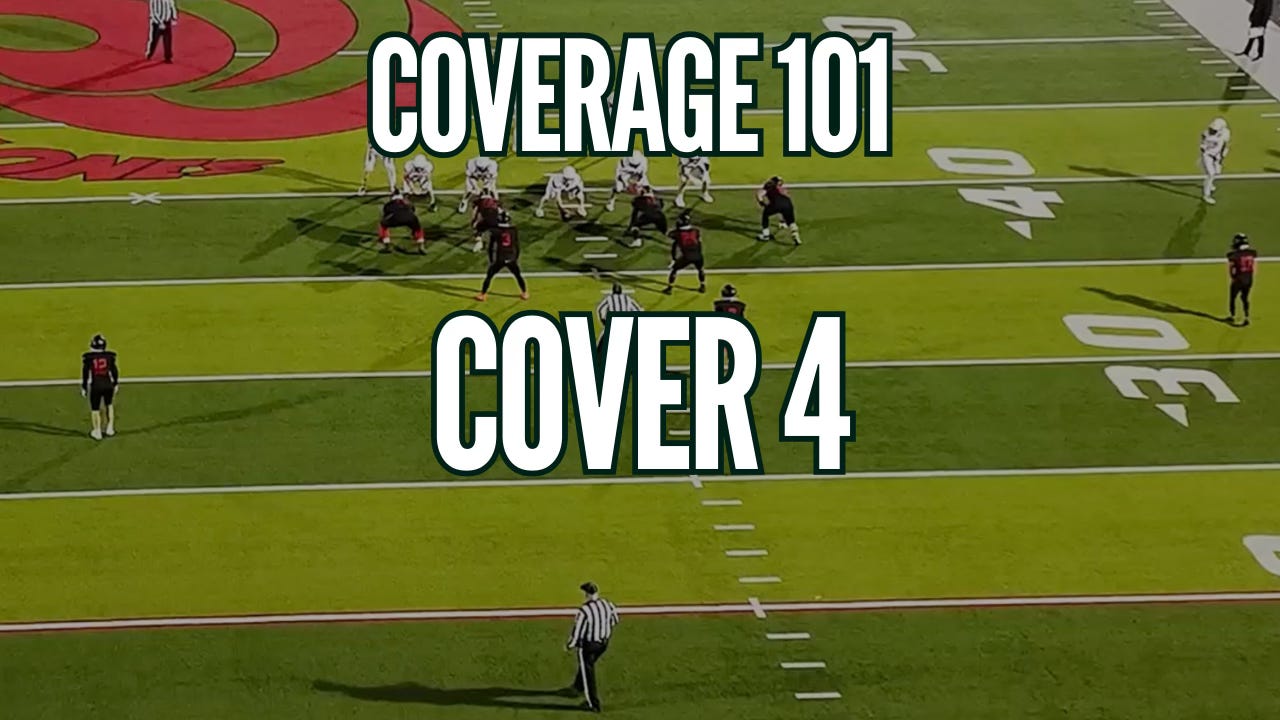
In the early 2000s, the spread offense exploded.
Four wide receivers. Skilled athletes on the perimeter. Offensive numbers climbing every year.
Defenses had to respond.
But before we get to the answer, you need to understand how we got here.
For decades, Cover 2 and Cover 3 were the default.
Both coverages allow the defense to crowd the run box. In a world built around the I-formation, Wing-T, and wishbone, those coverages excel.
Two or three deep defenders is plenty when the offense has two backs and a tight end eating up gaps.
Then the spread hit.
Teams started lining up four wide receivers. Just space, speed, and vertical threats from sideline to sideline.
The problem wasn’t just the formation. It was the personnel defenses were using. Three and four down linebackers built to plug gaps. Old-school Mike linebackers with the size to take on guards, not the speed to match a slot receiver running a seam.
Cover 2 and Cover 3 only have two or three deep defenders. Against a four-vertical concept with athletes at every skill position, that’s not enough.
Defenses had to adapt.
Cover 4 became the answer.
What is Cover 4?
Cover 4 is a four-deep, three-under zone coverage. Also called Quarters.
There are variations: Palms, Solo, Stubby, 2 Read, Blue… etc. Each has its own rules and adjustments.
We’re not going into all of that here. What matters is the overarching concept, because every version starts from the same foundation.
The goal is simple. Take away the explosive play.
Statistical analysis is clear on this: explosive plays drive great offenses.
Cover 4 is designed to make you work underneath. Short completions. Dink and dunk until you make a mistake.
And most of the time, that works.
Offenses fall behind the sticks. Third and long shows up. Now the defense is in obvious passing situations, exactly where Cover 4 still wins.
The Base Rules
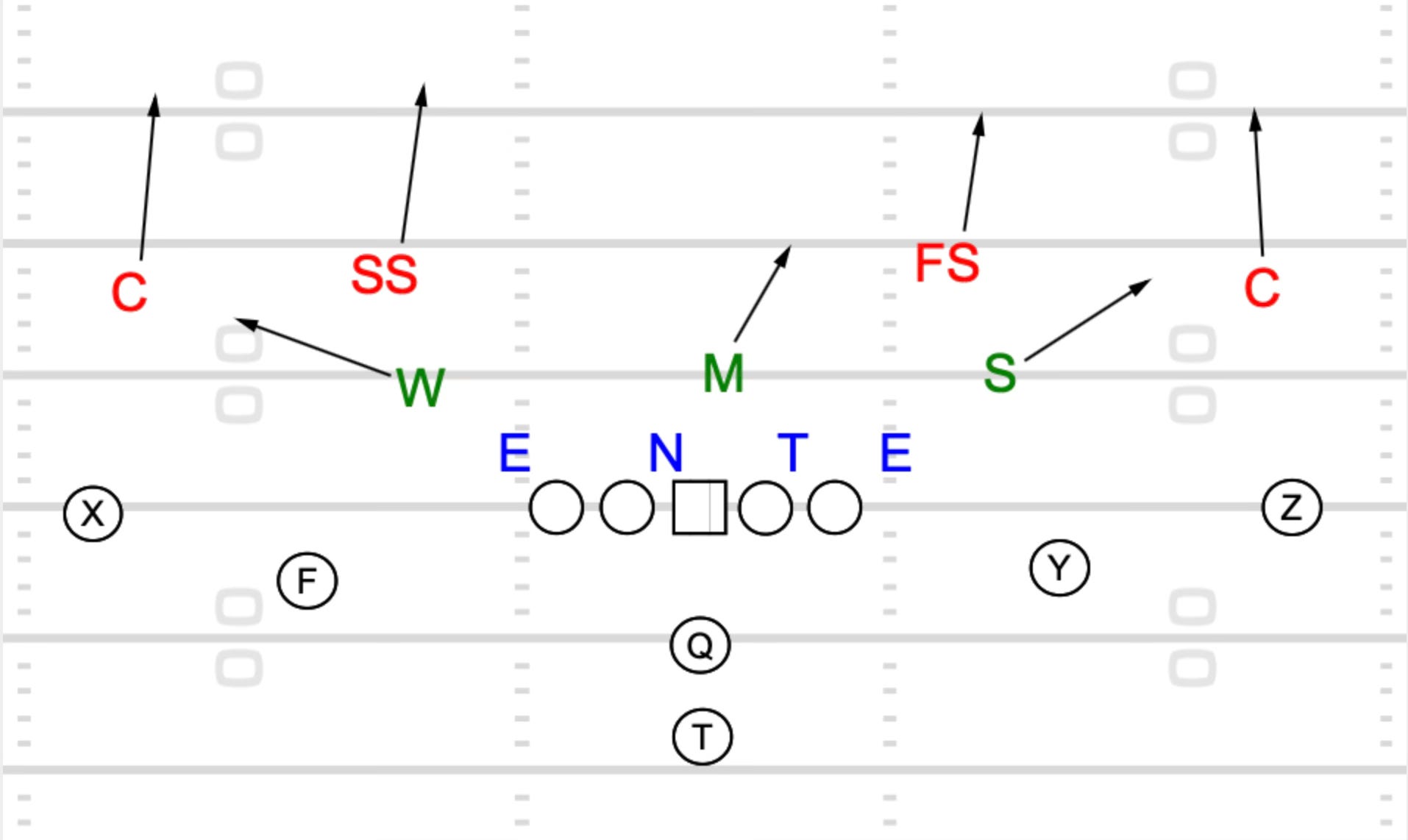
The two flat defenders: Typically two linebackers, buzz to any threat in the flat. Their job is to never get out-leveraged.
The Mike linebacker owns the middle hook. He’s responsible for walling off any crossing concept underneath.
Both corners align off, seven to eight yards. They have the outside receiver vertical, but if he runs short he will sink and look to help on a corner route inside. Corners can also press from a tight alignment and jam the release.
The safeties align on the inside eye of number two with a flat-foot read. No backpedal. They’re reading run or pass through their keys. Versus run, they fill downhill. Versus pass, they’re responsible for the vertical release from number two. If number two doesn’t threaten inside vertically, the safety brackets number one outside, looking for the curl, dig, or post.
Where it gets stressed
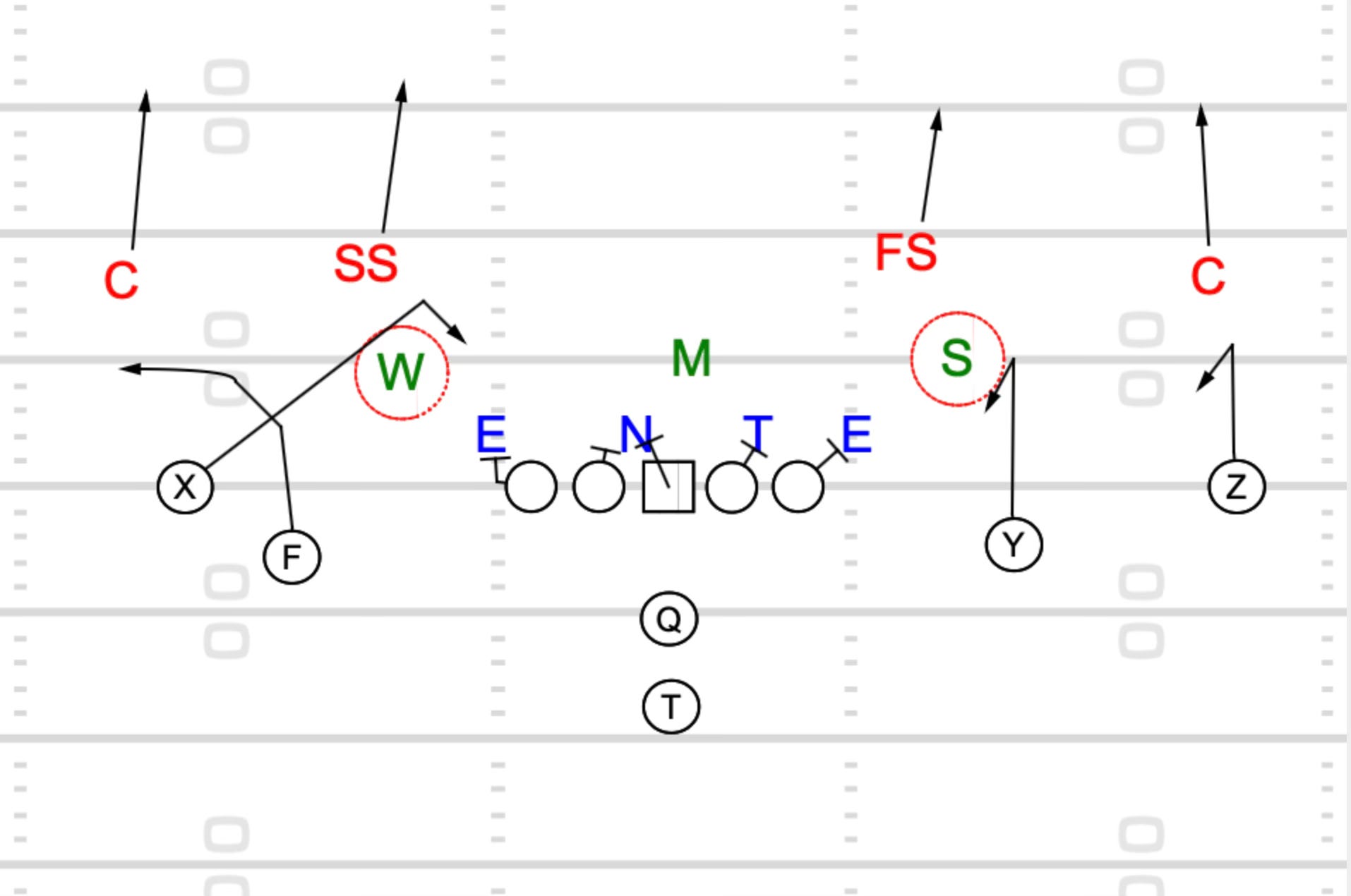
The flat.
Here’s the geometry of the problem. The flat defender has to cover a lot of ground. His help is the inside linebacker, a run-first player.
That creates a window. When an offense can hold the linebacker with a run key, a handoff fake, a mesh point, anything that makes him hesitate, that window gets bigger.
On deep routes, Cover 4 is essentially man coverage. Defenders are seven or more yards off the ball, so they have time on their side. But that time has limits. Against a max protection look with two or three skilled receivers running specific concepts, a mismatch at corner or safety becomes a one-on-one opportunity.
That’s where Cover 4 can be taken apart.
Next…
We go into the Xs and Os. Specific concepts.
How to game plan and attack it.
Paid subscribers get the one-page cheat sheet. Diagrams, teaching cues, and a three-day practice install. Print it, keep it, build with it.
If you’re not subscribed yet, that’s where to start.