

Red Zone: How to Call Plays When the Field Runs Out
Here's the framework I use to navigate it zone by zone.

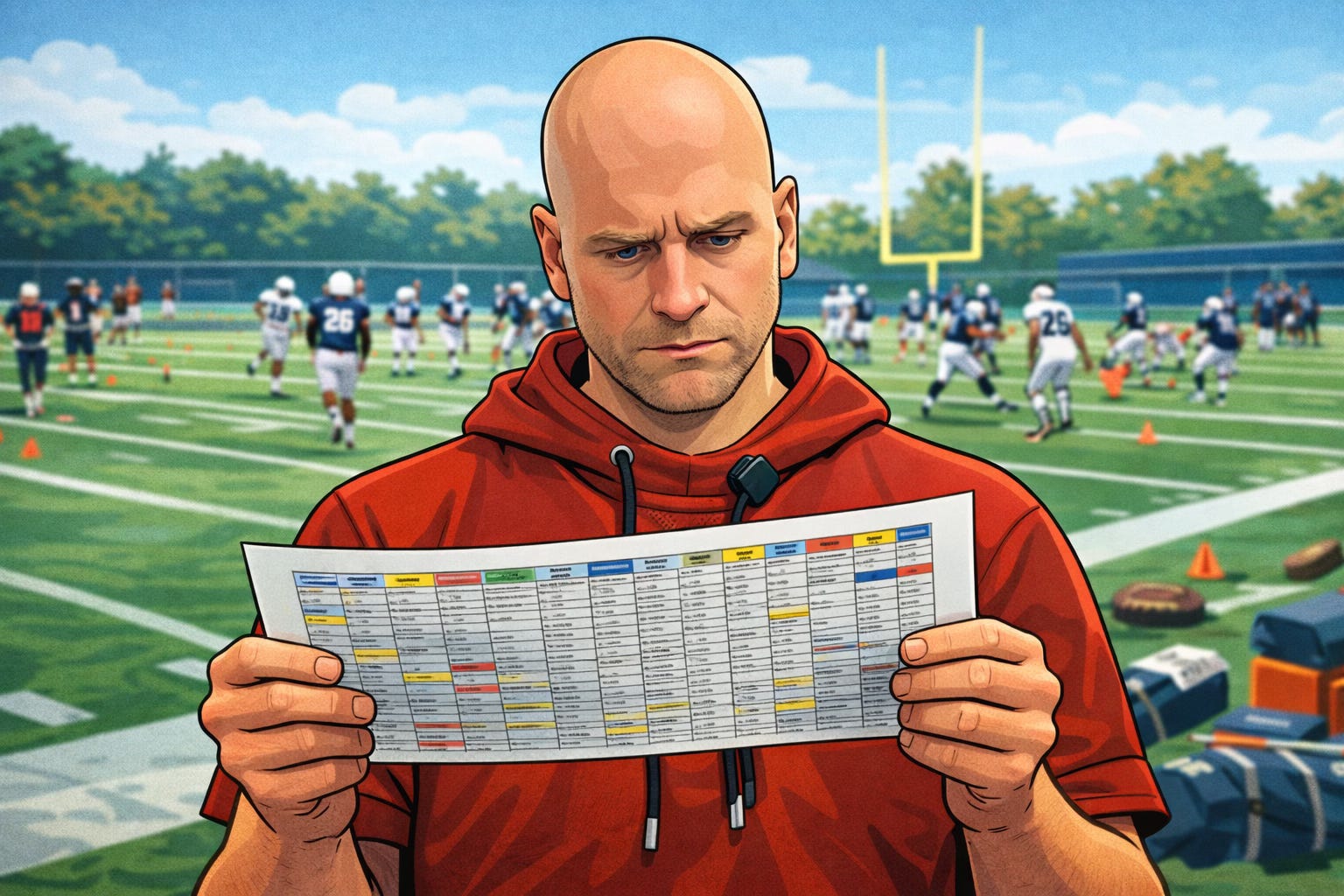
First year as an OC. We run our way down the field and land inside the 5. I wanted to be “clever” and switch it up.
I reach for something. I call all hitch.
And… my QB throws a pick.
Stupid call. Shouldn’t have been a thought.
I had no plan for situations, just call what feels right.
That interception stayed with me, because I wasn't prepared for that moment and my kids paid for it.
What Actually Changes Inside the 20
Vertical space is shrinking. Defenses stop worrying about the deep ball because there isn’t one anymore.
Safeties creep down. Corners tighten. The threat of giving up a big play disappears, so they can put more hats closer to the run box.
The closer you get to the goal line, the tighter the defense gets.
Most coordinators panic here and go one of two directions.
They call the exact same plays they’ve been running all drive and ignore what the defense is doing.
Or they scrap everything and reach for something completely different.
The answer lives between those two extremes.
First question I ask every time we cross the 20:
Are we winning the line of scrimmage?
If yes, keep running. If you just popped two explosive runs to get down there, pound it again.
The closer we get, the more I’m thinking heavy personnel packages and getting more blockers in the box.
Don’t fix what isn’t broken.
High Red Zone: The 20 to 15
This is your last clean shot to use your vertical concepts.
Hit it here and you can throw the rest of this article out.
I have one question before every play in this zone:
Is there a matchup worth attacking right now?
If yes, take it. If no, move on.
The 15 to the 5: Smash Combinations
Once you get between the 15-10 yard line, defenses should start playing man.
This is where I live in Smash combinations.
Smash attacks the defense vertically and horizontally at the same time. If the corner stays low on the outside receiver, there’s a window above him.
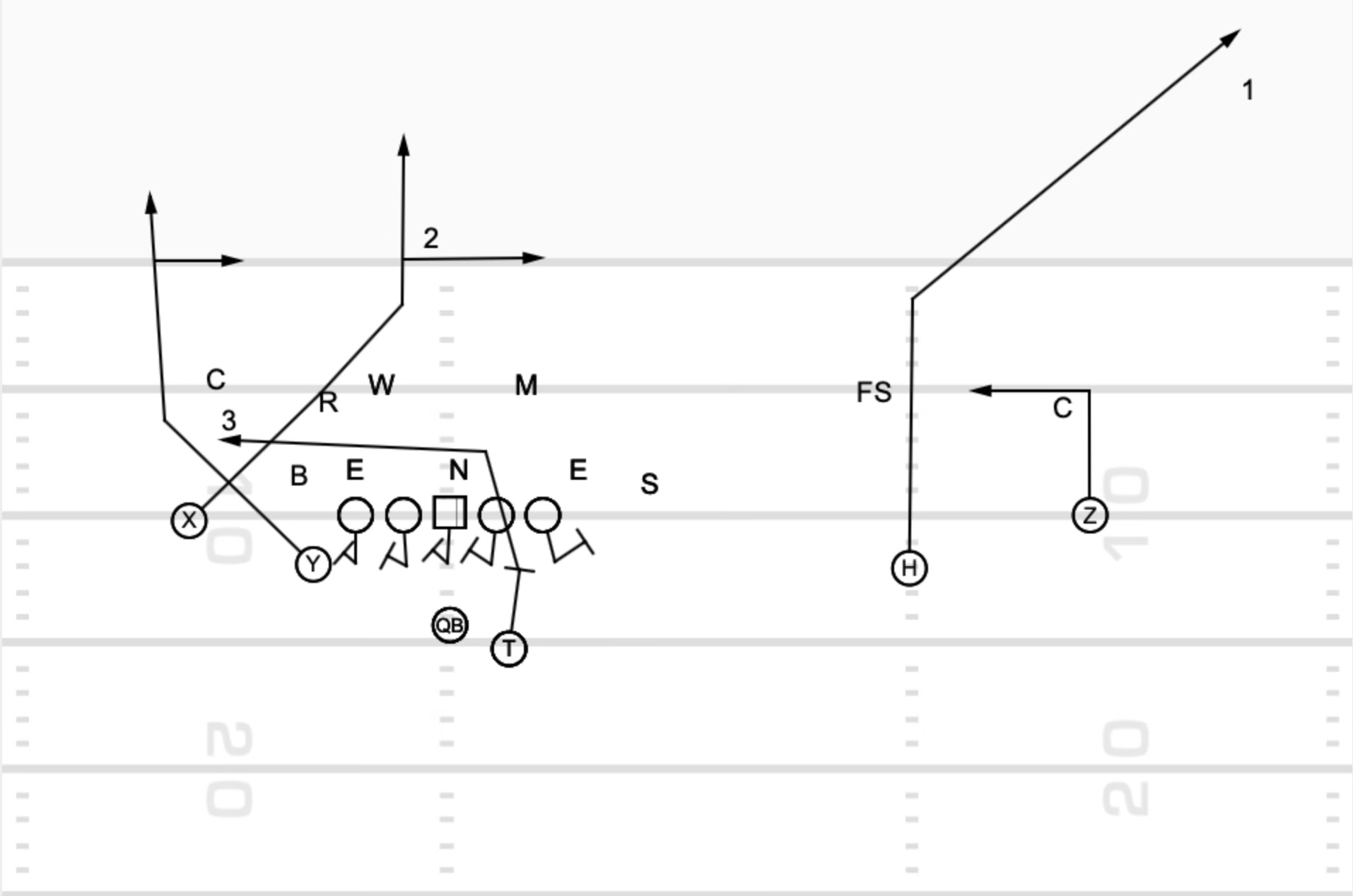
Because the underneath windows are so tight, I want multiple options that can win vs tight coverage. My favorite way to get that is Smash to the field, with switch verts to the boundary.
We want to hit the corner route, but if it doesn’t win, the QB can scan to the boundary and work the switch seam read. The option to dig gives the X the ability to run away from man coverage, and with the switch release we may be able to get a rub.
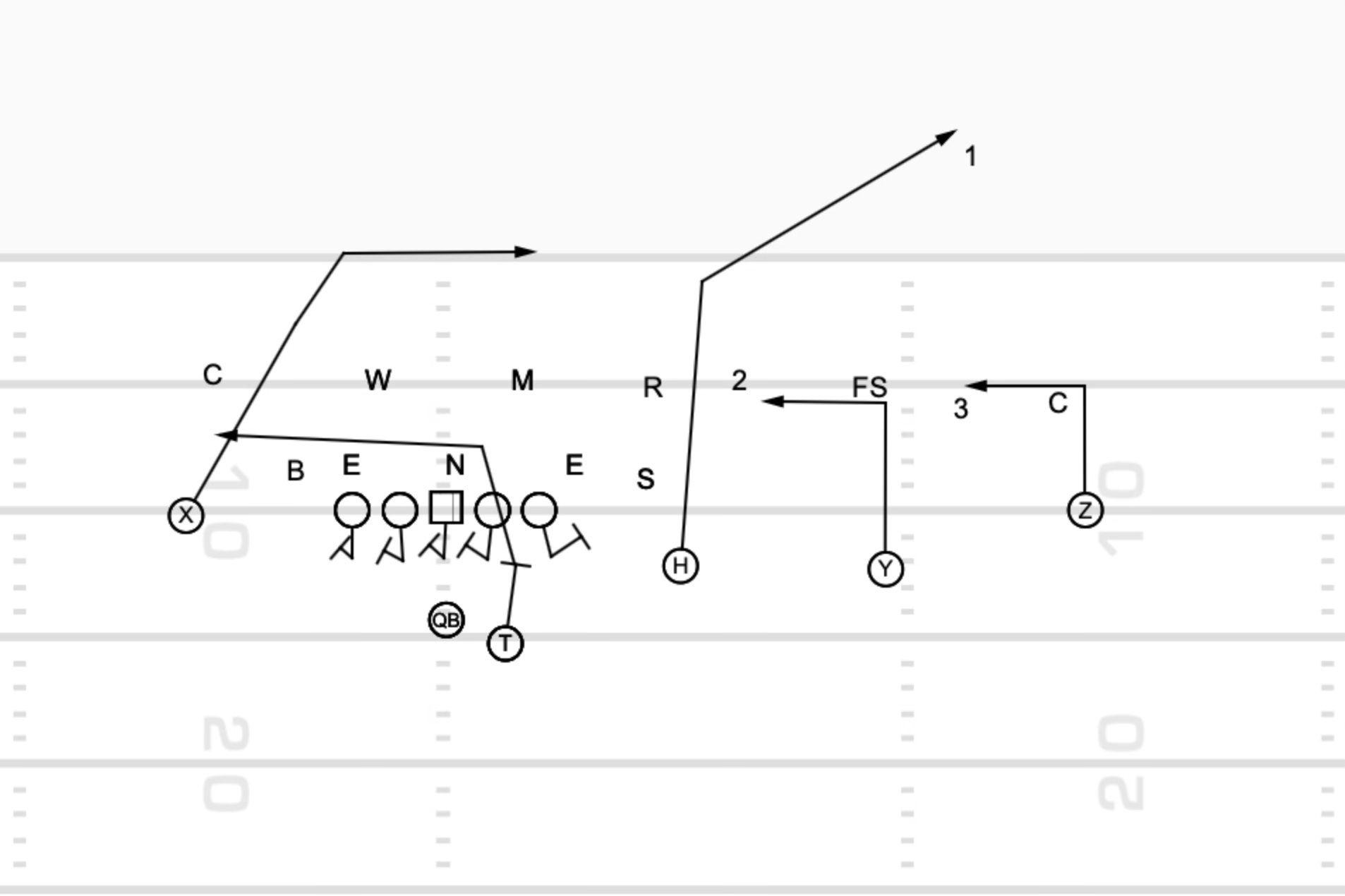
We call it dolphin (Double Five and in), but it’s commonly referred to as Double China 7 in NFL systems.
The tight alignment of the #3 receiver gives the corner route a lot of space to work open. If both outside defenders in man chase the fin routes this becomes an easy completion to the back pylon
Goal Line: Down to the 7 and In
Now defenses sell out to stop the run. Extra hats in the box. Safeties on the line of scrimmage. They are daring you to throw.
You have two options.
Bring more blockers and beat them physically. Or create rubs and throw quick before the coverage can recover.
Either way, I’m using motion.
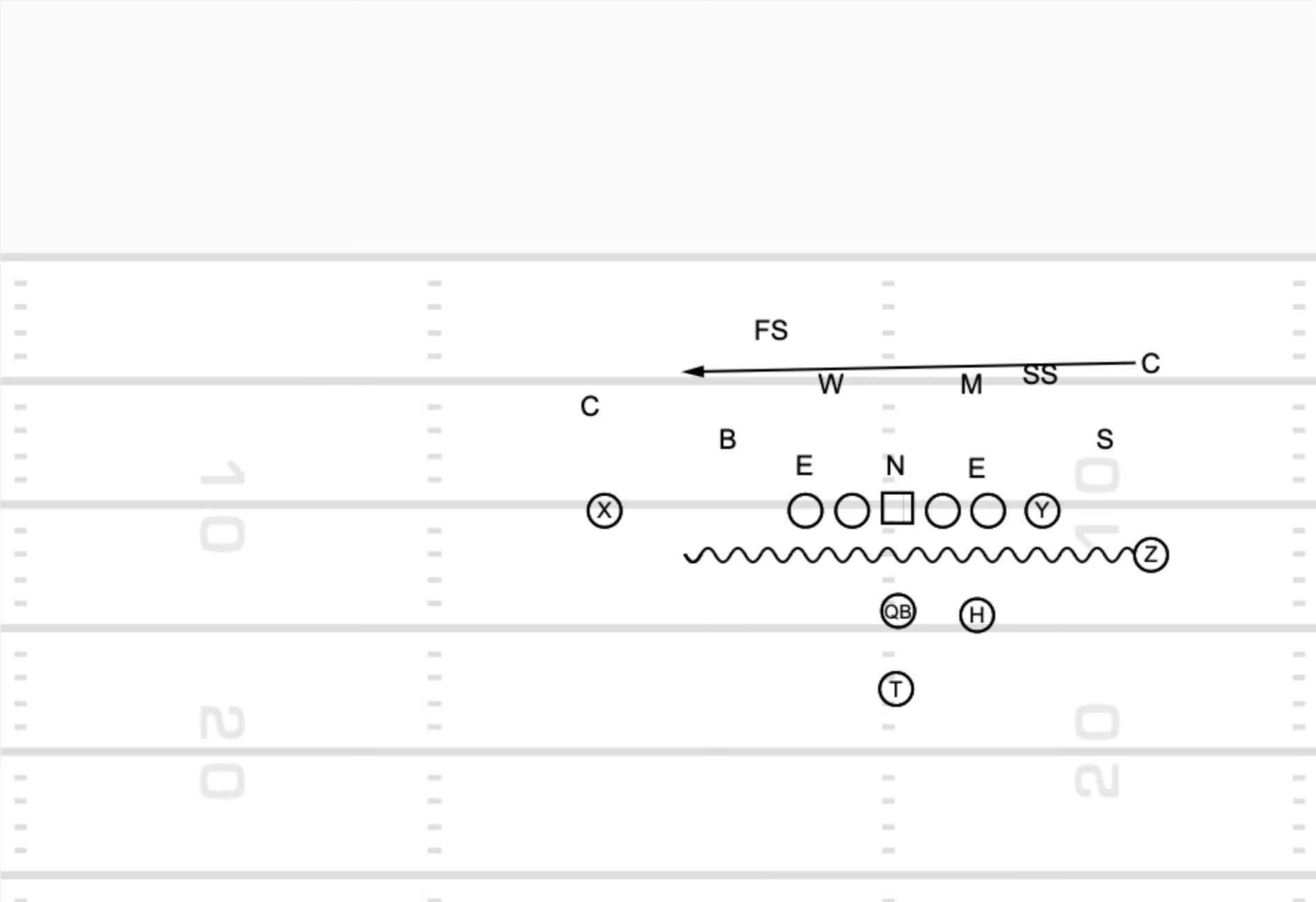
Defenses in the red zone aren’t in their base. They’re in specialty packages they’ve repped less. Motion forces communication they haven’t practiced as much in those packages. That amplifies the chance of a coverage breakdown.
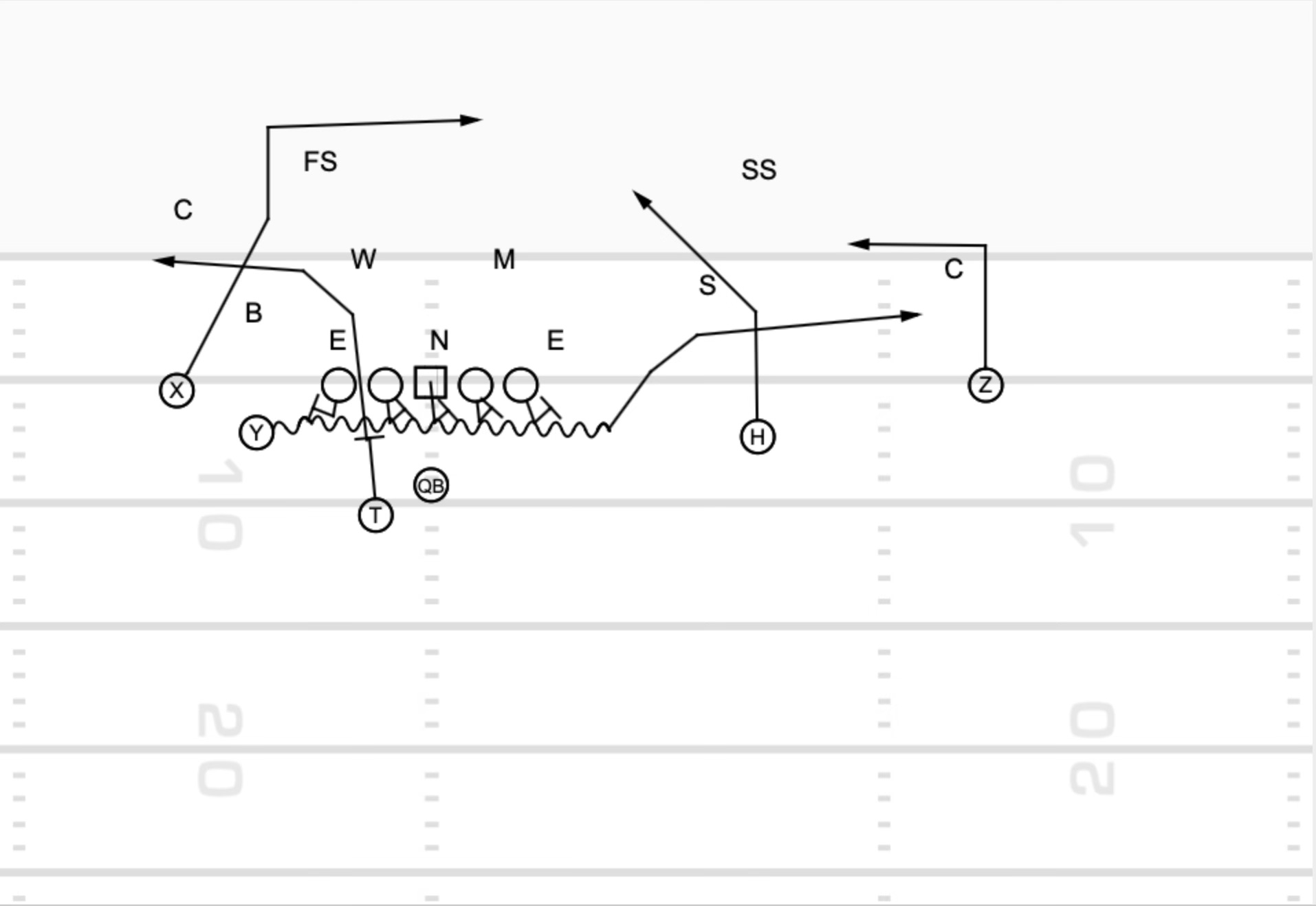
Motion into double slants. Motion your slot away from where you are running the play. The options are endless, just make them have to move and communicate who is cover who, someone is bound to be wide open.
The Real Answer
Scheme is not what wins the red zone.
You and your kids knowing exactly what’s coming when you hit the 20 is what wins it.
Build your red zone answers in preseason install. Rep them every week.
By October, the call is irrelevant.
You aren’t scrambling and burning timeouts.
Your players aren’t thinking. They’re executing something they’ve already done a hundred times.
That’s the difference between a coordinator and a play caller.
The coordinator has a plan before the drive starts. The play caller is hoping something works.
My first year, I was hoping.
I don’t hope anymore.
If your red zone plan lives in your head instead of your install, your kids are paying for it on Friday night. The Core Playbook builds the structure so you’re never reaching for answers in the moments that matter most.