

RPO Football: The Complete Guide to Run-Pass Options
What Is RPO in Football and How to Build It Into Your Run Game

RPO football stands for run-pass option. It’s a play concept where the quarterback has the option, pre-snap or post-snap, to hand the ball off or throw it based on what the defense gives him.
At its core, it’s a way to call two plays at once. The quarterback has the ability to attack the defense where there is space and get into the best play automatically.
When I became an offensive coordinator in 2012, I came from a flexbone triple option background. When I made the switch to spread football, I really thought RPOs were the next evolution, a more modern way to run triple option.
We sold out to them.
Week one of that first season, we upset a team we had no business beating. Our sophomore quarterback threw for 300 yards. We had a sophomore tight end and a really young offensive line.
The RPOs were wide open because that defense had never seen them on film. I thought that game validated everything I believed. It didn’t.
Defenses caught up. As teams got more film on us, they started playing more man coverage. Their linebackers played slower, more flat-footed. Some teams just dared us to run the ball. We were stuck, either running into a loaded box or throwing into man coverage.
Neither one is what an RPO is designed to take advantage of. We had to recalibrate.
What Does RPO Mean in Football?
In theory, an RPO gives your quarterback an answer to whatever the defense is doing.
You have a run play with a pass concept attached. The quarterback can either read space, leverage, or a specific defender to decide which play to execute.
RPOs are a Tool
RPOs work best when they protect your best play. They are not an offense by themselves.
Think of them the same way you think of a screen, a draw, or a play action. They’re a tool.
A lot of coaches try to make them their entire identity, and when that happens, defenses scheme them out and your offense breaks down.
If the run isn’t effective, the RPO is not going to be effective. The defense will load the box, play man coverage, and dare you to beat them. I know that from experience because we lived it.
Two Types of RPOs
Pre-Snap RPOs
In a pre-snap RPO, the quarterback is making his decision before the snap. He’s reading the defense’s alignment and deciding whether the throw or the run is the better option. Once he’s decided, he catches the snap and executes. The faster the ball gets out, the more likely these are to succeed.
Quick Screens
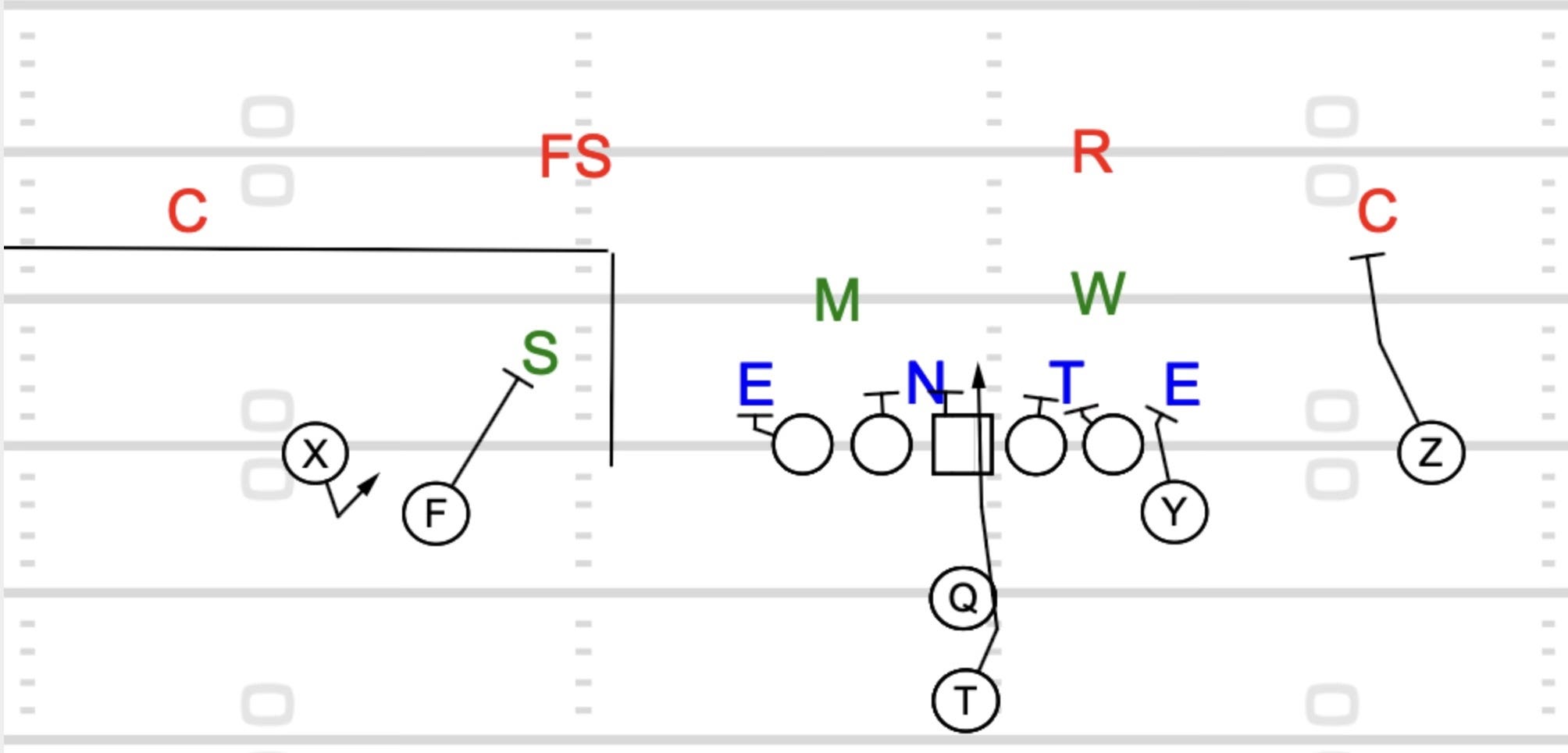
This is where most spread offenses started with RPOs. Because the throw happens at or behind the line of scrimmage, there’s no concern about linemen getting downfield illegally. It gave offenses a way to stress the defense horizontally without putting the ball in the quarterback’s hands on a designed run.
The read is simple. Do we have enough blockers to account for every defender under seven yards and outside the run box? If yes, throw the screen. If not, hand it off and run.
Quick Game
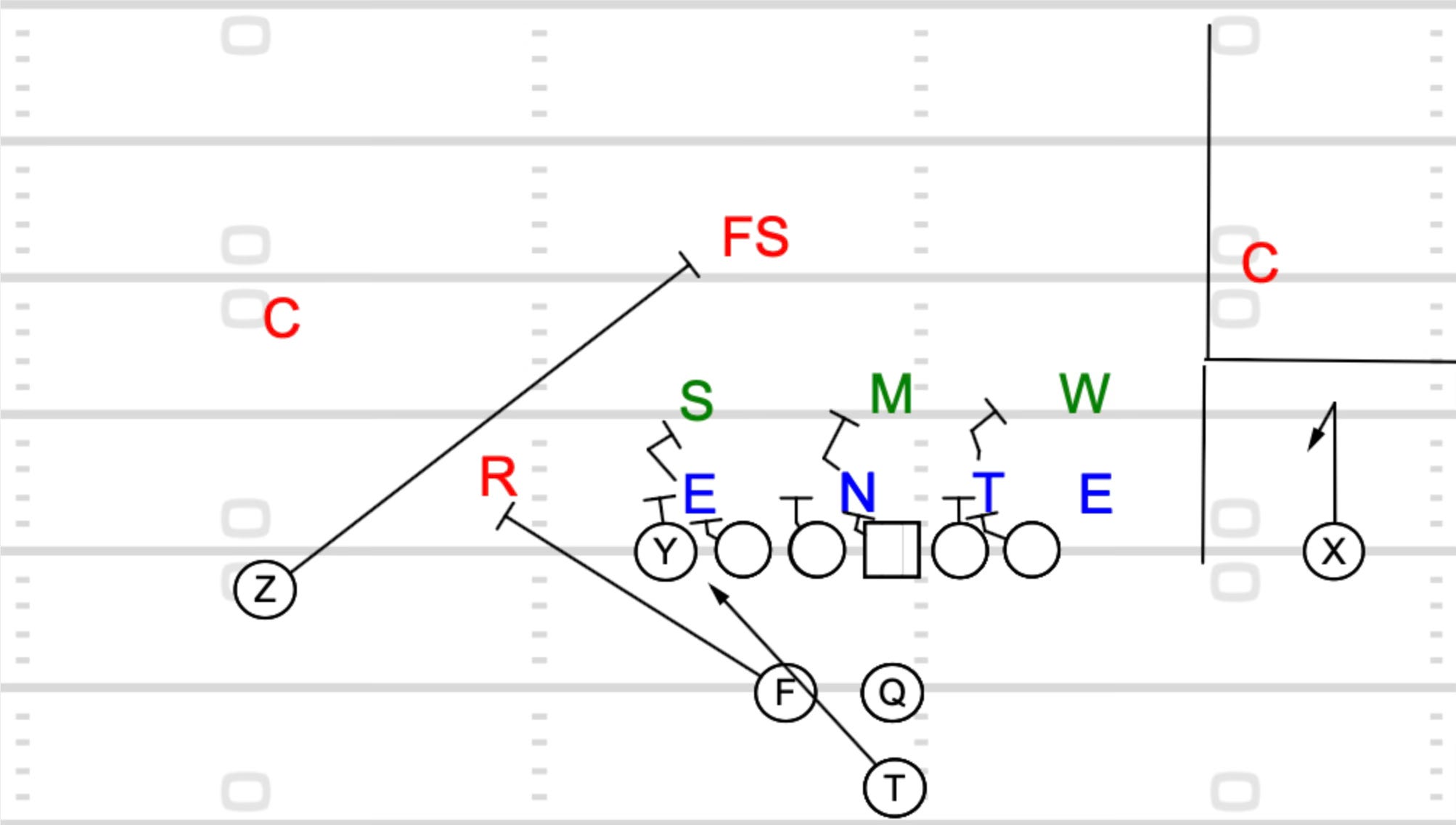
A lot of teams have replaced traditional drop-back quick game entirely with RPOs. The quarterback isn’t reading a specific defender here, he’s just asking one question: is this route open right now?
If yes, catch and throw.
If not, hand it off and run.
We call these gift RPOs. Common variants are hitches and quick outs. Because the ball is out so fast, linemen rarely get downfield before the throw, so illegal man downfield is rarely a concern.
Post-Snap RPOs — Defender Read RPOs
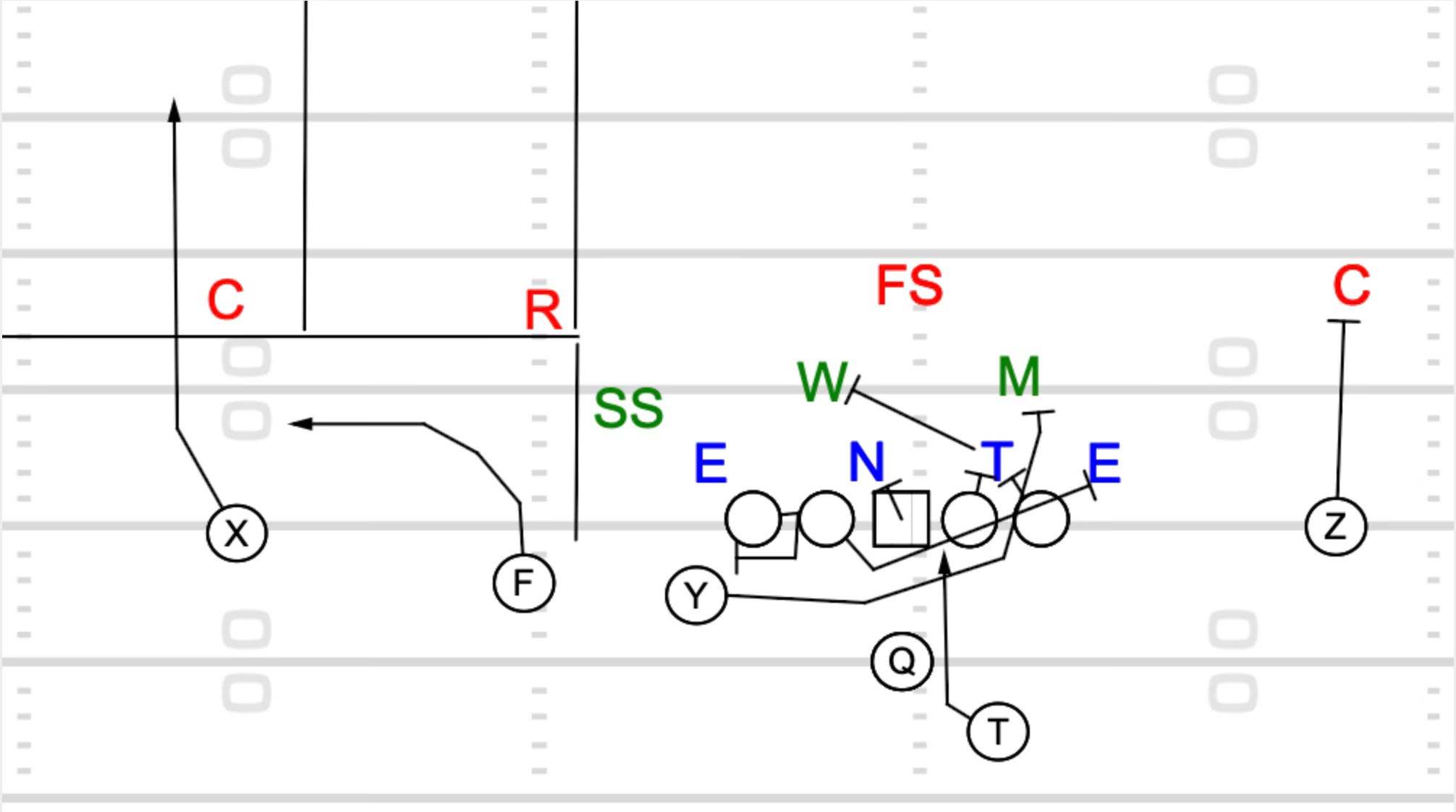
These are closer to option football. The quarterback meshes with the running back and reads a specific defender after the snap. What that defender does tells the quarterback what to do.
There are three levels.
First Level — Defensive End Read
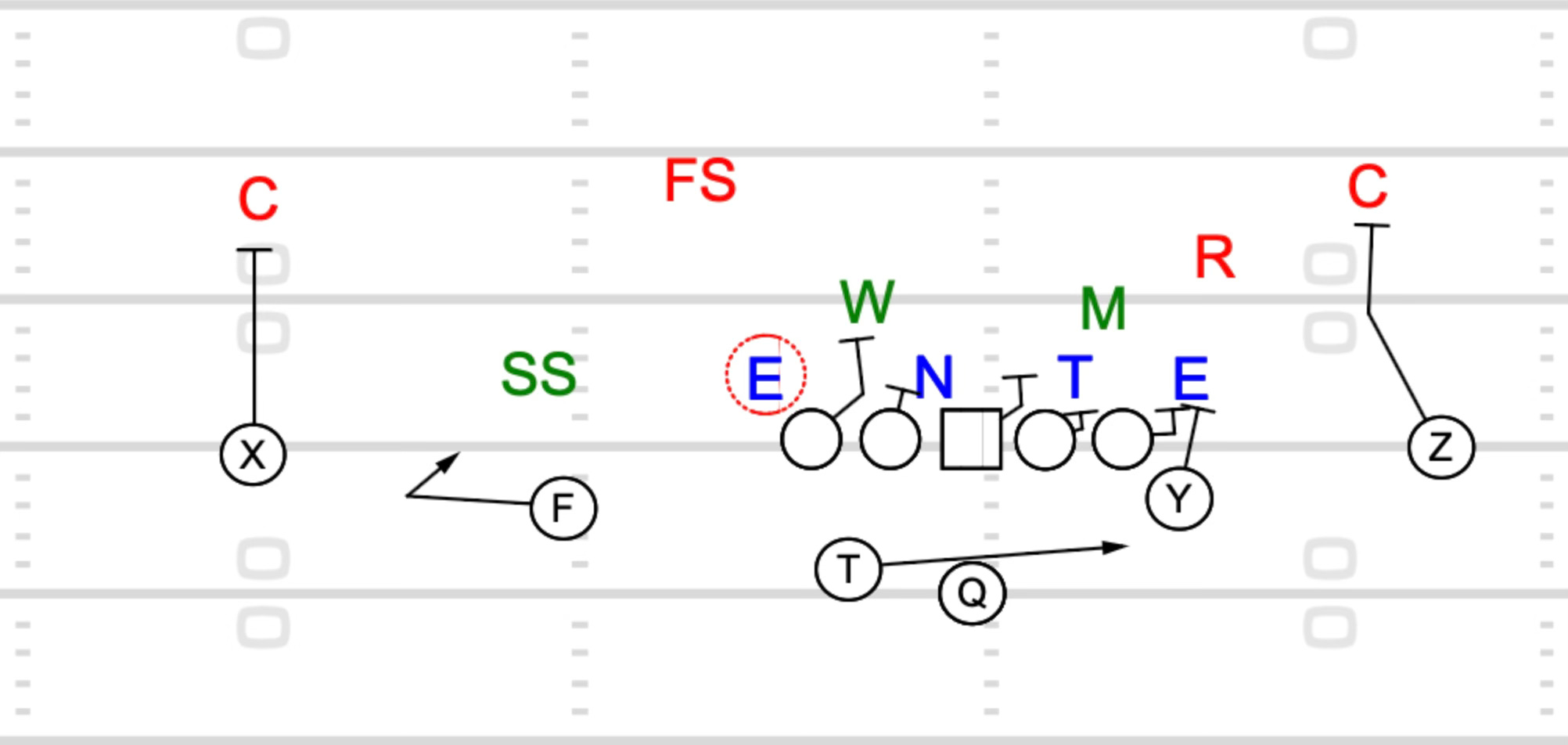
This is straight out of the old triple option playbook, just adapted for spread football. The offensive line zone blocks, and the quarterback reads the end man on the line of scrimmage during the mesh.
The difference from triple option: instead of a pitch back, you have a route or a screen.
Same concept, different application.


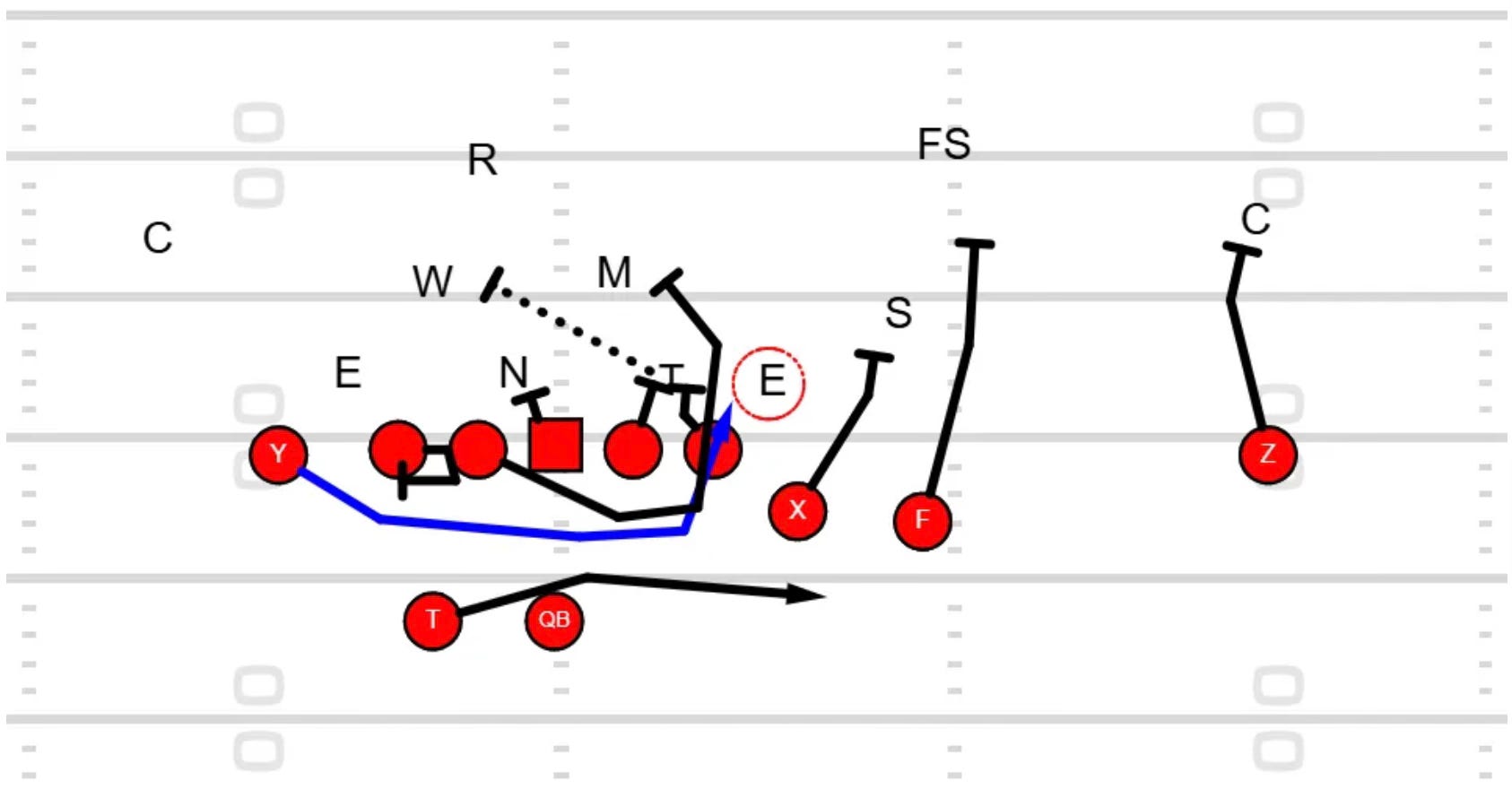
One variation worth knowing is the Power Shovel. It works off a sweep or speed option fake. The end chases outside trying to stop the perimeter, and instead of the quarterback following the pulling guard like he would on Power Read, he shovels it forward to a wing, back, or tight end trailing behind that guard. The end takes himself out of the play by chasing the perimeter.

Second Level — Linebacker Read
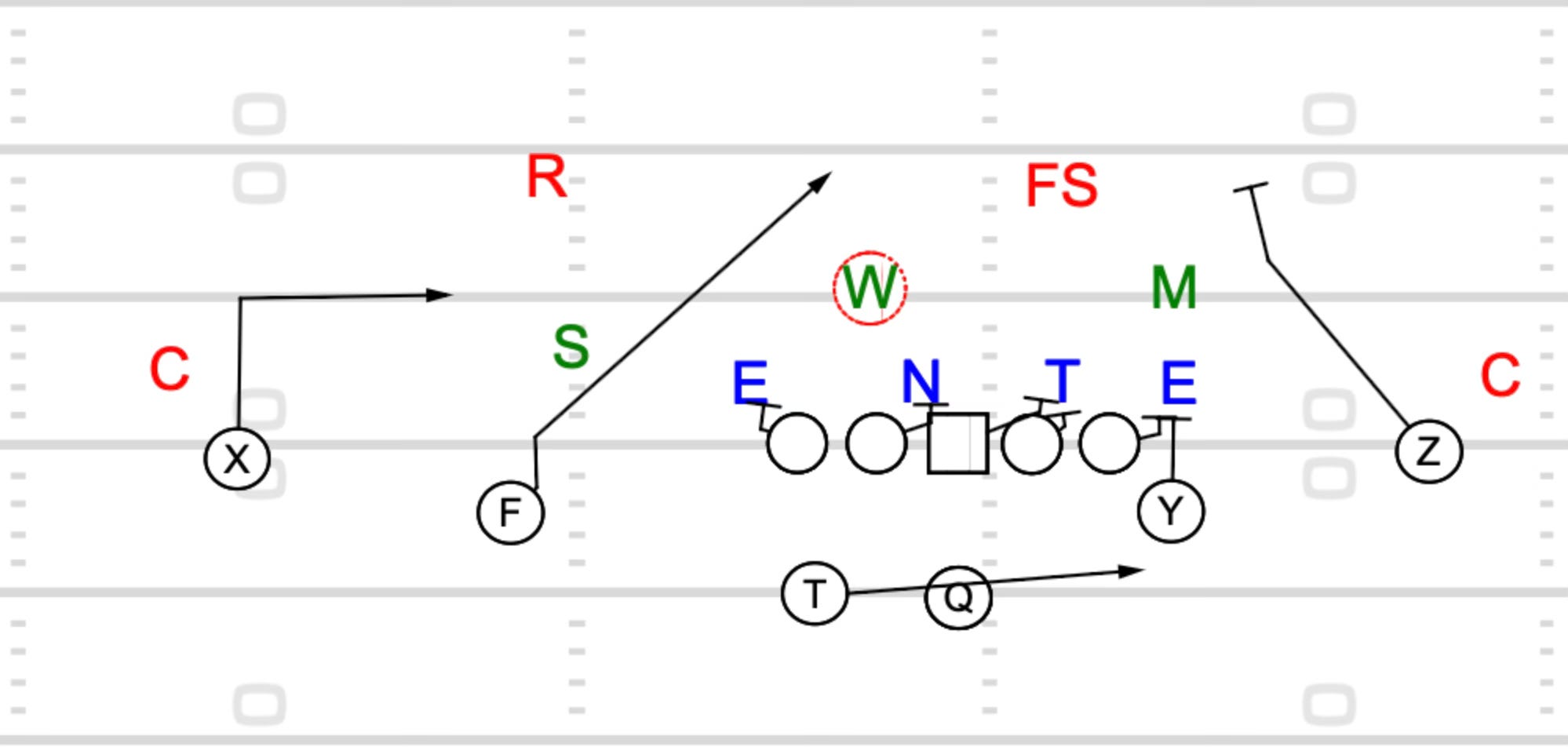
The offensive line accounts for every defensive lineman. The quarterback reads a second-level defender, usually the backside linebacker away from the run, after the snap.
The goal is to attack that linebacker’s pass responsibility. If he fits the run, there’s a route sitting right in the space he just vacated. Common combinations are inside zone with a stick route or wide zone with backside slants.

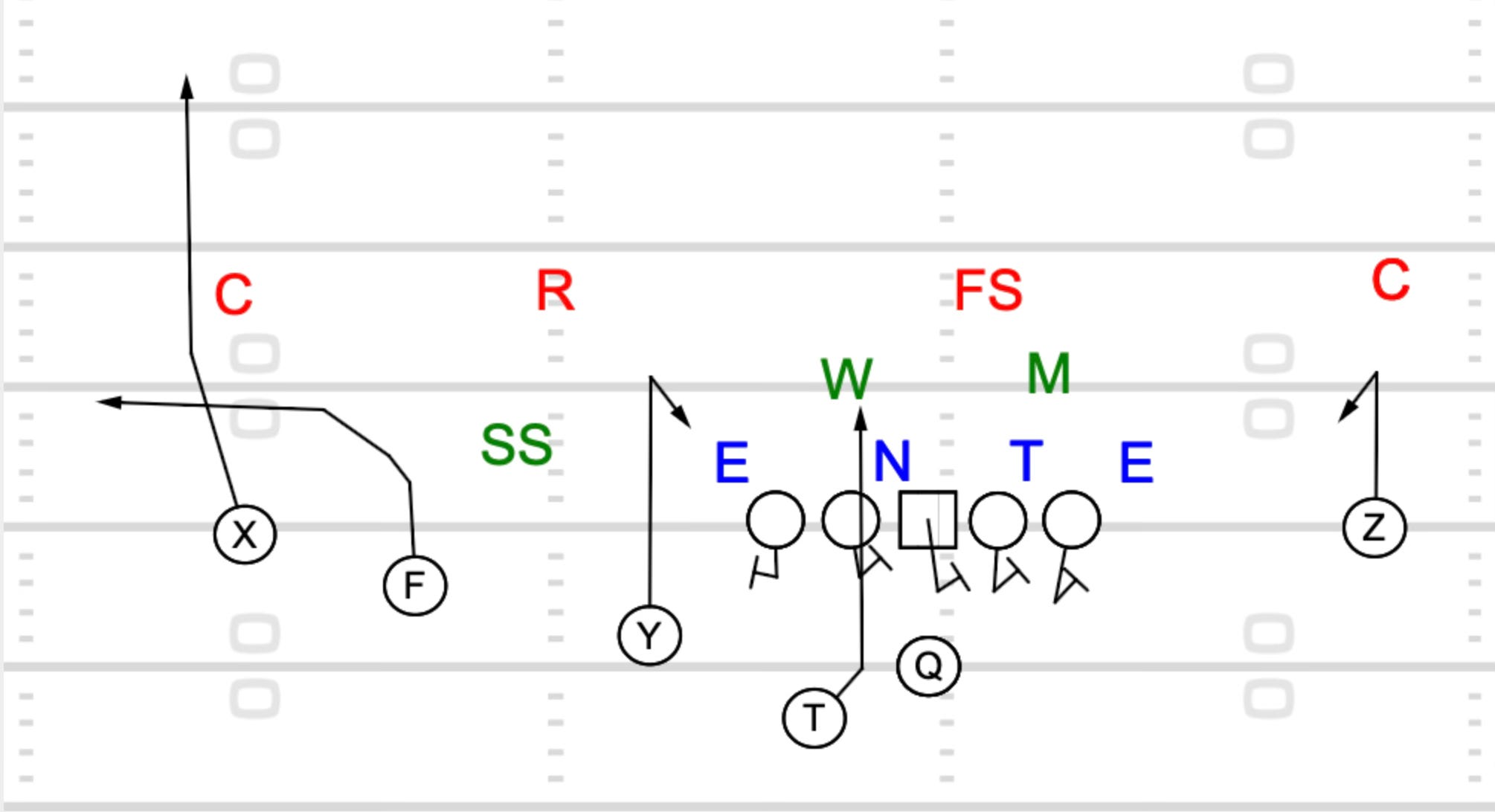
One variation that gained popularity in Air Raid circles is the Stick-Draw. Technically still an RPO, but it flips the read, the pass look comes first.
The quarterback takes a quick pass drop and reads the linebacker. If the linebacker drops under the stick route, he hands it off. If the linebacker steps up, he throws it.
It’s really more of a pass-run option. The same conflict, just built from a pass-first system’s DNA.
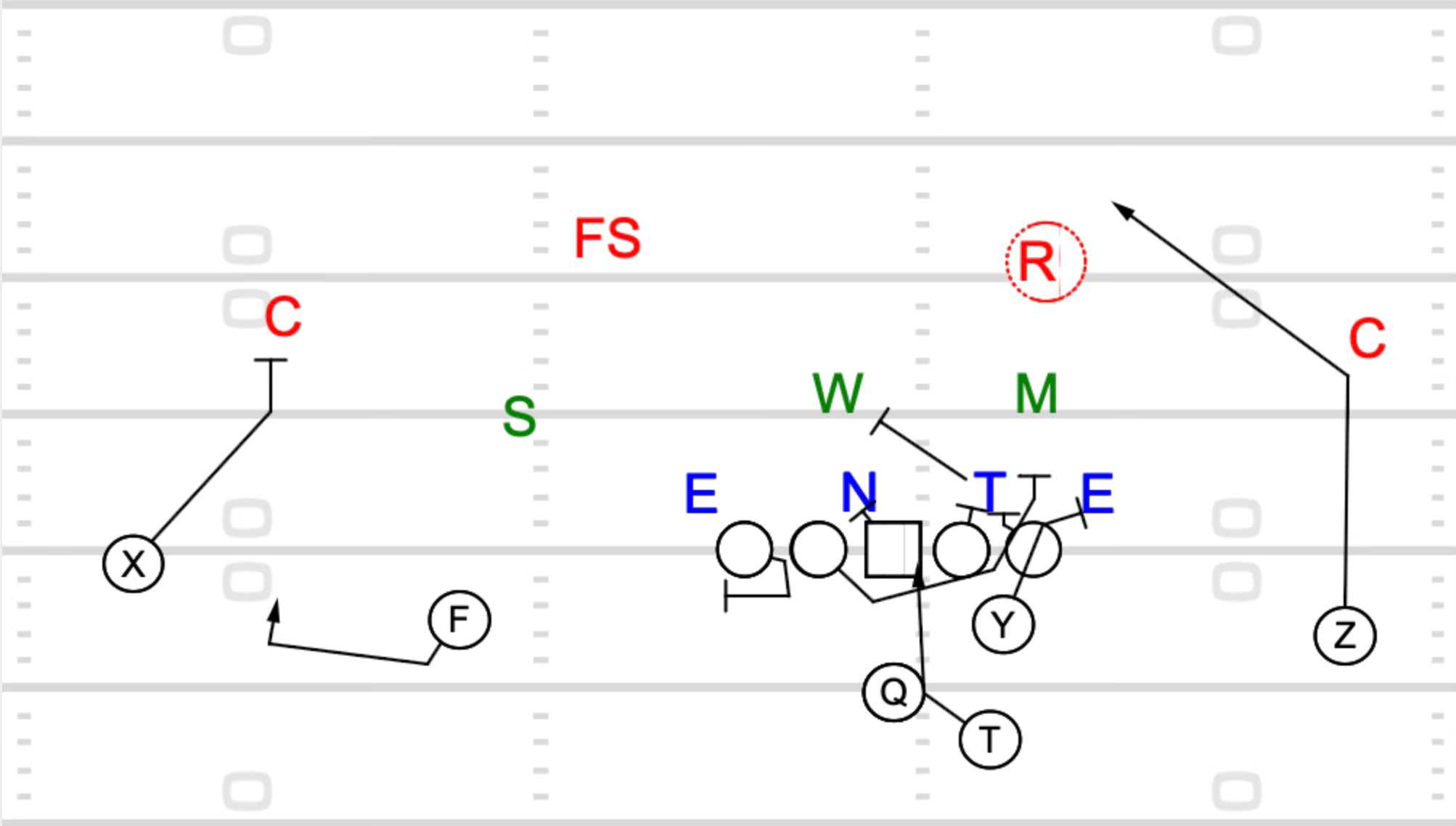
Third Level — Safety Read
Defenses that want an extra hat in the box will roll their boundary safety down. When that happens, the backside of the defense is exposed.
The quarterback meshes with the back and reads that safety. If he comes downhill hard, the quarterback pulls and throws a boundary post or glance route right into the void the safety just vacated. If the safety rotates back, you hand it off.
Which Run Plays Work Best With RPOs?
All of them. That’s the point.
It doesn’t matter if you’re running:
power
inside zone
wide zone
counter
pin and pull
Any run play can have an RPO attached to it if you design it the right way.
Take your best run. Figure out who’s cheating it. Put a route in that area.
That’s how you build your RPO game.
How Does a Quarterback Read the Defense on an RPO?
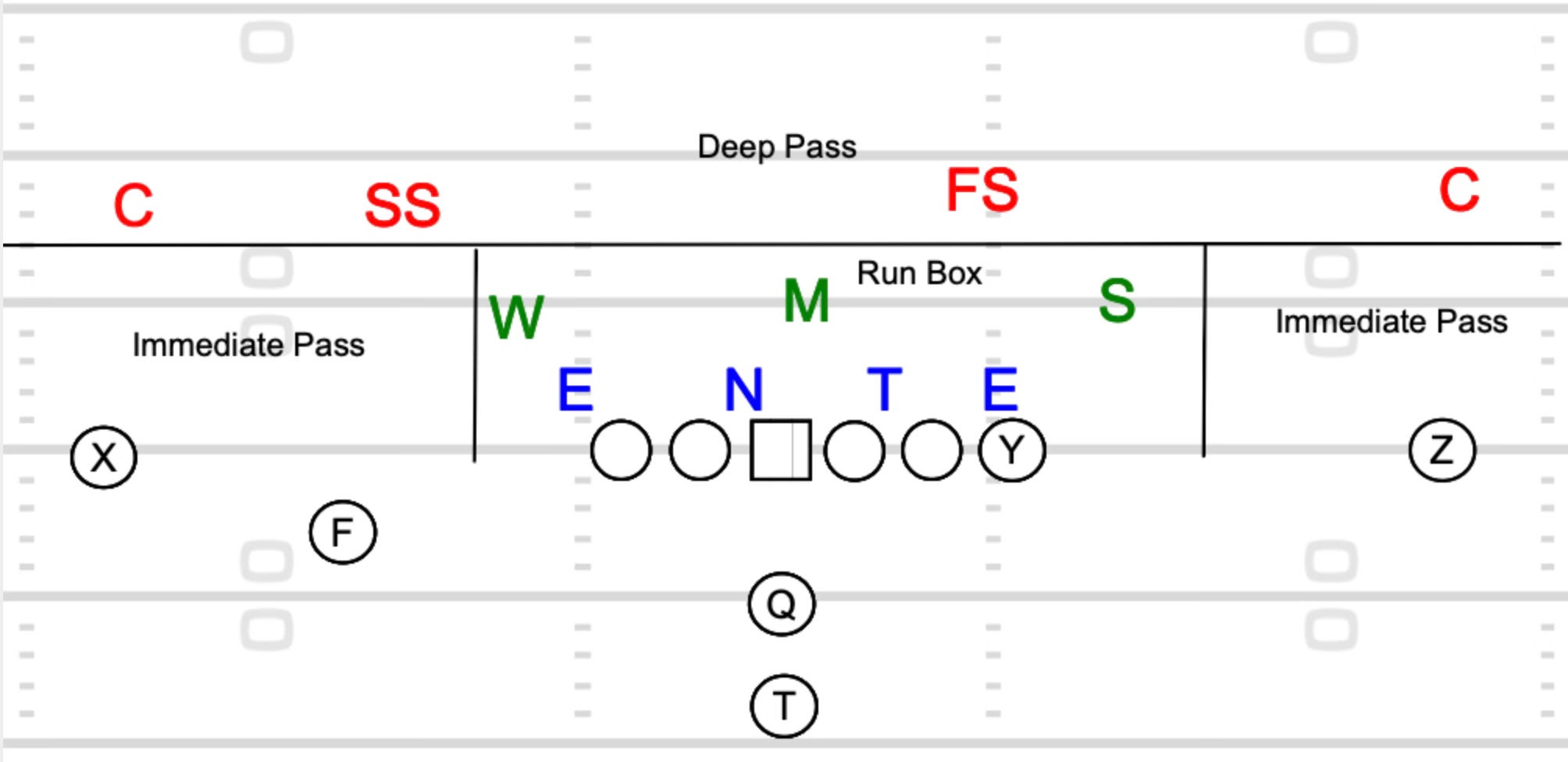
We break the field into three zones.
The run box is the area between the apex of the furthest inside receiver on each side of the formation and the offensive line. This is where run defenders live. If a defender is in this box, he’s a run threat.
The immediate pass space is everything outside the run box within 7 yards of the line of scrimmage. This is where you attack with screens and quick game.
The vertical pass space is anything beyond 7 yards. A defender aligned back here cannot realistically stop a quick throw before gaining 3-4 yards.
On pre-snap screens, the quarterback is asking do I have enough blockers for everyone in that area?
If it’s quick game, do I have free access to throw right now?
RPOs vs. Man Coverage
RPOs work because zone defenders have two jobs, fit the run and cover their zone. That’s who you’re attacking.
When a defender is locked on a receiver, he’s not worried about the run. There’s nothing to take advantage of.
If you’re seeing man coverage, don’t force the RPO. Just run the ball or call a play designed to beat man.
Ineligible Man Downfield
When throwing routes downfield, your offensive linemen cannot be more than three yards downfield when the ball is thrown.
The fix is simple but it has to be coached. When you tag a second or third level RPO to a run, your offensive line needs to know to stay tight to the line of scrimmage.
Give them a tag in the play call, a word or signal, that tells them this is an RPO look.
They can still do their job; they just can’t get down field the way they normally would on a pure run.
Pre-snap RPOs don’t carry the same risk because the ball is out so fast. It’s the post-snap reads where you have to be disciplined.
Where Should a First-Year OC Start With RPOs?
Start with pre-snap quick screens. They’re the easiest to teach because the quarterback isn’t reading anything post-snap, he’s making his decision before the snap and then catching and throwing.
From there, add gift RPOs, a three-step hitch or a three-step out tagged to a run.
Same concept: pre-snap read, quick throw, get the ball out fast.
Once your quarterback is comfortable there, start building in post-snap reads.
The biggest mistake I see coaches make is giving the quarterback too many options at once.
Don’t attach two different RPOs, one to each side. You’re asking him to process too much in real time.
Give him one decision. The less he has to process, the better.
How Do You Practice RPOs the Right Way?
If you’re attaching RPOs to your runs, old-school 5-on-5 or 7-on-7 run periods where receivers aren’t involved are pointless. You need receivers out there every single time.
During our inside run period, we go 11-on-11. If RPOs are a big part of our game plan that week, our quarterback has a green light to throw them on every single rep. Some days he’ll throw it 10 out of 15 reps during a run period.
Make sure your running back continues like he has the ball regardless of what the quarterback decides. That way we still get the run rep we need on film. But the quarterback and receivers get the confidence they need to pull the trigger on Friday night.
I learned this the hard way. We’d attach screens and quick game to our runs, and then on Saturday film we’d watch the corner playing 10 yards off all night and we never threw it once.
The outside linebacker cheating the box all night and we never threw the screen. The throws were open. The quarterback just defaulted to the handoff because that’s what he was repping in practice.
If you want your quarterback to throw RPOs in a game, he has to throw them constantly in practice.
How Do You Game Plan RPOs Each Week?
RPO game planning starts with one question: who’s cheating?
When you’re watching film, you’re looking for defenders who in run/pass conflict, and playing the run fast.
A safety crashing downhill toward the boundary. A flat defender creeping into the box.
This is giving you space, and RPOs are how you punish them.
Find the cheaters on film. Build your RPO tags around them.
When Is Play Action Better Than an RPO?
Sometimes a simple play action is just as effective as an RPO. Maybe more effective.
A lot of times as a play caller, I already know before I call the RPO that we’re going to be throwing it.
The defense is giving us something obvious. If that’s the case, why am I making my quarterback think about it at all? Just call the play action and throw the ball.
The RPO adds mental load to a decision that’s already been made upstairs. When the answer is obvious, take the decision away from the quarterback and just call the right play. That’s your job as the OC.
The Bottom Line on RPO Football
RPOs are not magic. They were overhyped for a while and defenses have caught up. That doesn’t mean they’re not effective, they absolutely can be, and we still use them. But they only work when they’re protecting a run game that the defense has to respect.
My philosophy, boiled down: RPOs are meant to protect the run game, so use them as such. Attack the cheaters. If there aren’t any, just run the ball better.
Start with pre-snap screens. Build your QB’s confidence. Rep them in every run period. Find the cheaters on film each week and tag your RPOs to punish them. And when the answer is already obvious from the press box, just call the play action.
Simple systems win.