

The Football Route Tree: Every Route Explained
A Complete Guide to the Football Passing Tree and How to Build Your Route Concepts

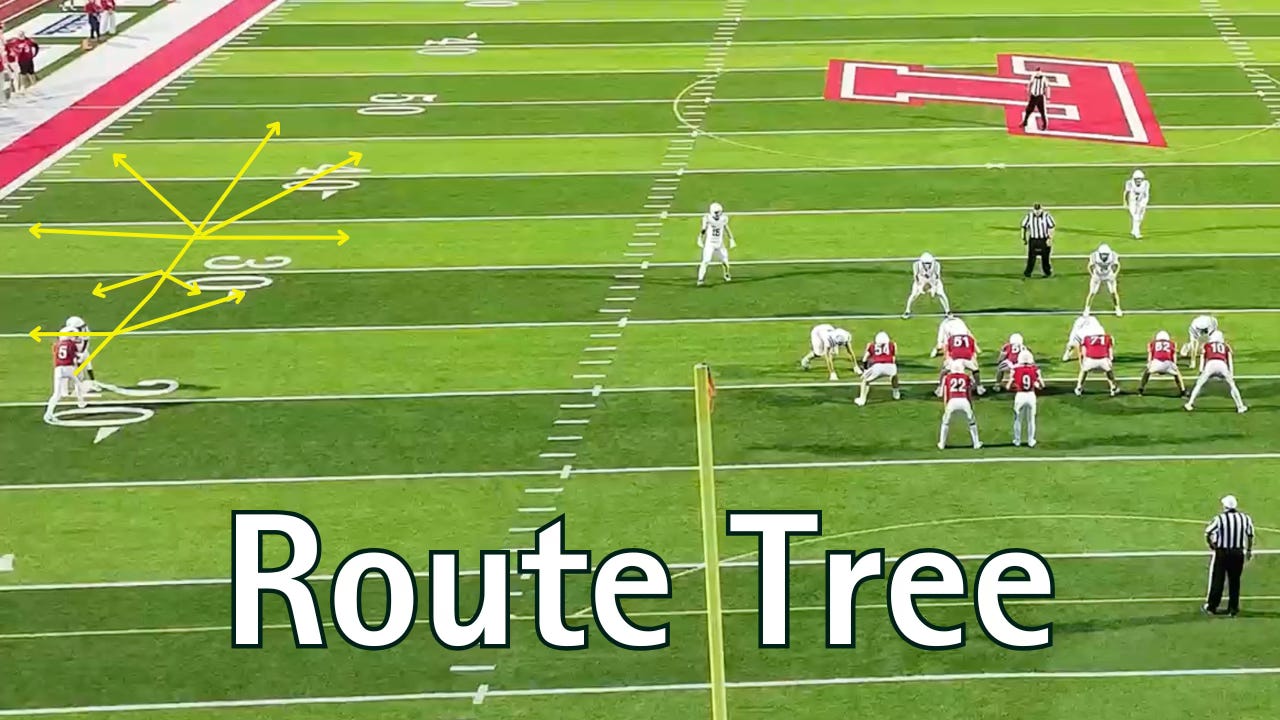
A route tree in football is a numbering system that tells your receivers exactly which route to run based on a number, not a word.
Even numbers break inside. Odd numbers break outside. The higher the number, the deeper the route. Nine routes, one number each, and every receiver on your roster speaks the same language.
It sounds simple. And in a lot of ways it is. But how you use it, and whether you should use it at all… that’s what we're discussing today.
I’ve been an offensive coordinator for 14 years. I’ve used the route tree. I’ve used one word concepts. And I’ve learned a lot about what each actually does well and where it breaks down.
This article is everything I know about it.
What Is a Route Tree in Football?
A route tree is a numbering system for your passing game. Instead of memorizing a concept, what everyone does within a specific play, your receivers just memorize what each number means. A two is always a slant. A six is always a dig. It doesn’t matter where they line up or what the play is called. Their number is their route.
The benefit is flexibility.
Once your receivers know the tree, you can put them in any combination you want. Move your running back outside, put your tight end in the slot, they know their number, they run their route.
How Does the Route Tree Numbering System Work?
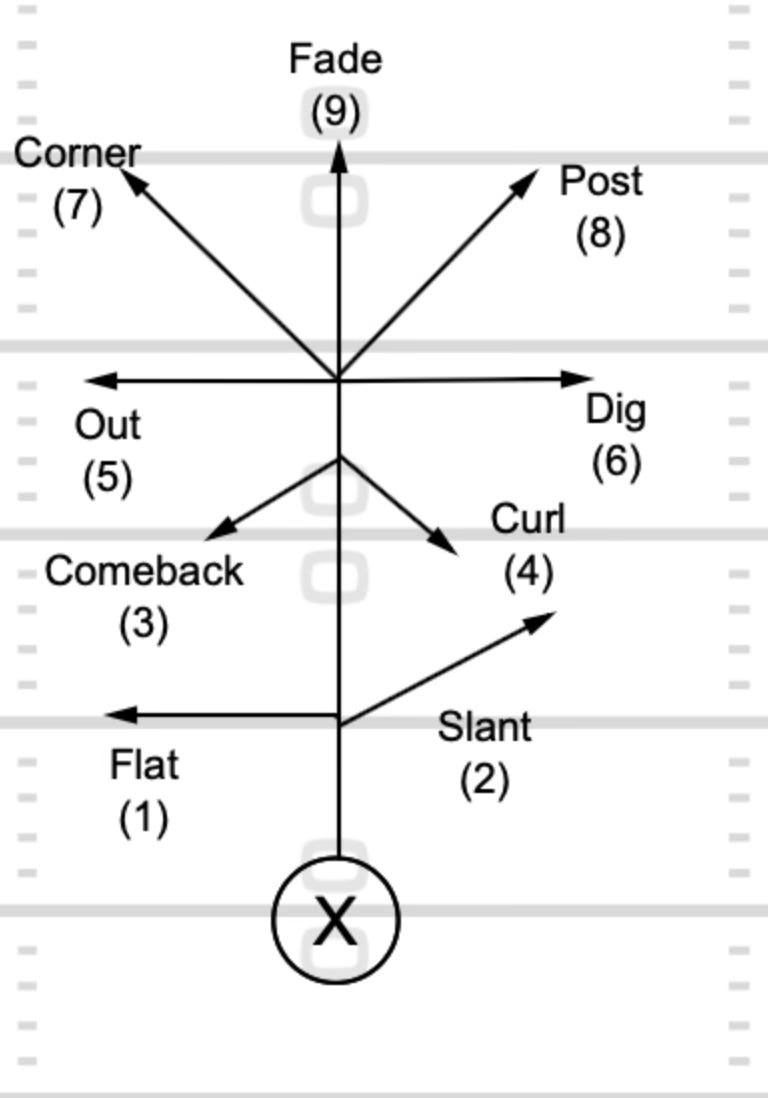
Here’s the logic behind the numbering. Even numbers break inside, odd numbers break outside. And as the numbers go up, the routes get deeper.
1: Flat
2: Slant
3: Comeback
4: Curl
5: Out
6: Dig
7: Corner
8: Post
9: Fade
Once your players understand the logic, they can figure out what a route does before they ever rep it. That speeds up your install and gives everyone a shared language.
Every Route in the Football Route Tree Explained
Let’s go through all nine. For each one, I’ll give you the teaching points we actually use and what the route is designed to do for you as a play caller.
1 Route: The Flat
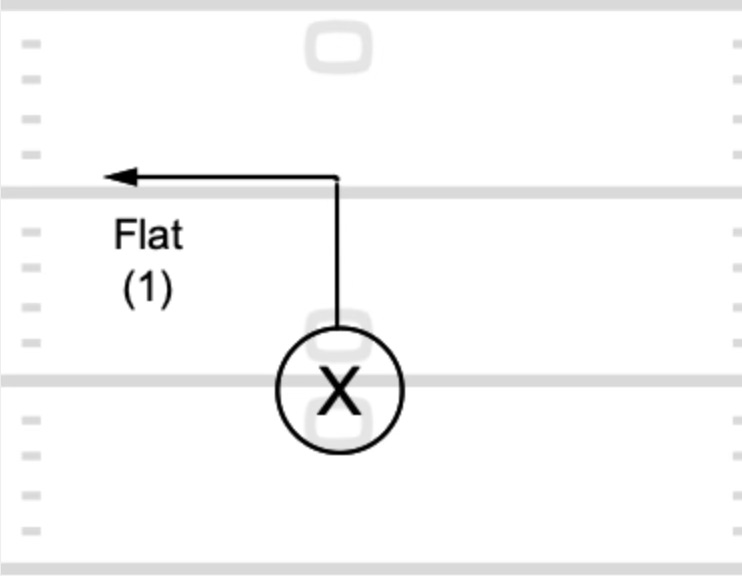
The flat route is your immediate flat space threat. The job of this route is to stretch the defense horizontally and force a flat defender to make a decision.
We teach our receivers inside foot up. The flat is a four-step speed cut, and your aiming point is out of bounds at three to five yards. You want to get there fast. The quicker the receiver threatens that flat space, the faster the defense has to react.
2 Route: The Slant
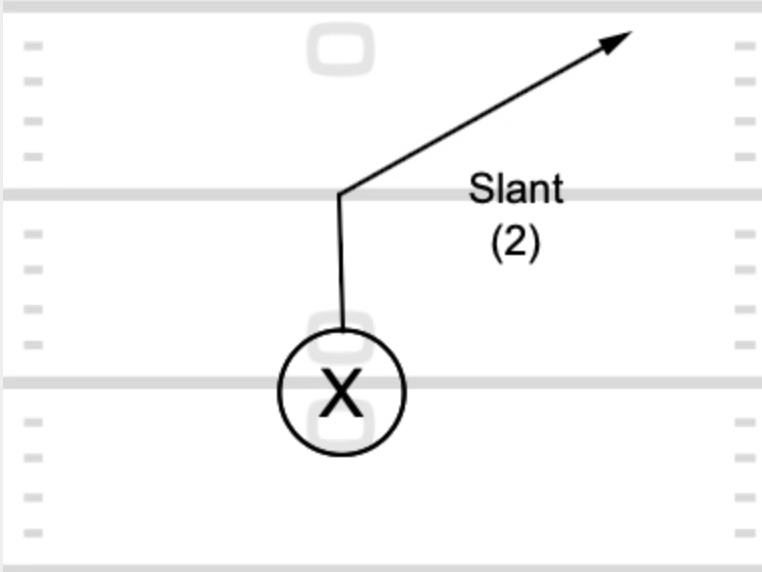
The slant is one of the most difficult routes to cover in football, and it works against both man and zone.
We run it off three steps. The goal is to own inside space.
The slant is dangerous because it hits linebackers in their run-pass conflict and gets into space quickly. If safeties are playing off, a well-thrown slant can be an explosive play.
3 Route: The Comeback
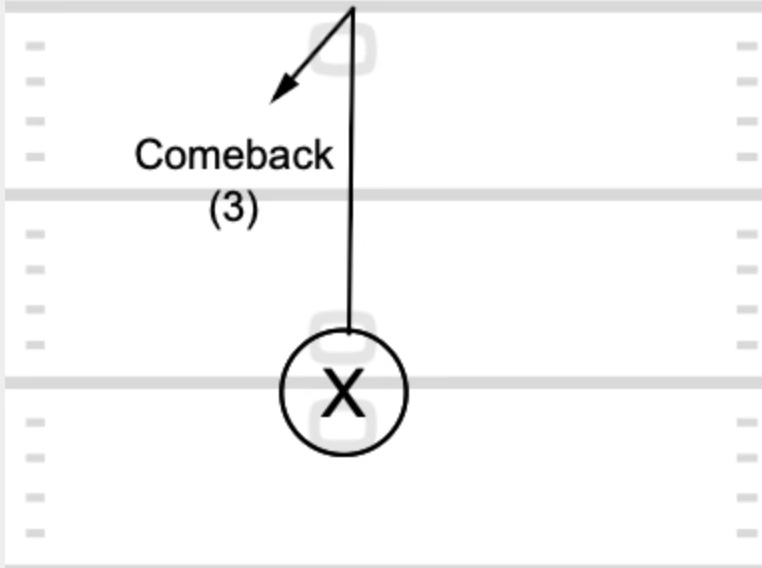
On a comeback the receiver is threatening the defender deep, making the corner feel like he’s defending a fade.
You want his hips to open vertically. When they do, you break back underneath and you’ve got high percentage completion.
This route attacks the numbers area, the space toward the sideline. It’s a great complement to the curl, which attacks more of the hash-seam area. Different window, same idea.
4 Route: The Curl
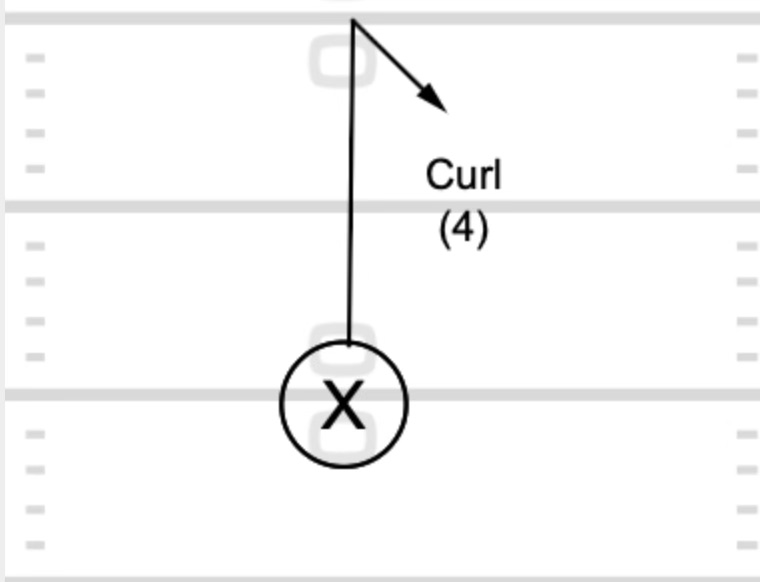
The curl and the comeback are built on the same premise, threaten vertical, break back, but the curl operates in a different part of the field.
Your landmark is around twelve yards, breaking back to ten. What you’re doing is making the defender feel like you’re running a post or vertical seam. When he opens his hips and starts to run, you snap the route back and you’re open underneath.
The curl almost always pairs with a flat route. The flat pulls the underneath defender out of the window, the curl sits in the space he just vacated. Curl-flat is one of the most reliable combinations you can call at any level.
5 Route: The Out (Sail)
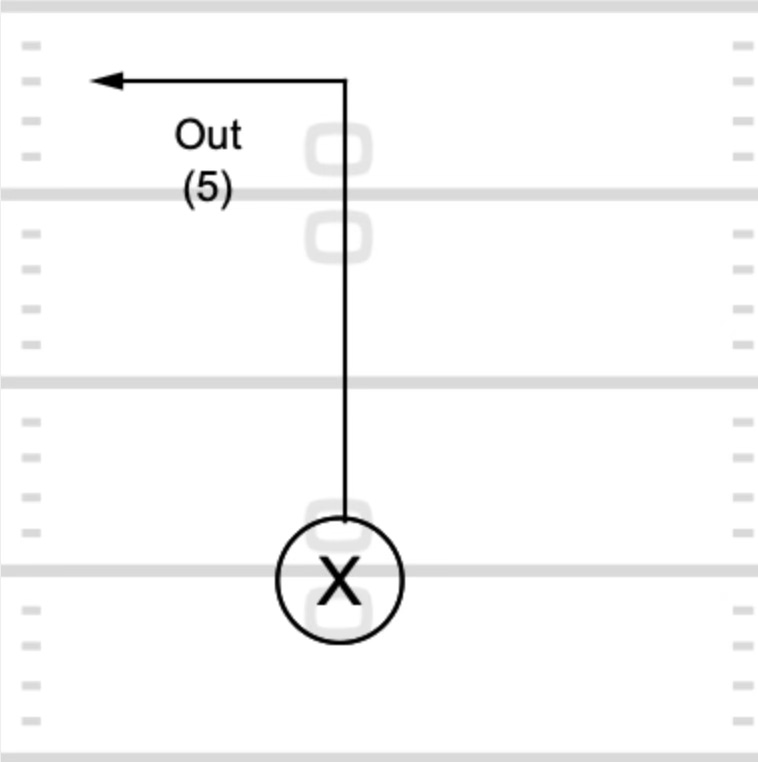
The five route is a deep out, and a lot of people call it a sail route. Think of the flat route and the out route as companions. The flat is attacking the immediate space to the sideline, and the out is attacking the deeper area of that same sideline space.
It attack safeties who play inside leverage. They don’t want to get beat deep inside where they don’t have help. That leaves the outside open.
If the corner clears out vertically, the out route can have big play potential in the space he just vacated.
6 Route: The Dig
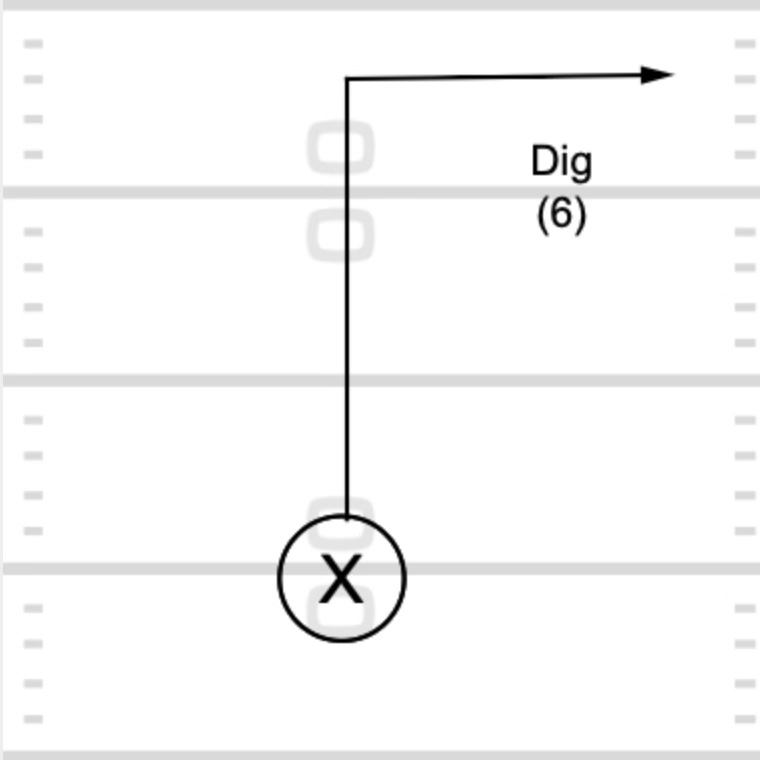
The out is designed to attack space to the sideline, the dig is its mirror, breaking inside and attacking the middle of the field.
Landmark is around fifteen yards. You want to make defenders feel like they’re defending a seam or a vertical route, and then speed cut horizontally between the linebackers.
What I like about the dig is that it gives the receiver a chance to separate. If the defensive back is tight, the receiver just keeps running across the field.
Great vs man for running a way from defenders. Vs zone receivers can throttle down in windows between backers.
7 Route: The Corner
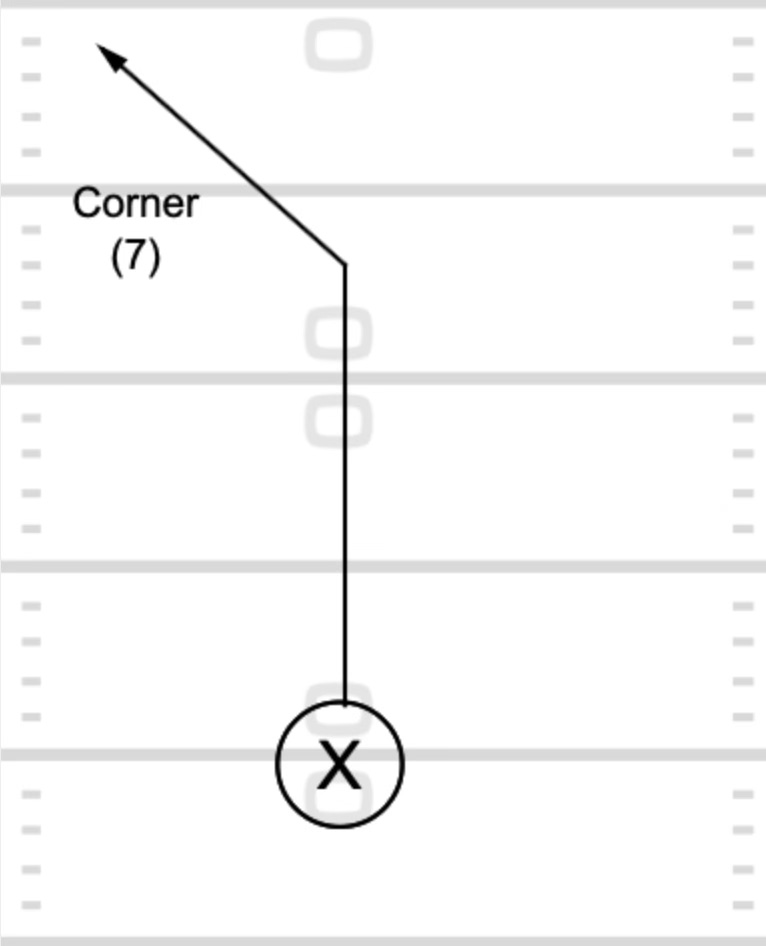
We like to run the corner route off rhythm. That means the break is coming on the sixth step, toward the front pylon. (The back pylon in the red zone.)
The corner route is best against a low corner, one who’s playing underneath, taking away the short-to-intermediate routes.
It’s a great red zone route where vertical space is limited and teams are playing tighter coverage.
8 Route: The Post
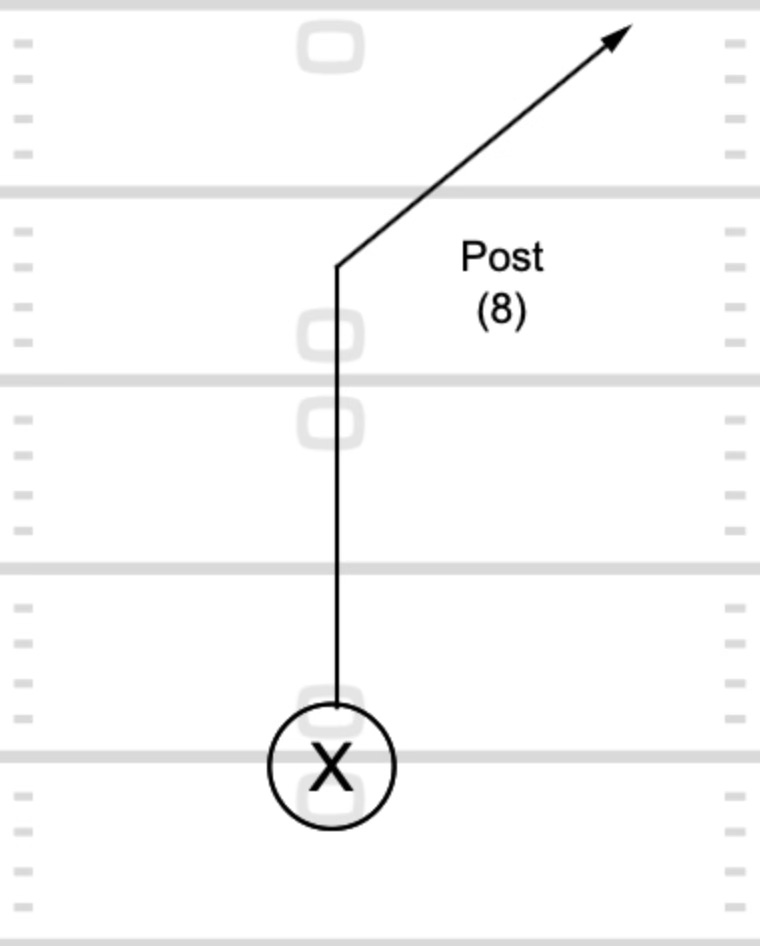
We run the post off a seven-step drop, and we want it skinny, attacking the area between the numbers and the hash. We never want to cross the hash on this route.
The post is built to attack one-high safety structures because the safety is in the middle of the field, leaving the seam-hash area open.
The post also works great off play action vs 2 high, especially when safeties are getting into the run box.
9 Route: The Fade
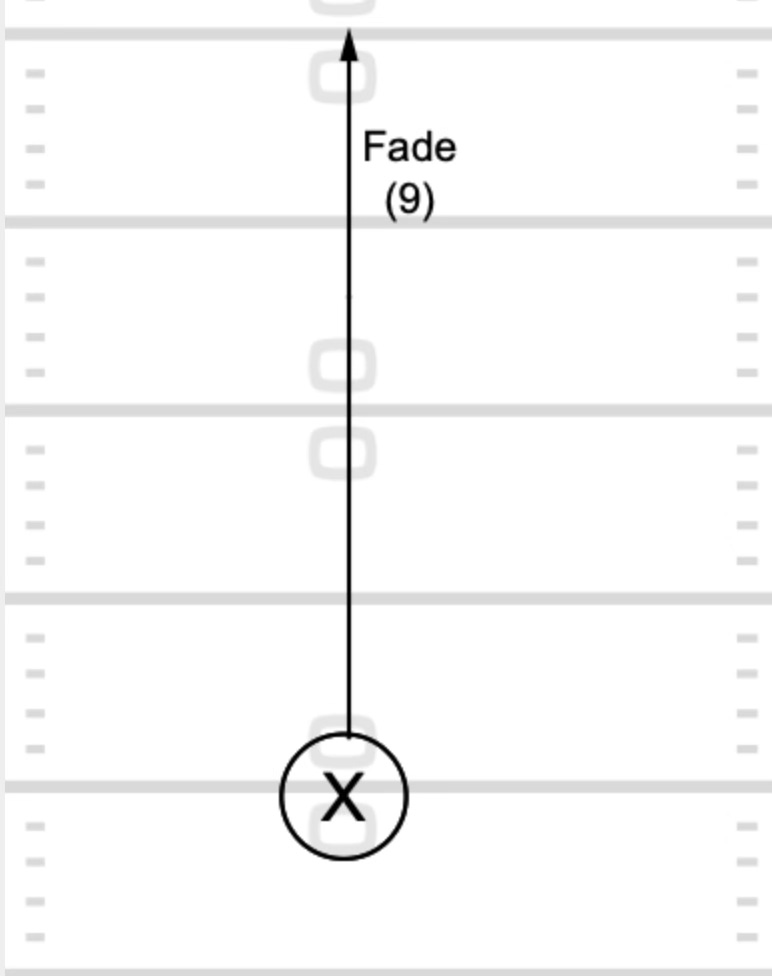
The fade is a matchup play. If you’re calling it, you’ve identified a one-on-one situation you want to take advantage of.
The biggest thing we teach on the fade is defeating the collision. If the corner is pressing, you have to get off the jam first. Once you do, you want to re-stack and always be at the bottom of the numbers. That gives the quarterback a full window to throw the ball outside away from the defender.
When you’ve got the matchup you want and you execute those two things, it’s hard for the corner to defend.
How Do You Build Route Combinations Using the Route Tree?
I design combinations from the top down.
Start with a deep route, typically a post or a corner. That gives you a rhythm every single time you call it.
If the defense takes it away, you’ve already got the rest of the combination underneath.
A concept we go back to a lot is 8-4-1.
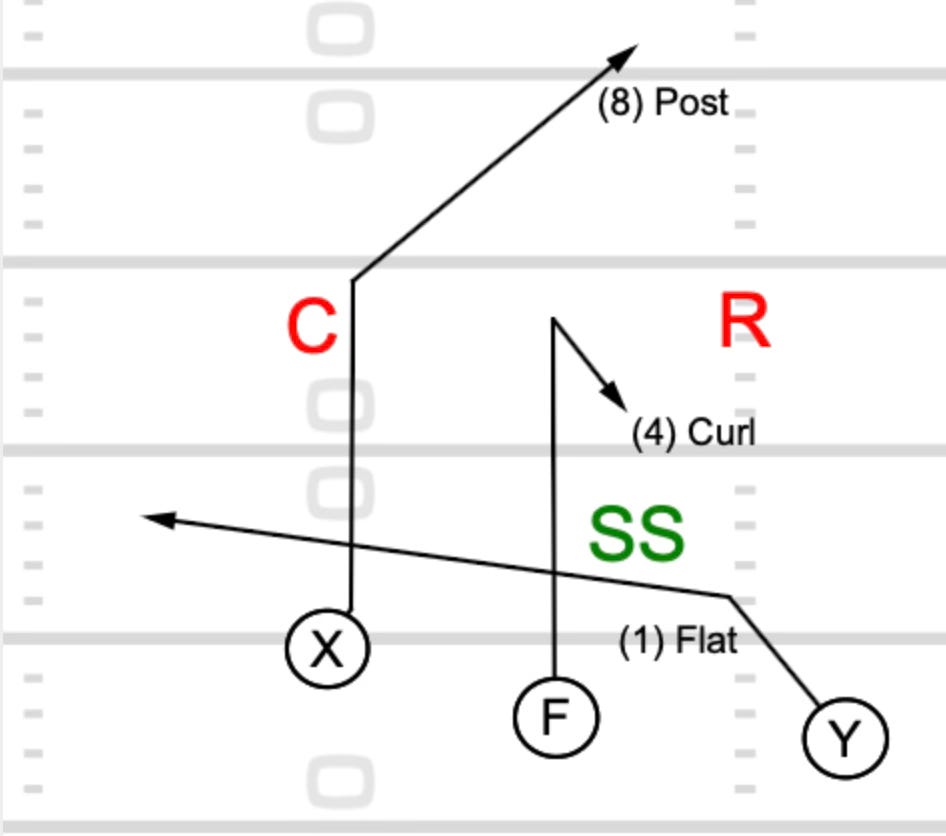
Post on the outside.
Curl from the slot.
Flat from the back or tight end.
Against any one-high structure, the post has a good chance of getting open.
Vs 2 High the Post should hold the corner and safety deep, allowing an isolation on the flat defender.
Common Route Combinations Using the Route Tree
This is where the route tree gets fun. Once your receivers know the numbers, you can build almost any concept you want. Here are some of the most common combinations and what they’re designed to do.
8-5-1: Flood
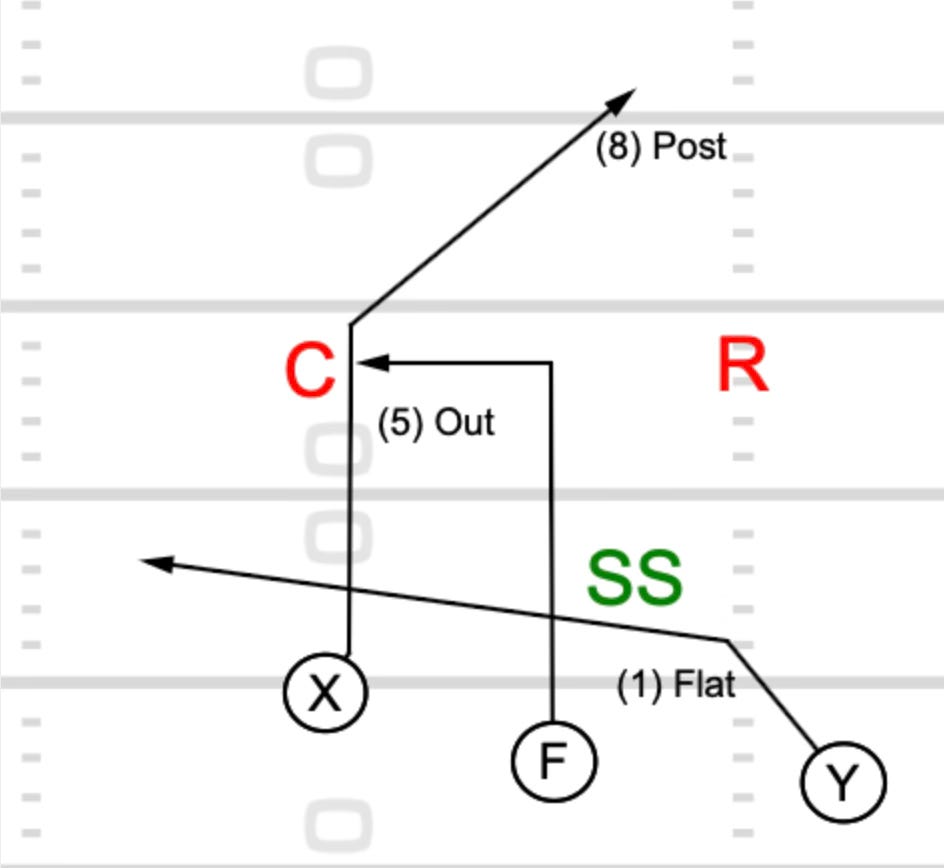
This is a classic flood concept. You’ve got a post stretching the defense vertically, an out sitting at the intermediate level, and a flat route attacking the space underneath. You’re creating a three-level stretch to one side of the field.

8-7: Scissors
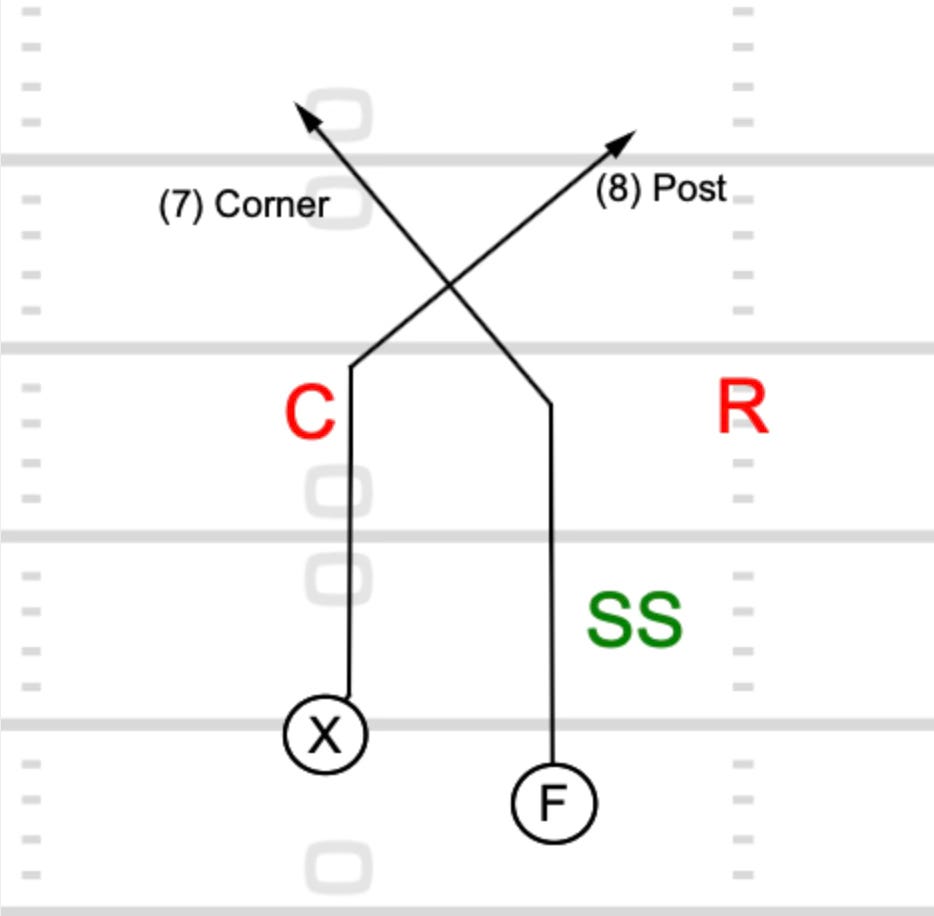
This one puts a conflict on the deep defenders, typically the Corner and Free Safety. The post is attacking inside, the corner route is attacking outside.
This takes advantage of Pattern Matching teams who play man vs vertical routes. The Post should clear out the corner back leaving space for the 7 (corner) route to work outside.
2-2: Double Slant
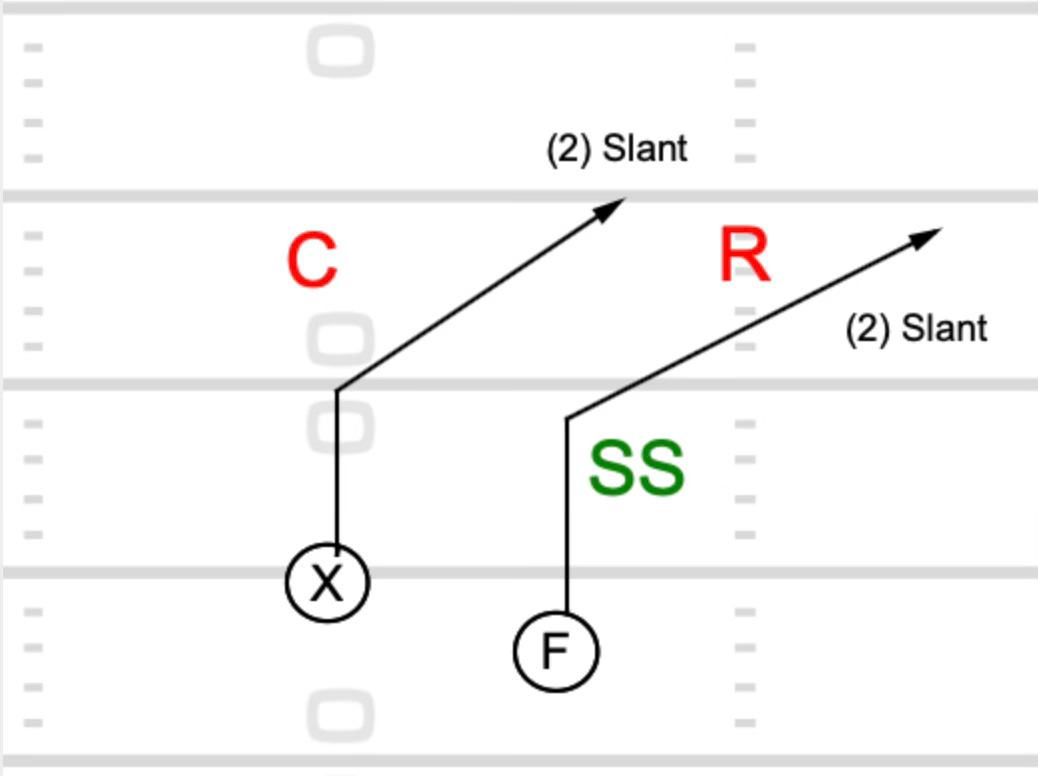
Two slants, both attacking inside space simultaneously. This concept creates immediate stress in the middle of the field and puts linebackers in conflict. If either one gets open, the ball comes out fast. It’s a great answer against zone, attacking the seams between linebackers. And if your receivers can win at the line, it gives you a quick answer against man too.

9-1: Fade Flat
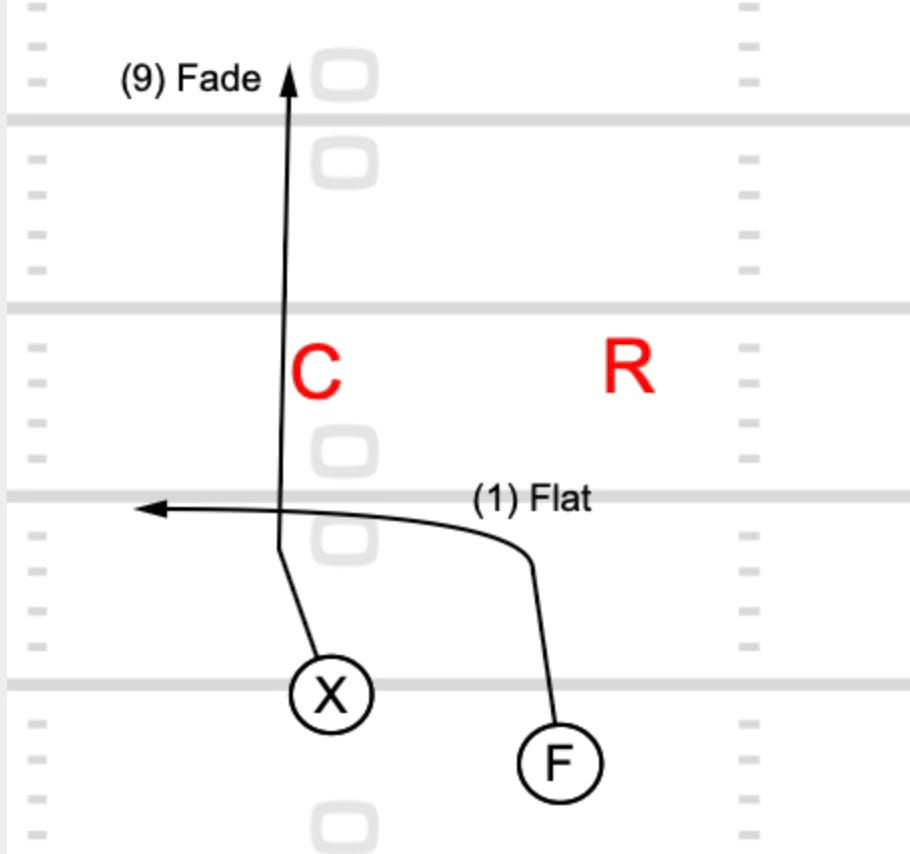
The nine route runs the corner off vertically, and if your overhang defender is cheating into the box, there’s nothing but space outside for the flat route to attack. The fade isn’t necessarily the primary throw here, it’s doing the work of clearing the corner out of the picture.
How Does a Quarterback Read the Route Tree?
This is the hardest part of installing any passing game.
We like to start with Vertical Rhythm routes. Post, Corner, or Fade.
Your quarterback starts with his eyes on the space that the primary route is attacking.
For a post, that’s the seam-hash area. For a corner and fade route, it’s the space above the cornerback. As he’s taking his drop, he’s asking one question: is that space available?
If yes, he throws it. If no, he hitches and gets his eyes to the next route in the combination.
In our 8-4-1 example, he’s going post first.
Not open?
He hitches and finds the curl.
Not there either? He hitches again and checks the flat.
If none of it is there, he scrambles.
Three routes. That’s the max. I’ve tried to give quarterbacks more than that, and what happens is they slow down, they get indecisive, and the play breaks down. Keep it to three and let him play fast.
What’s the Biggest Mistake Coaches Make With the Route Tree?
Thinking the route tree gives them unlimited flexibility.
It gives your receivers flexibility. It doesn’t give your quarterback flexibility.
Here’s the mistake I see constantly. A coach installs the route tree, his receivers learn all nine routes, and now he thinks he can call any combination he wants because they know what to run.
So he starts stringing numbers together.
841, 27, 22, 481… etc
The quarterback is standing there with a bunch of numbers that don’t tell him anything.
The quarterback needs a picture. A string of numbers doesn’t give him that.
This is something I learned from Dan Gonzalez, who’s one of the best offensive minds in the passing game.
(Link to his work here: https://gonzalezpassinggame.weebly.com/blog/conceptualizing-a-numbered-tree-passing-system)
His system pairs the numbered combinations with concept words that give the quarterback exactly that picture. The receivers hear the numbers and know their routes. The quarterback hears the word and knows the concept, the read, and what he’s looking for.
That’s the bridge between the two systems, and if you’re going to use a route tree, you have to do something like that.
Route Tree vs. Concept Calling: What’s the Difference?
With a route tree, you call plays by number. With concept calling, you give that same combination one name.
You call it, everyone knows what they’re doing, and your quarterback hears a word that gives him a picture.
Right now, we don’t use the route tree. We call concepts. We simplified, cut down our total number of plays, and wanted to use more tempo with shorter play calls.
But there are real benefits to the tree, especially if you’re moving players around a lot or want your kids to be able to run any combination without needing a new install every week.
The trade-off is this: the route tree gives your receivers more flexibility, but it can actually make things harder for your quarterback if you’re not careful about how you use it.
What Routes Aren’t in the Route Tree?
The tree has nine routes. Your passing game is going to need more than nine routes. Drags, shallow crosses, wheel routes, double moves, none of those are in the tree.
So what do you do with them?
You have to add tags. Your play calls get longer. And at some point you have to ask yourself if the system is still worth the workarounds.
There’s no wrong answer. But you need to have an answer before you install it, not after. If your passing game is going to rely heavily on drags and shallow crosses, you might be better off just calling concepts from the start.
What Should a First-Year OC Do With This?
Start simple.
If you want to use the route tree, pick two or three combinations. Rep them until your kids can run them in their sleep. Tag each combination with a concept word so your quarterback has a picture. Build from there.
If you want to call concepts, cut your list down, and make sure you only run them out of a few formations. It might seem like you need to run every pass from every formation, but just moving 1 guy changes what a kid has to memorize now.
Either way, your passing game isn’t limited by what your receivers can run. It’s limited by what your quarterback can process.
Build for him first. Everything else will follow.