
The Smash Concept Football: A Complete Guide
The Smash Concept Football: A Complete Guide
The smash concept is a high-low stretch on the cornerback. A corner route over the top, a shorter route underneath, and a simple read. If the corner gets depth, throw underneath. If he stays tight, throw the corner route behind him.
That's the smash concept in football.
It's one of the most durable concepts in the game because the structure is simple, the read is clear, and it punishes defenses that play tight coverage.
This is a breakdown of how it works, why it works, and how to fit it into your system.
What Is the Smash Concept in Football Attacking?
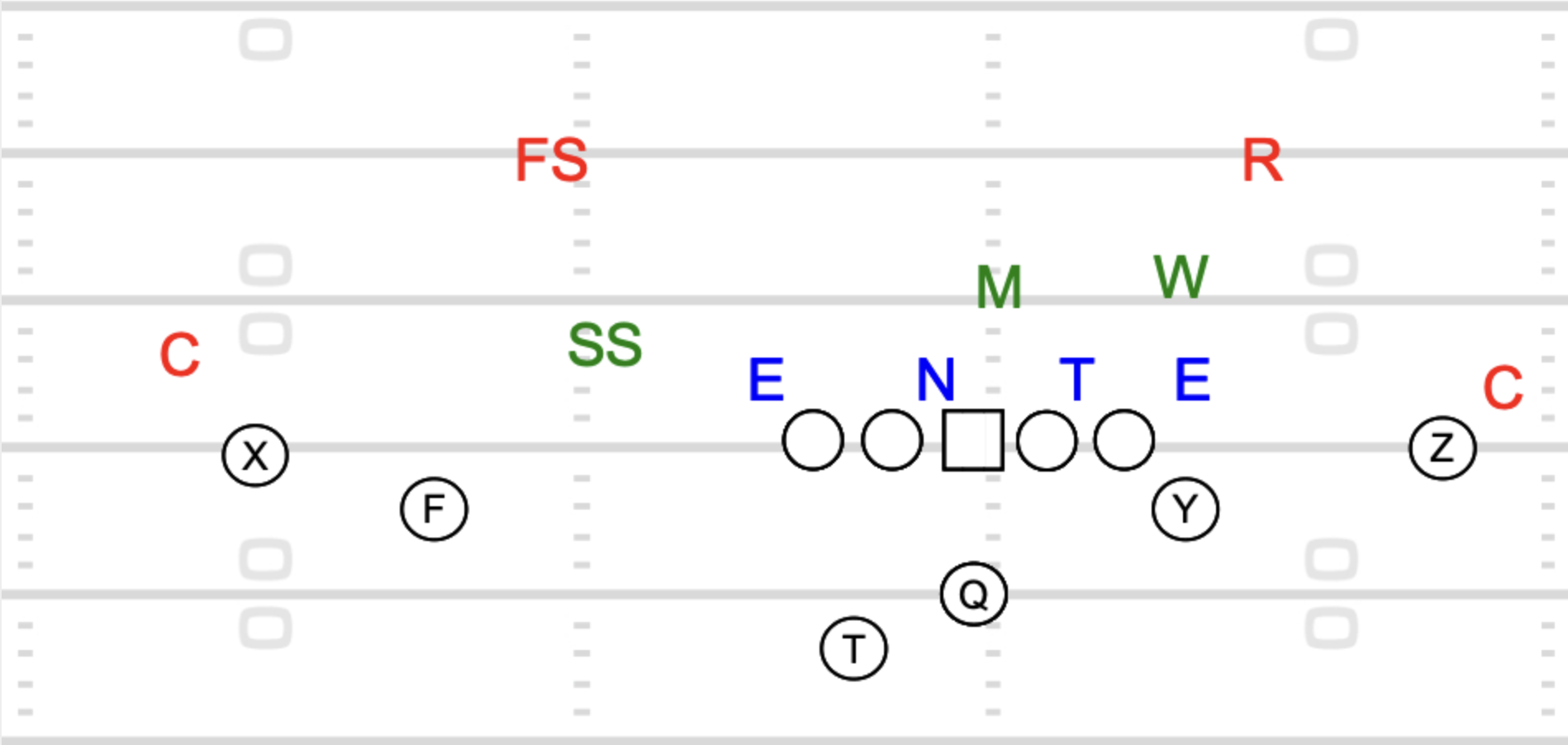
Cover 2 is a good starting point, but smash can attack other coverages too.
What smash is really attacking is the depth of the cornerback. When a corner sits low, whether he's playing Cover 2, Cover 1, or any man variation, he's leaving space behind him to the outside. The corner route is designed to find that space.
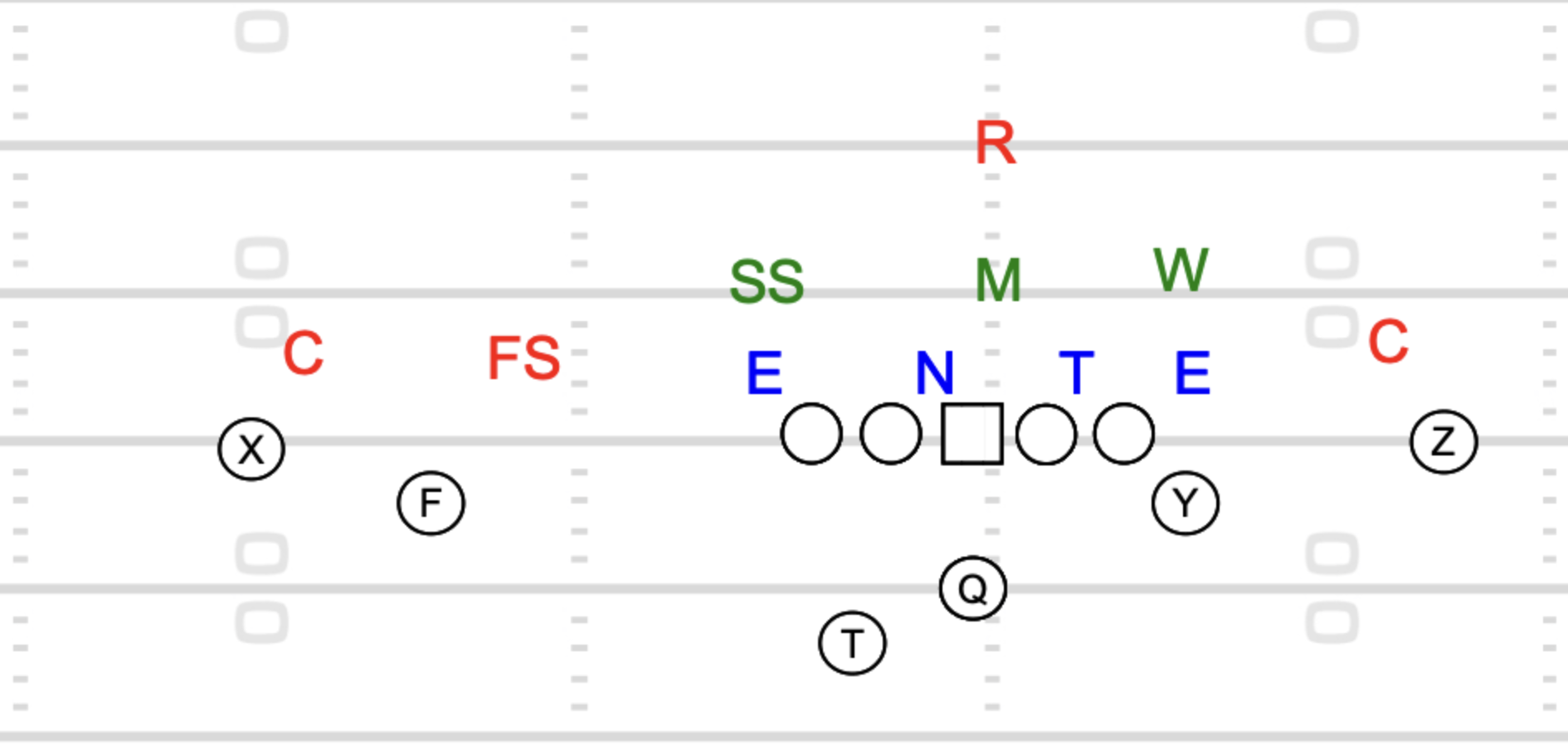
Safeties naturally want inside leverage because the dangerous throws are on inside-breaking routes, slants, posts, and digs. They have help from the corner on the outside, so they shade inside. That means when the corner route breaks toward the pylon, the safety is already leaning the wrong direction. The corner route attacks the space away from that leverage.
This is why smash works against man coverage too. A man corner is going to be pressed or low, and a well-run corner route will get behind him in a hurry.
When Should You NOT Run Smash?
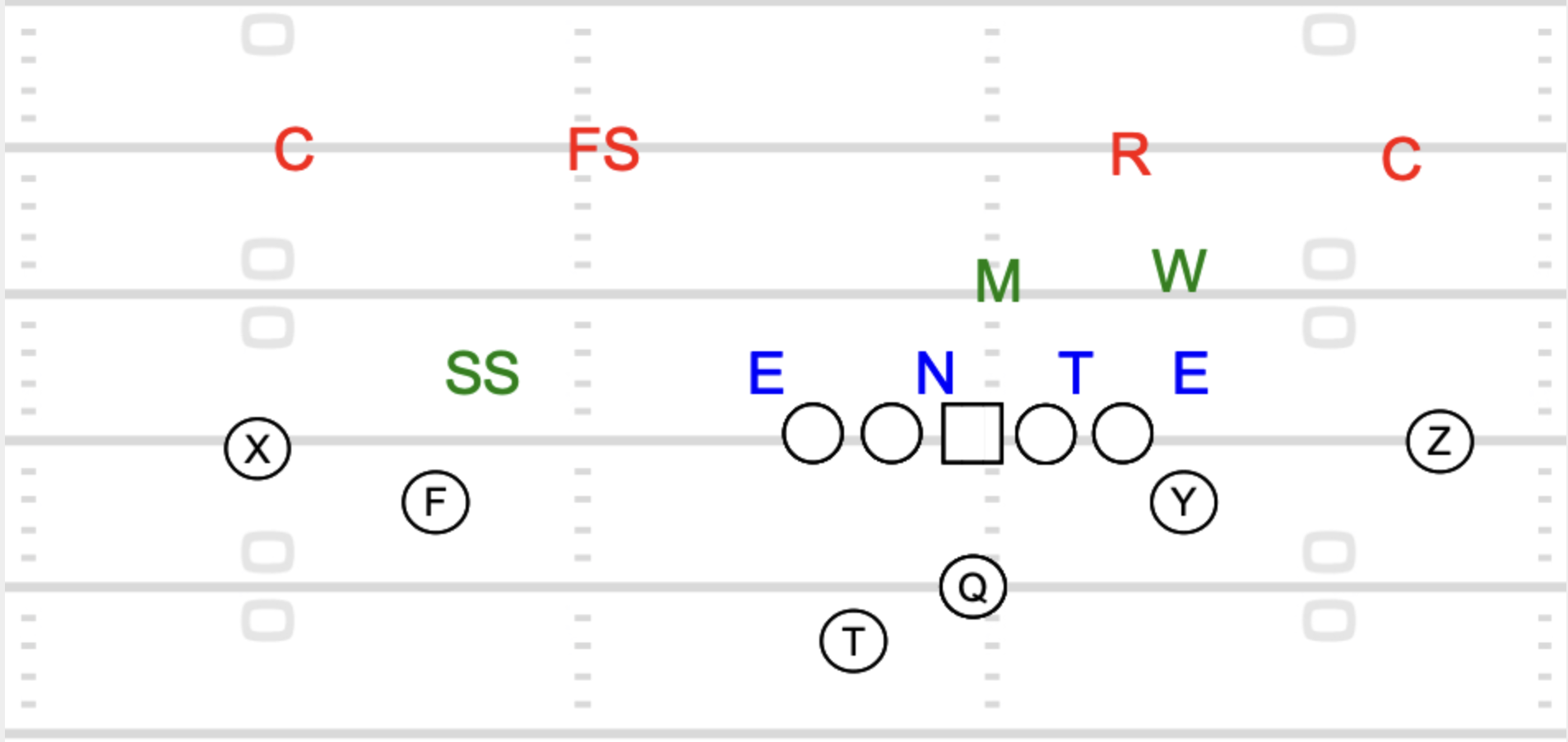
Cover 3 and Cover 4 are not good looks for smash. Both put corners at depth, right in the window where the corner route is supposed to operate.
You're not going to beat a deep corner with smash. All you've done is set up a short hitch or flat route, and that's not why you called the play.
If you're dropping back to pass, you're trying to move the ball down the field, there are better concepts to attack Cover 3 and Cover 4.
Why Smash Is So Effective in the Red Zone
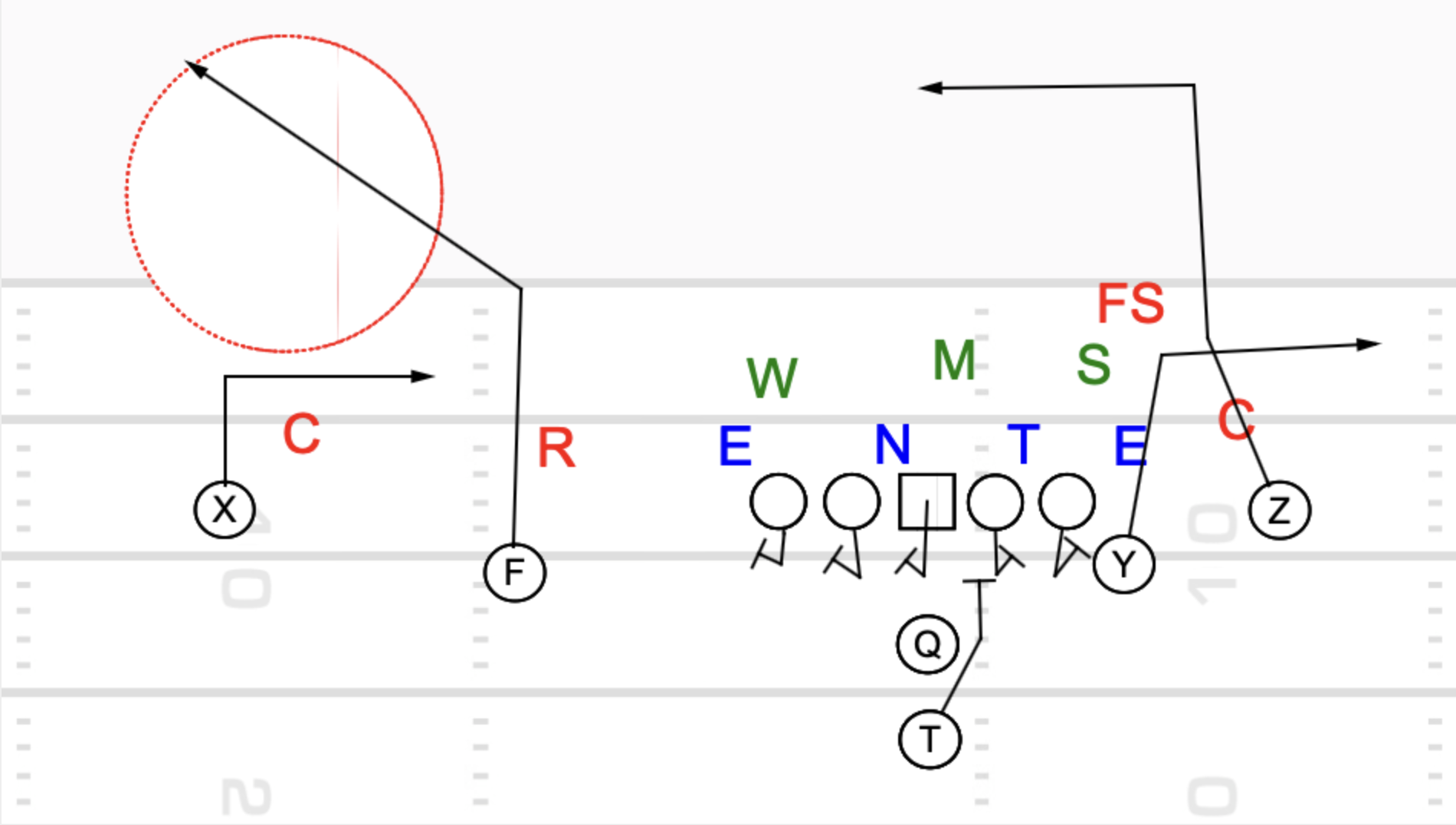
The red zone is where smash becomes a staple. When you're inside the 20, defenses compress vertically, corners tighten down, safeties squeeze, everyone is protecting the end zone.
Your four verticals concept isn't a great call anymore. But the corner route is still viable because it attacks horizontally as much as vertically. If the ball is on the hash, you have space from that hash all the way to the back pylon. In an area where space is a premium, that's a lot of room to work with.
What Are the Best Smash Concept Variations?
There are a lot of ways to run smash. Here's a breakdown of the most useful ones and what each is designed to do.
Traditional Smash
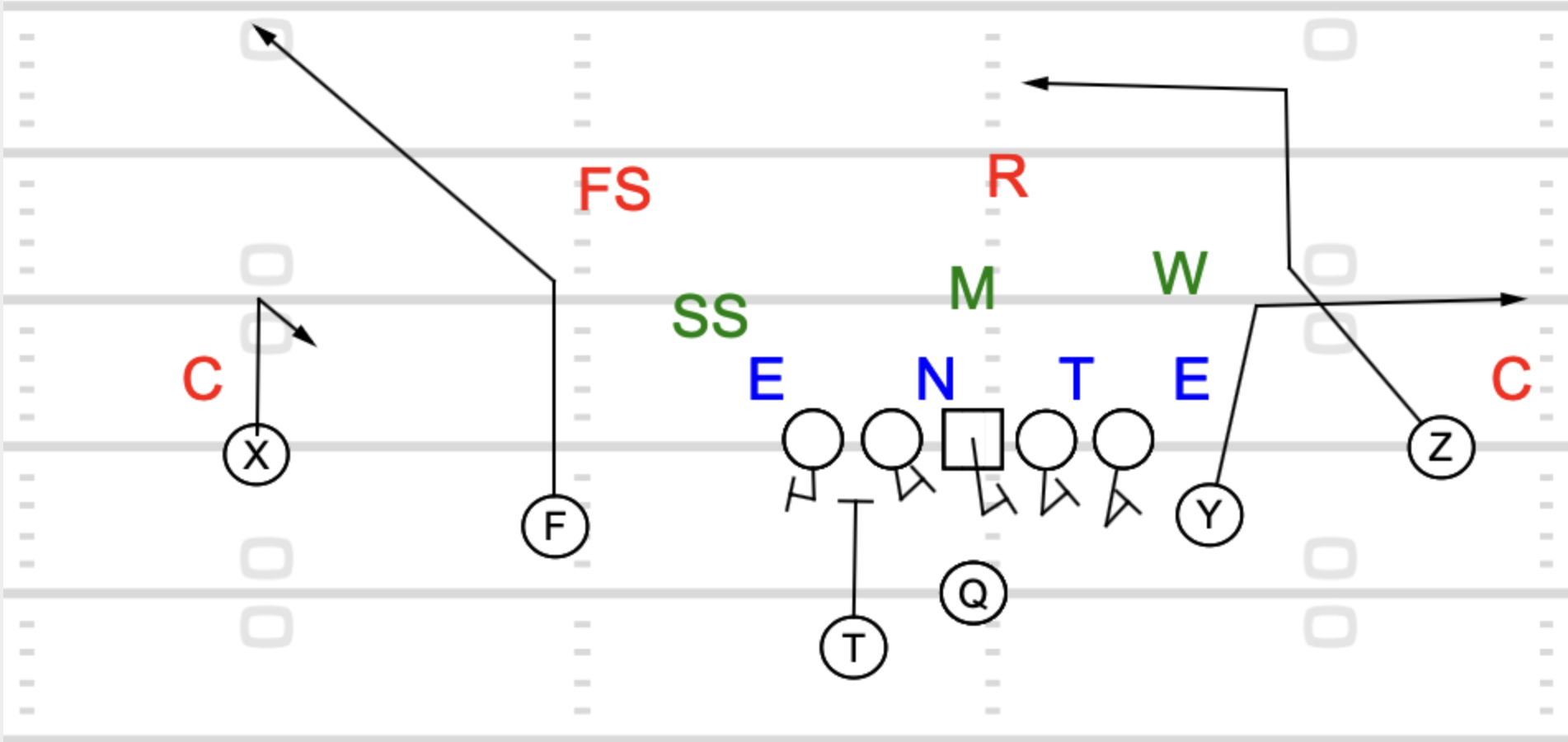
The outside receiver runs a 5-yard hitch with a corner route over the top from the slot. It works, but defenses know it well. A disciplined Cover 2 corner will sink, let you throw the hitch, and rally to make the tackle. You've picked up five yards, and that's not why you called smash.
3x1 Smash
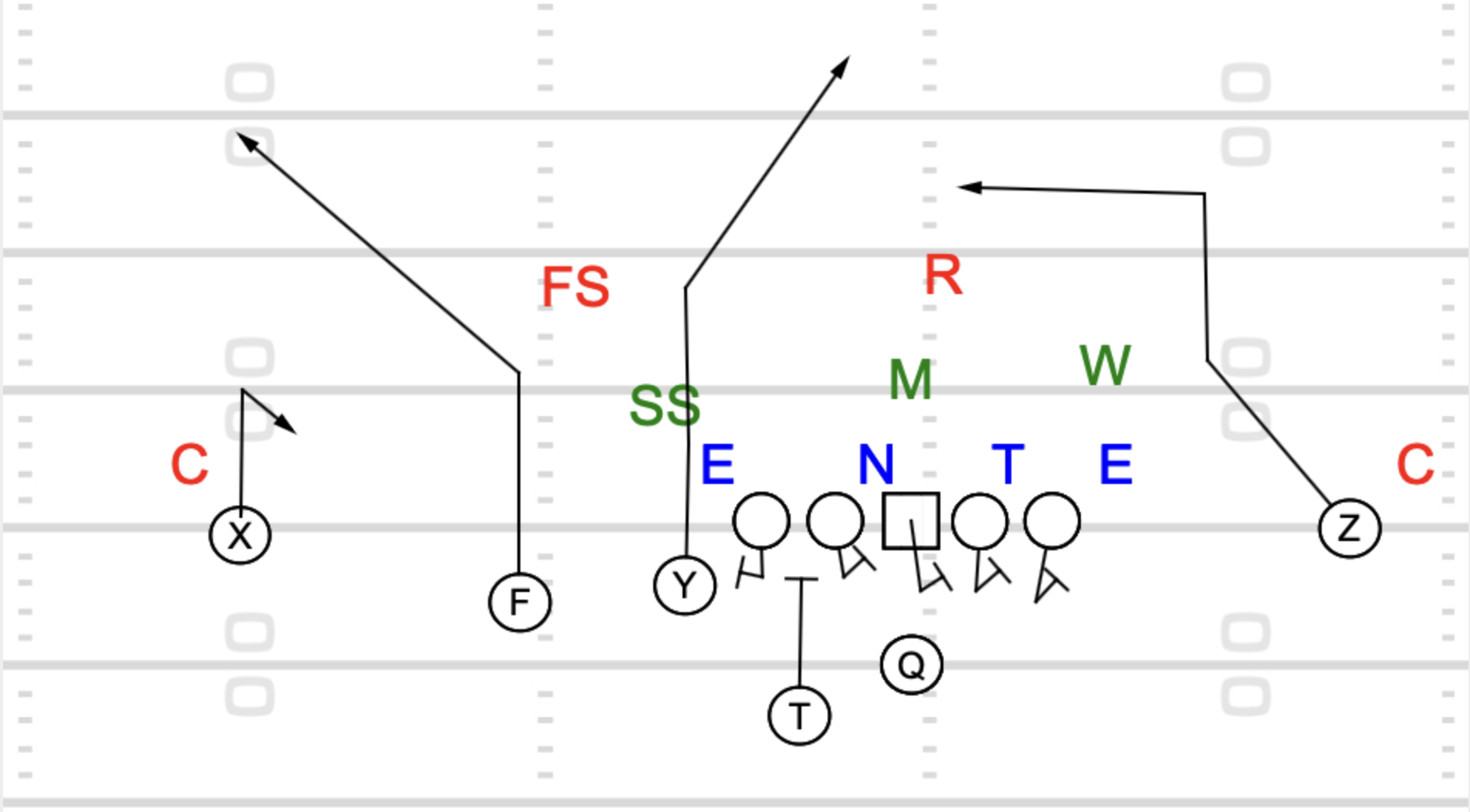
Out of 3x1, you can add a middle read post from the number three receiver. When a Cover 2 safety widens aggressively to take away the corner route, he's vacating the middle of the field. The post runs right into that void. You've also now got a slot receiver or tight end matched up on a linebacker underneath.
Fin Route Variation
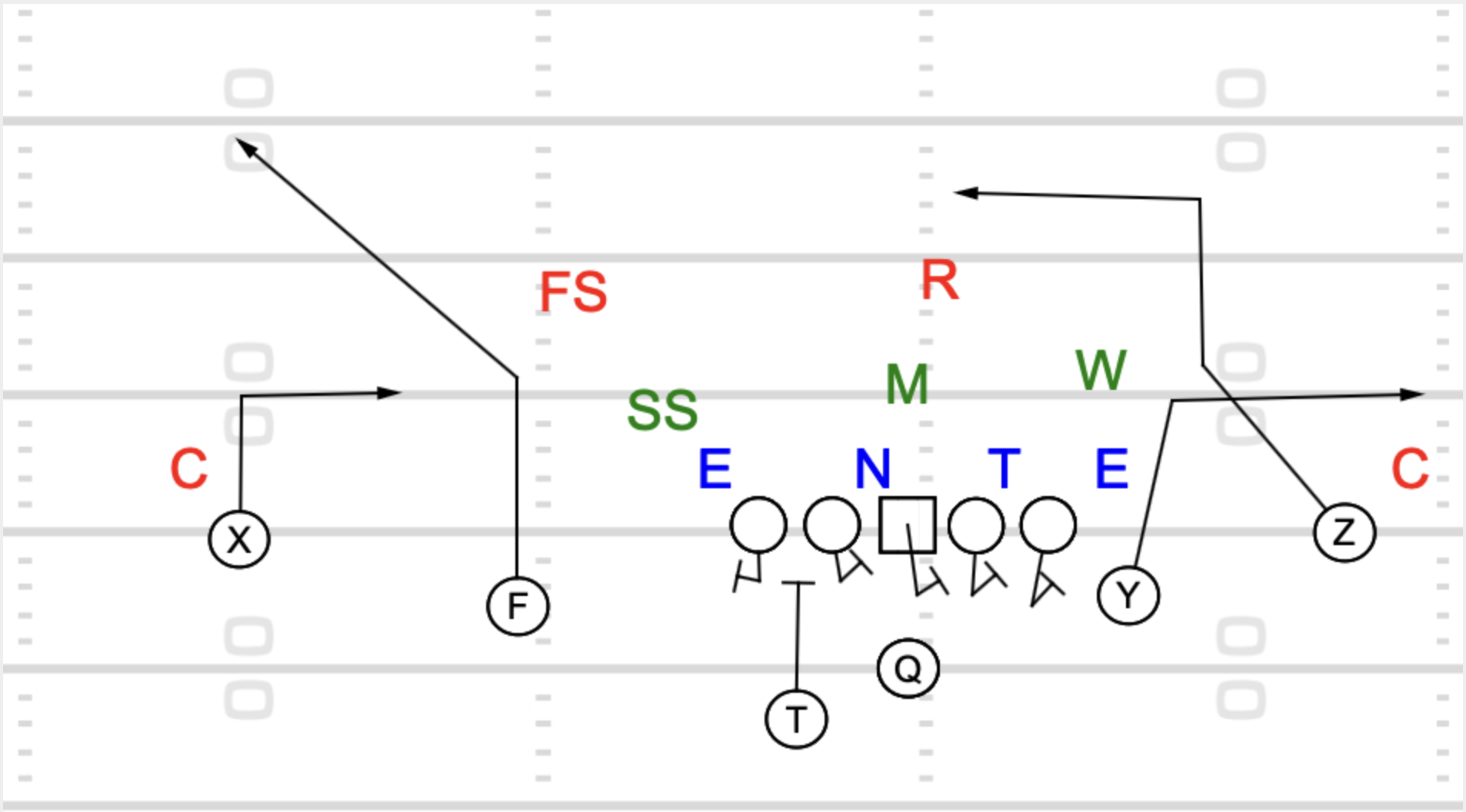
Instead of a hitch, have the outside receiver run a fin route. Now if the corner sinks, you have a receiver running away from him with room to work after the catch. It's closer to a slant in terms of what it can do, if the corner sinks, that receiver has room to run, and it's a lot harder to rally and make that tackle.
Stack Smash
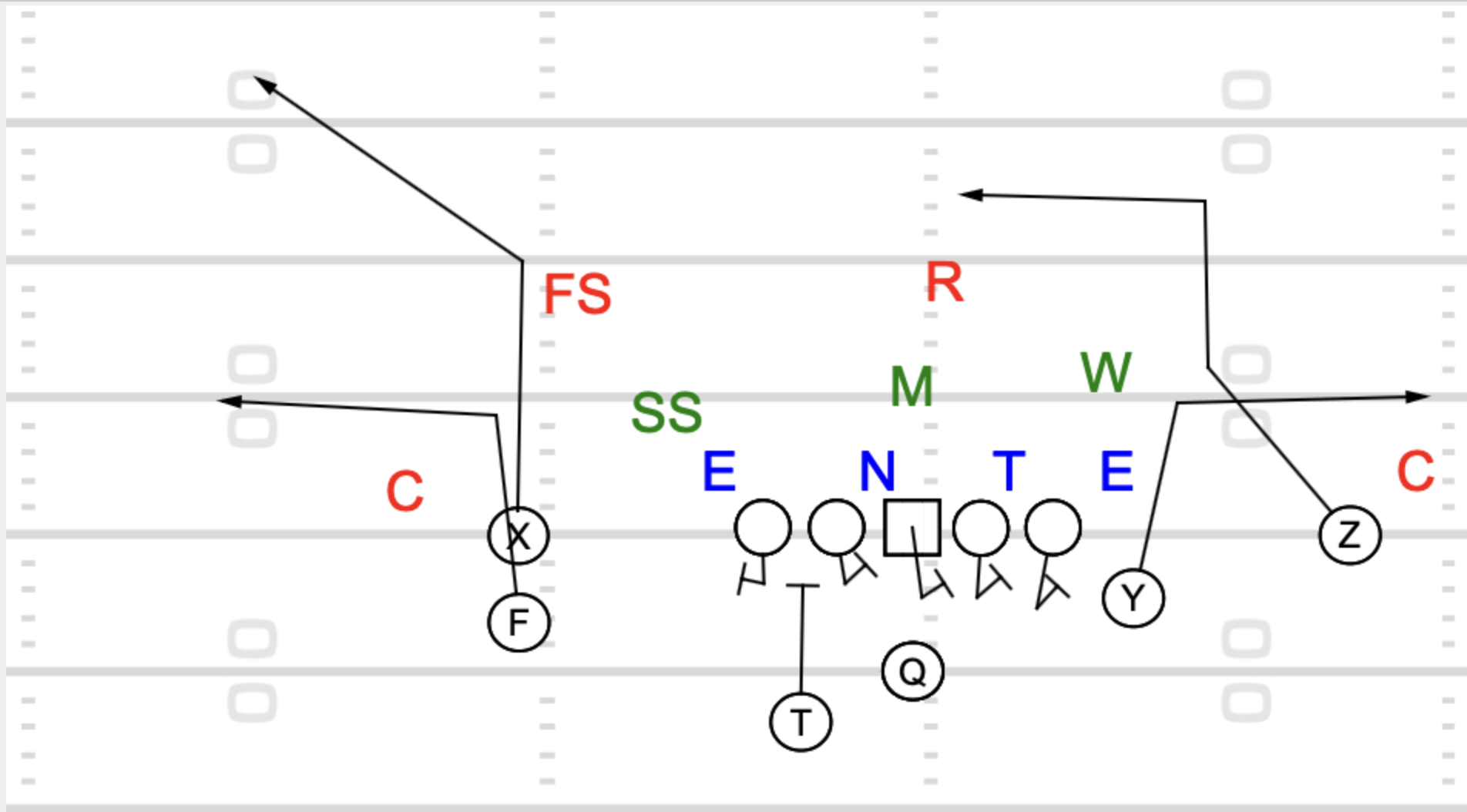
Stack your two receivers and send the inside receiver on the corner route with the outside receiver running a flat underneath. The immediate flat threat forces the corner to trigger quicker. If you don't have something threatening the flat right away, a zone corner is going to sit and wait. Give him something to react to, and the corner route opens up behind it.
Double China (3x1)
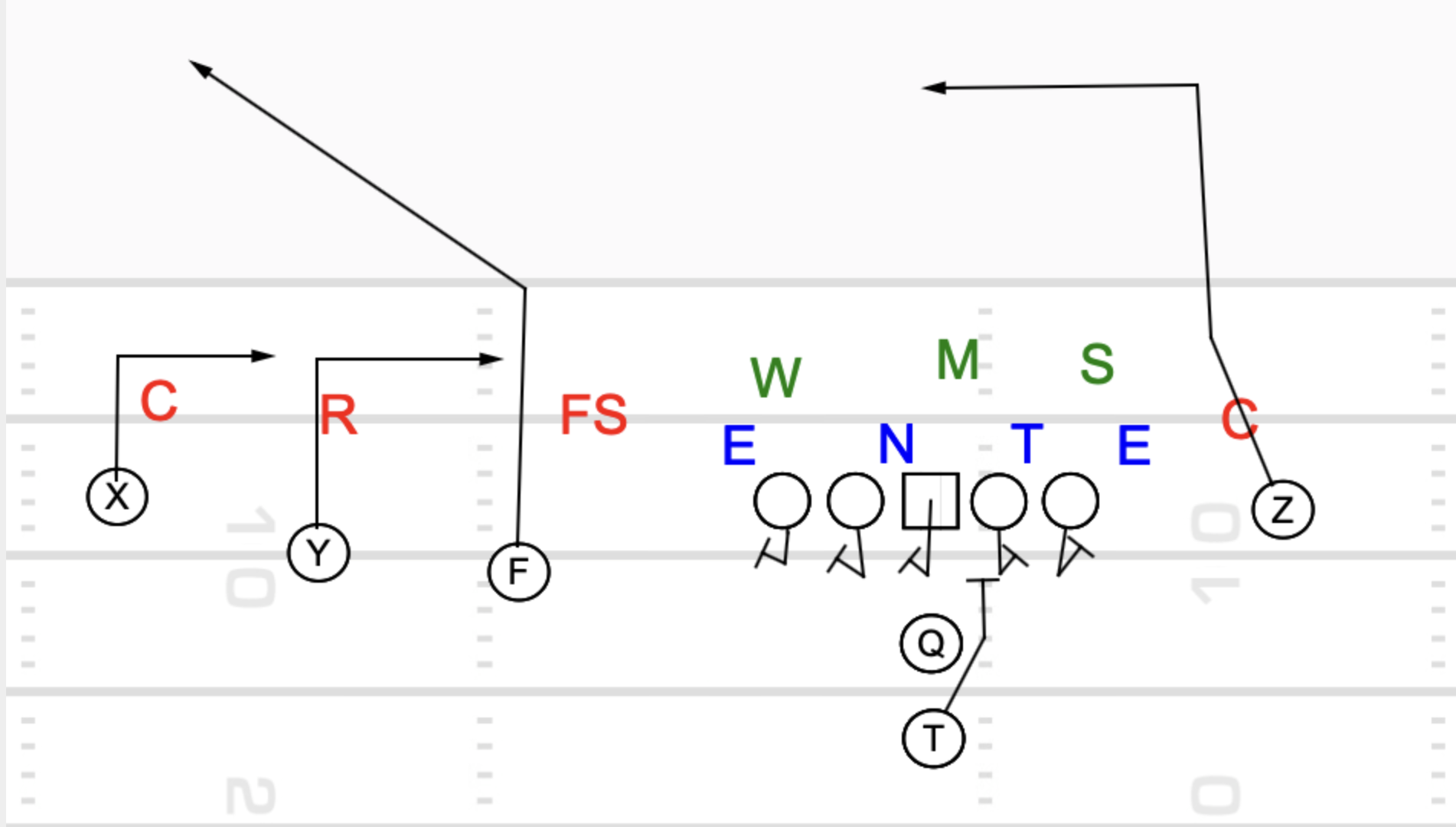
Out of a 3x1 formation, the outside two receivers run 5-yard ins and the number three receiver runs the corner route. Running the corner from the number three gives him even more space to work. And if the defense bails into zone, those two in-routes become a double slant that can inside-out stretch the flat defender. So if they bail into zone on you, you've still got an answer.
Inverted Smash
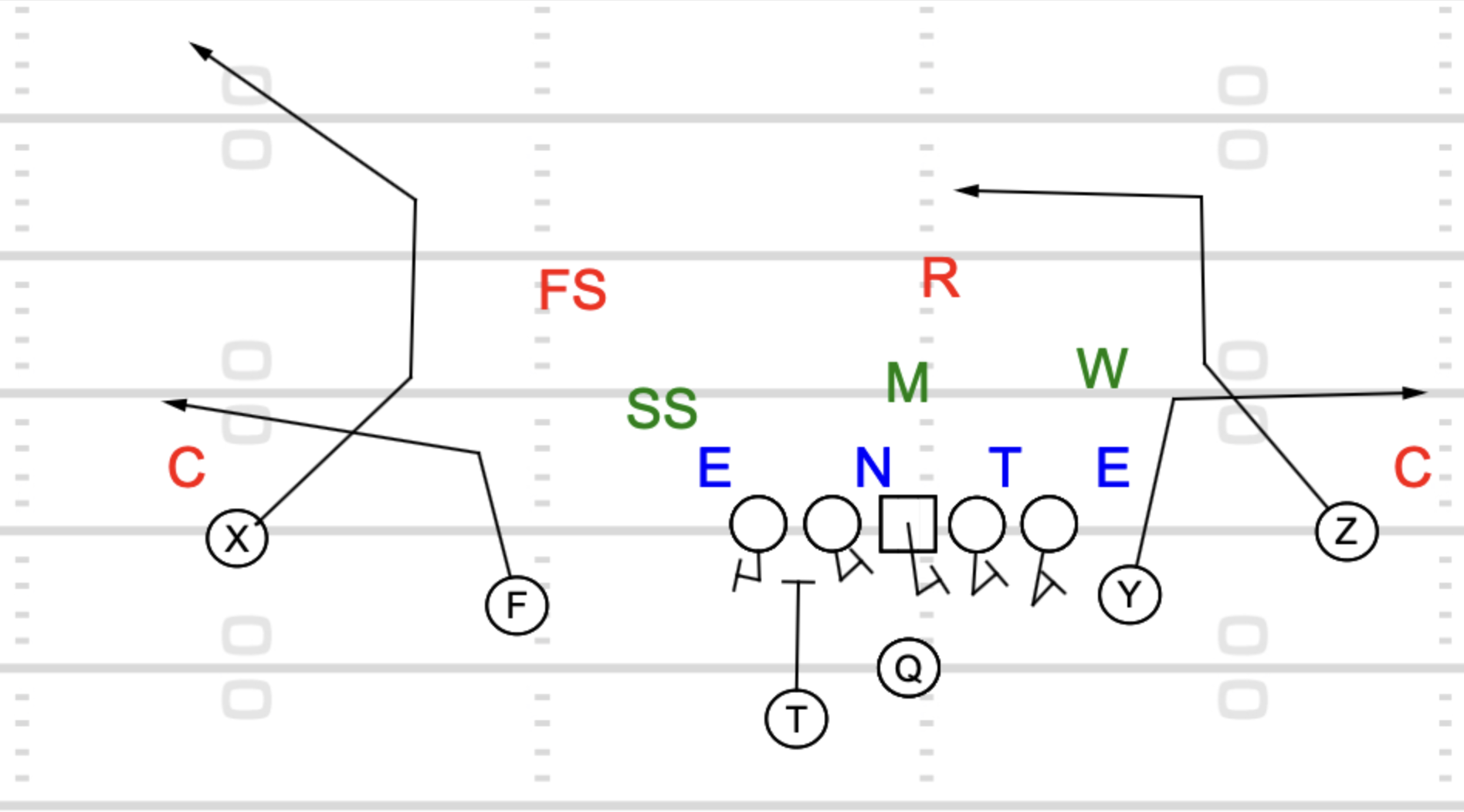
Here you flip the assignments. The outside receiver runs what looks like a crack block, then bends back to the corner. The slot runs a quick flat. The flat route triggers the corner, he jumps it, and the outside receiver bends into the vacated space behind him.
The tradeoff is timing. A traditional slot corner route can be delivered off a quick three-step drop. The inverted version takes longer, the outside receiver has to sell the crack before bending. That extended timing means your protection has to hold up. Know that going in.
Snag
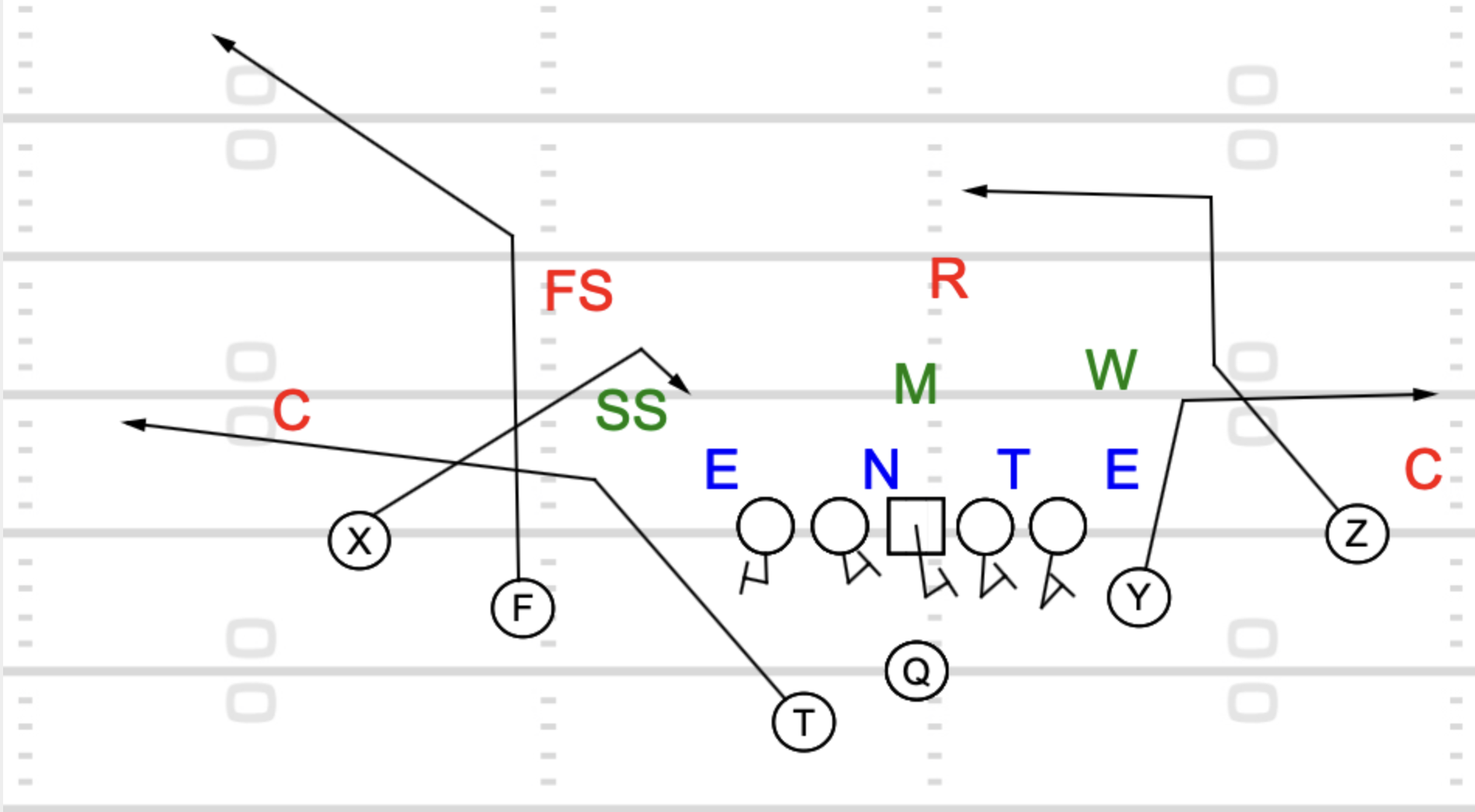
Snag fits inside the smash family even though it looks different. The number one receiver runs a mini curl, aiming straight at the flat defender before curling back inside. The number two runs a corner out. The number three, whether a back or a receiver, runs a flat.
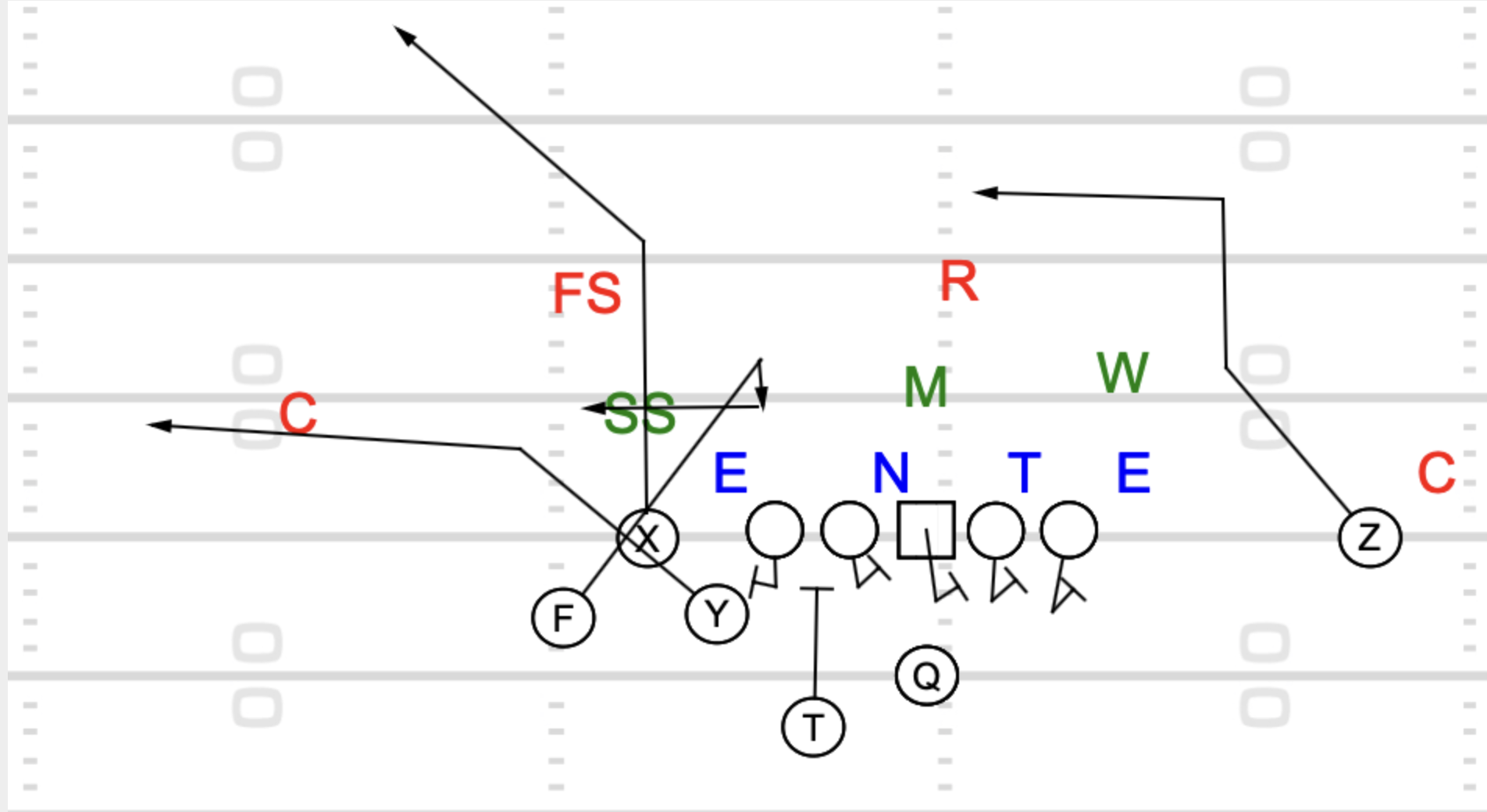
This gives you answers against multiple coverages. Against Cover 2 or man, the corner route is your shot. Against zone, you have an inside-out stretch on the flat defender with the curl and flat working together. Andrew Coverdale and Dan Robinson built their Bunch Attack system around a concept in this family, their book is worth reading if you want to go deeper on it.
Scissors
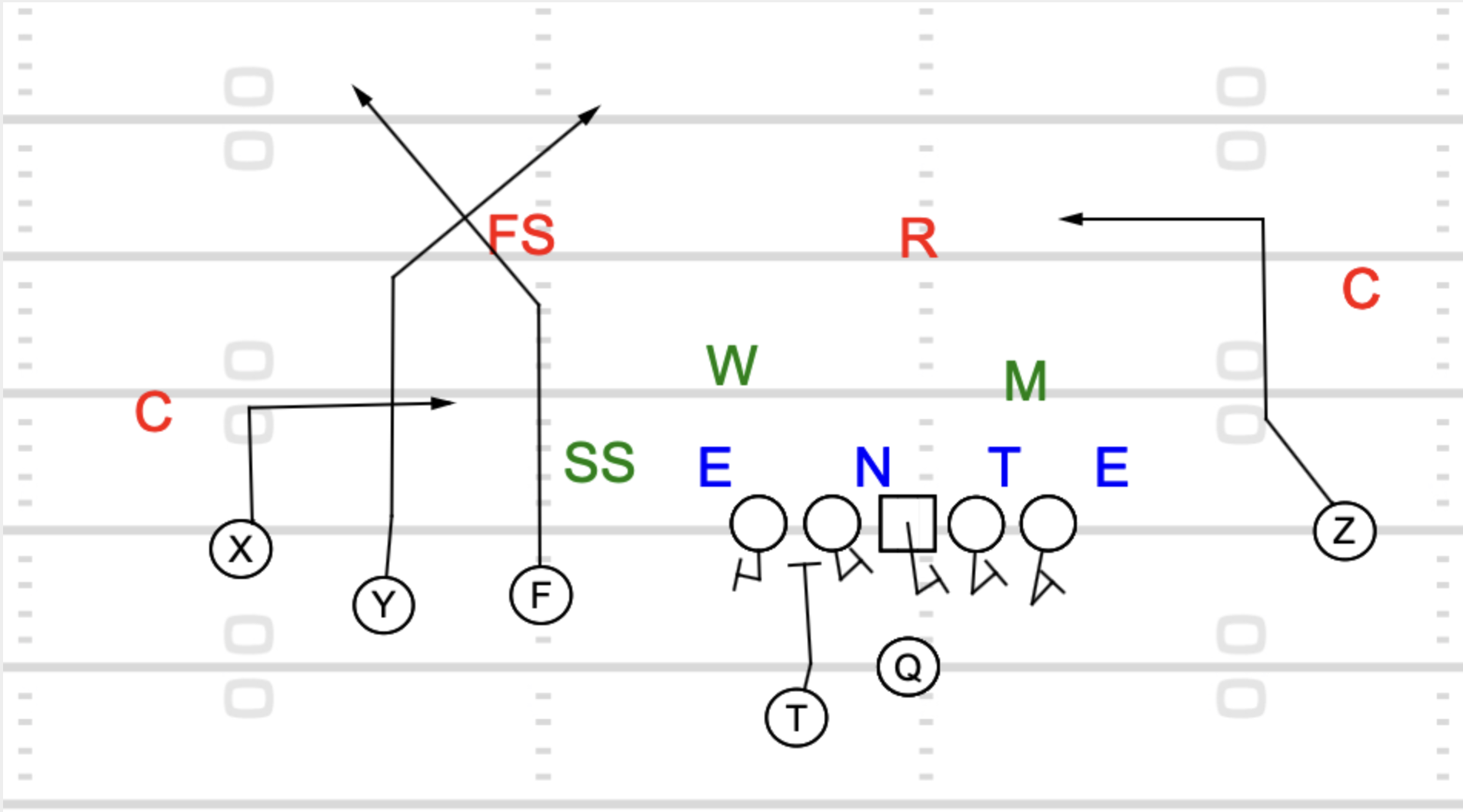
Scissors pairs a post and a corner route with a flat underneath. The safety has to choose, expand with the corner or stay inside with the post. Whatever he gives up, you take. Mike Leach ran a version of this in the Air Raid where the number one ran a one-step slant, the number two ran a post, and the number three ran the corner. The slant gave a quick underneath answer if the defense took everything else away.
Smash Sluggo
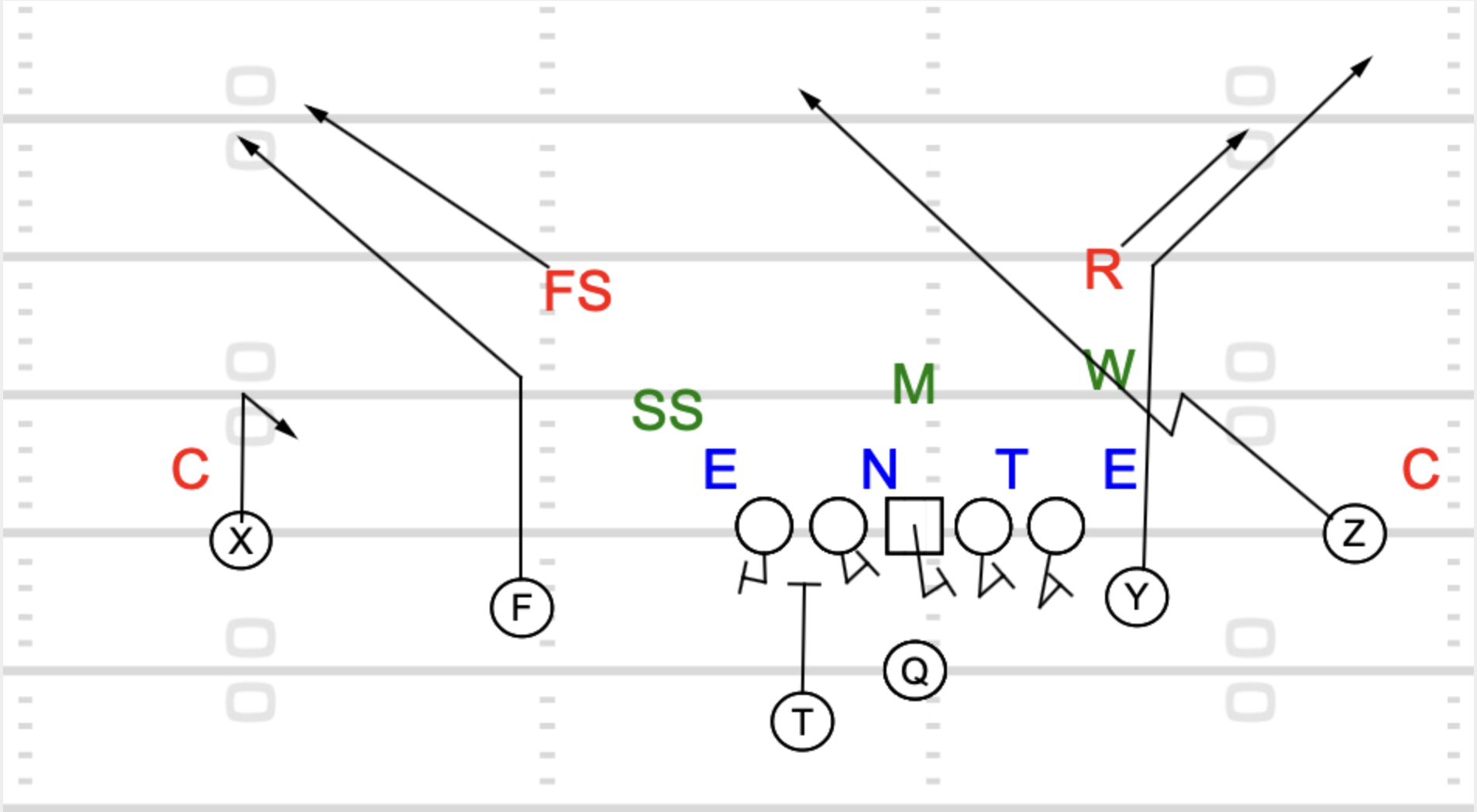
As the safety expands to take away the corner route, one of the outside receivers settles into the void down the middle of the field. It takes time to develop and your protection has to hold. But when it hits, there's no one in the middle of the field. If the corner and safety are bracketing that corner route, the middle of the field is wide open.
How Does the Quarterback Read the Smash Concept?
The quarterback starts with the corner route. He's taking a three-step drop out of the gun with no hitch, and his eyes go immediately to the space above where the corner route is going to break.
He's not simultaneously tracking the corner, the safety, and the underneath route. He's looking at one window. If that window is clear, no defender in position to take it away, he throws it. The receiver breaks on his sixth step, aiming for the front pylon. In the red zone, he'll aim for the back pylon.
If that window isn't there, the quarterback hitches up and moves to his next progression. The first read is always the corner route. After that, it depends on what combination you've called.
Against three-over-two, where the defense has the smash side covered at both levels, you go backside. A common backside combination is a dig with a flat underneath, giving you a high-low on a single defender. If the defense has overloaded to the smash side, the backside is often isolated and you're just reading dig to flat.
What Pass Protection Works Best With Smash?
Smash is typically run out of normal dropback protection. That's the default and there's nothing wrong with it.
Some coaches like to sprint out to smash, partly because the corner route is a long throw for some quarterbacks and getting the feet moving toward the throw can help. But sprint out is not my preferred way to run it. The minute you sprint out, you've cut yourself to half the field and the defense knows it. You're no longer stressing the full width, and you've given up all your backside options before the ball is even snapped. It's fine as a changeup, but I wouldn't make it your primary way to run smash.
Play-Action Smash
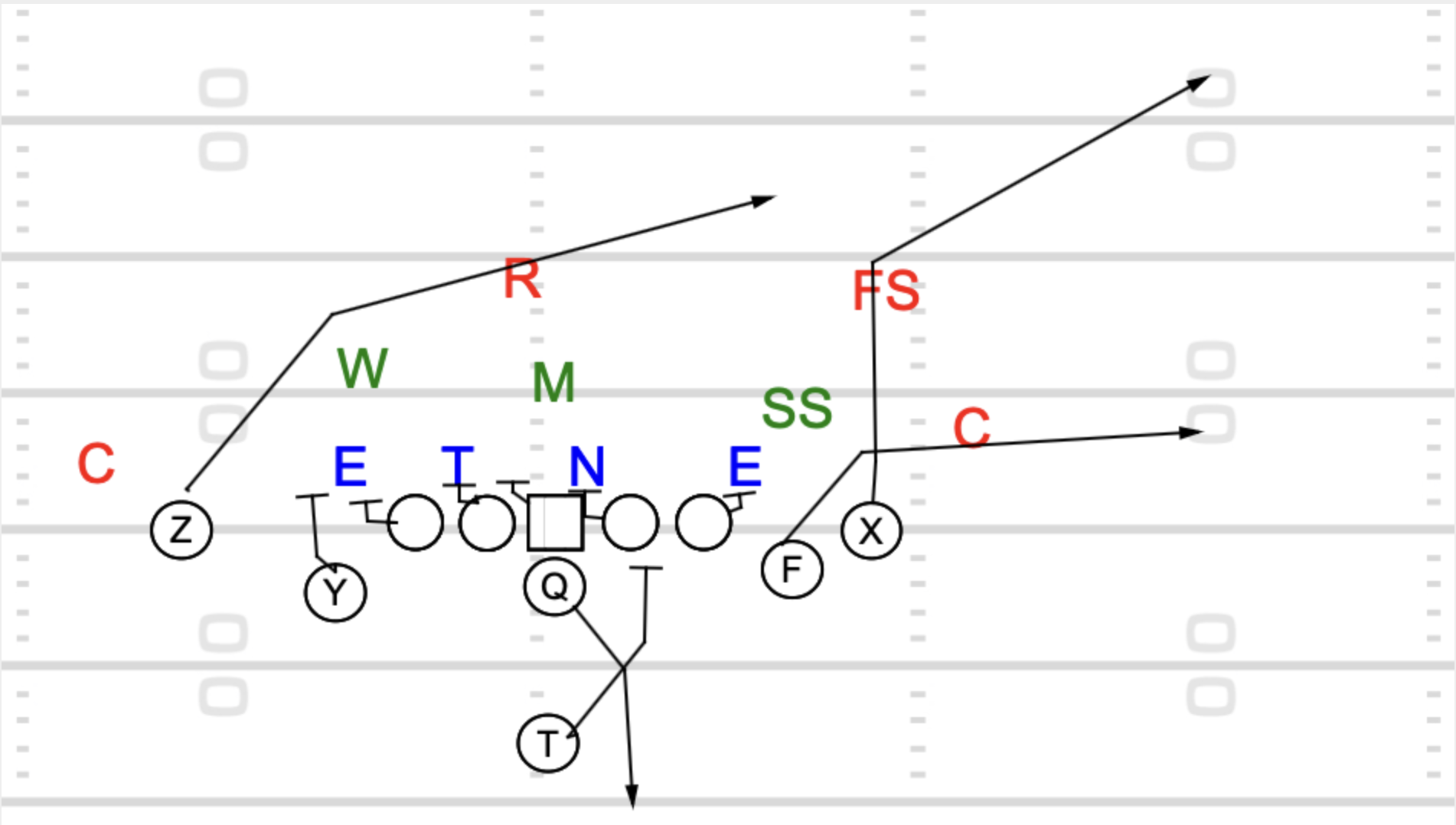
Smash works in your play-action game too, but you have to account for the extra time. With play-action, we drive the corner route deeper, minimum eight steps, to give the quarterback time to execute the fake and get into his drop or roll before delivering it.
This works best out of condensed sets where the flat route is coming from the backfield or a tight receiver. We'll often convert that flat to a whip route so the timing matches up with the quarterback. If you're running a standard flat, the receiver can end up too far outside by the time the quarterback is ready to throw.
If a corner is playing tight in the run game against bunch or compressed sets, play-action smash is a great answer. You're already getting him to respect the run, and now you're putting him in a bind with the corner route working behind him.
What Goes on the Backside of Smash?
Smash is a half-field concept. That means you've got three other receivers who need something to do, and what you attach to the backside matters.
High/Low
At the NFL level, the most common backside tag is high/low, one receiver on a 12-15 yard dig, another on a short route underneath, whether that's a flat, whip, or option route. This gives your quarterback a legitimate answer if the defense takes away the smash side. If they're not giving you Cover 2 or man, you've got a two-level stretch working back into his vision.
Drive
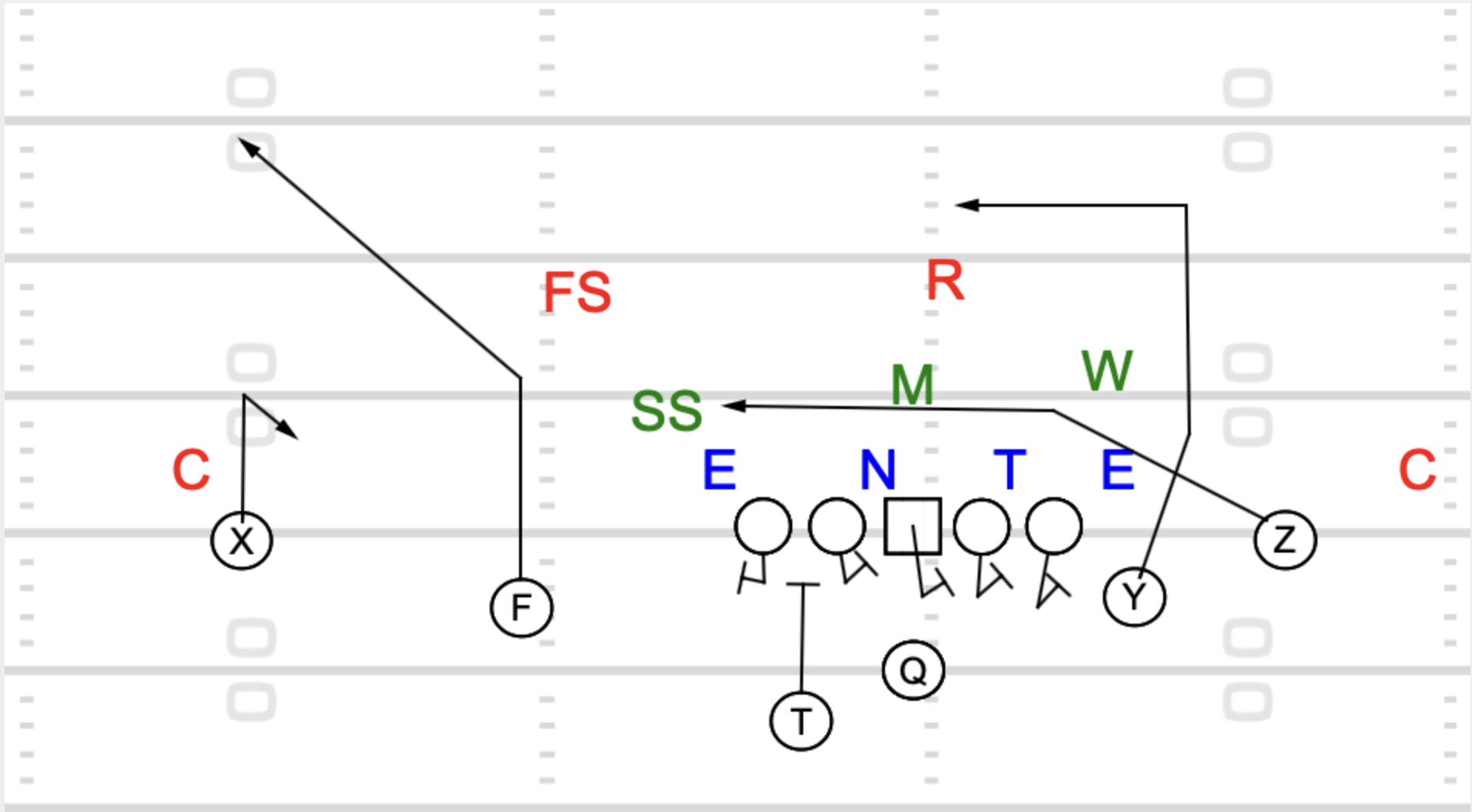
Drive is one of the most used concepts in the West Coast offense. One receiver runs a shallow cross, another runs a dig behind it. Because smash is attacking the far side of the field, drive works right into the vacated windows across the middle. If the defense overplays smash, the drive concept is sitting in open grass working right back to the quarterback. It's about as natural a pairing as you'll find.
Y-Cross
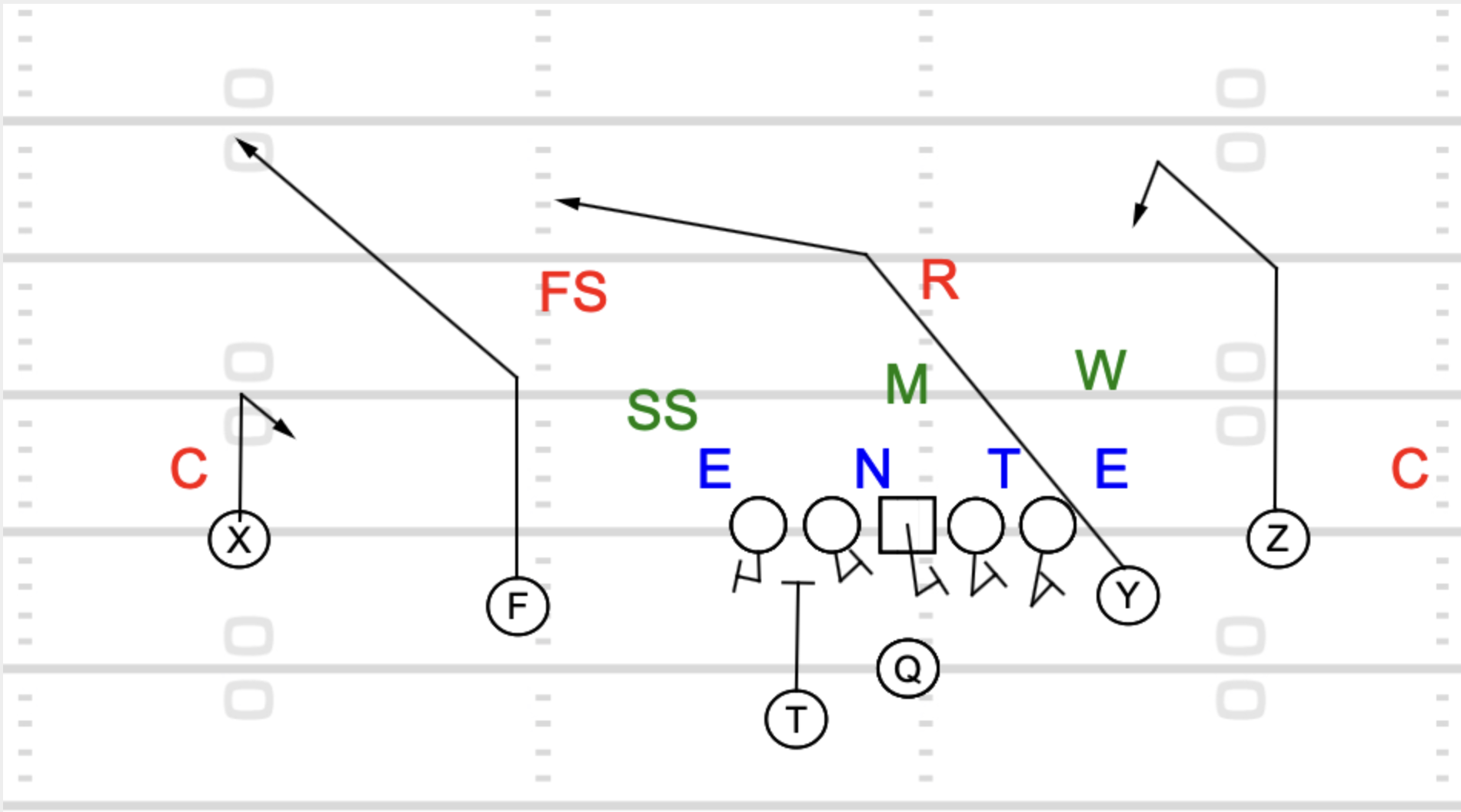
Smash also pairs well with Y-Cross. The corner route and the deep cross both attack the safety at the same time, if he runs with the corner route, he's opened a window for the cross working across the field behind him.
There's another wrinkle too. If the safety gets depth passing off the corner route to the outside corner in Cover 4, the cross can flatten and work right into that void. The defense is damned either way, stay shallow and the corner route is open, get depth and the cross finds the window underneath.
Where Does Smash Fit in Your Offense?
Smash is built to attack a low corner. When defenses start cheating, corners creeping up to take away quick screens, safeties inching toward the line of scrimmage, smash is how you make them pay. It protects whatever you've built your offense around.
For us, four verticals and deep choice are what we hang our hat on. But those concepts aren't great calls in the red zone, you've run out of vertical space and the defense knows it. That's where smash takes over. The corner route attacks both horizontally and vertically at the same time, and it gives you a way to attack the space that's still there.
Outside the red zone, it's a situational weapon. When a defense starts taking away your quick game, when a safety is cheating hard toward the run, when a corner is playing too low, that's when you pull it out. You don't need to run it every series. You need to have it ready so that when the defense gives you that look, you have a specific answer for it.
What Should You Do Next?
You don't need all of these variations. Pick one or two that fit your personnel and your system, install them correctly, and rep them until your quarterback isn't thinking, he's just playing.
Start with traditional smash or snag. Get comfortable with the read. Then add a variation that solves a specific problem your offense faces. If you're struggling in the red zone, smash should already be in your install. If defenses are cheating your quick game, the corner route is your answer.
Every offense needs a way to attack a low corner. This is it.


