

Cover 2 Explained: Structure, Strengths, and Stress Points
The complete breakdown for offensive coaches.

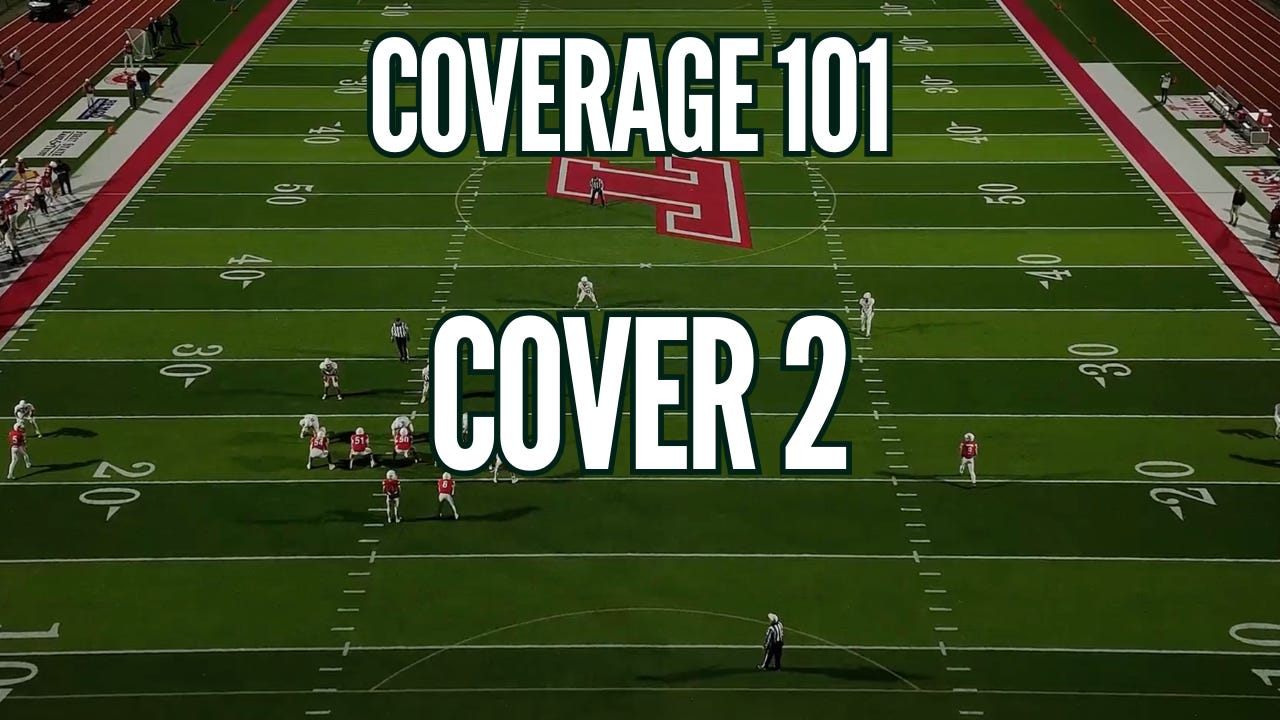
Last week we broke down Cover 4. Missed it? Start there:

Cover 4 took off because of the spread. Four wide receivers stressed two and three deep coverages past the breaking point.
But before the spread changed everything, Cover 2 was the primary 2-high coverage.
For decades it worked. Two deep safeties. Five underneath defenders. A defense that could pack the box against run-heavy offenses and still have enough range to cover the field deep.
Then offenses went to four wide. Speed at every skill position. Vertical threats from sideline to sideline. Two safeties suddenly had to account for half the field each against athletes they were not built to handle alone.
That’s the gap Cover 4 was designed to fill.
But Cover 2 still exists and works well. At the NFL level it’s still widely used. Faster safeties. Better Mike linebackers. The personnel fits the coverage.
At the high school level it’s more of a mix. Cover 4 to the field, Cover 2 to the boundary or pattern matching to get the best of both worlds.
While sitting in base Cover 2 at lower levels is not as prominent, Cover 2 still shows up.
Position Responsibilities
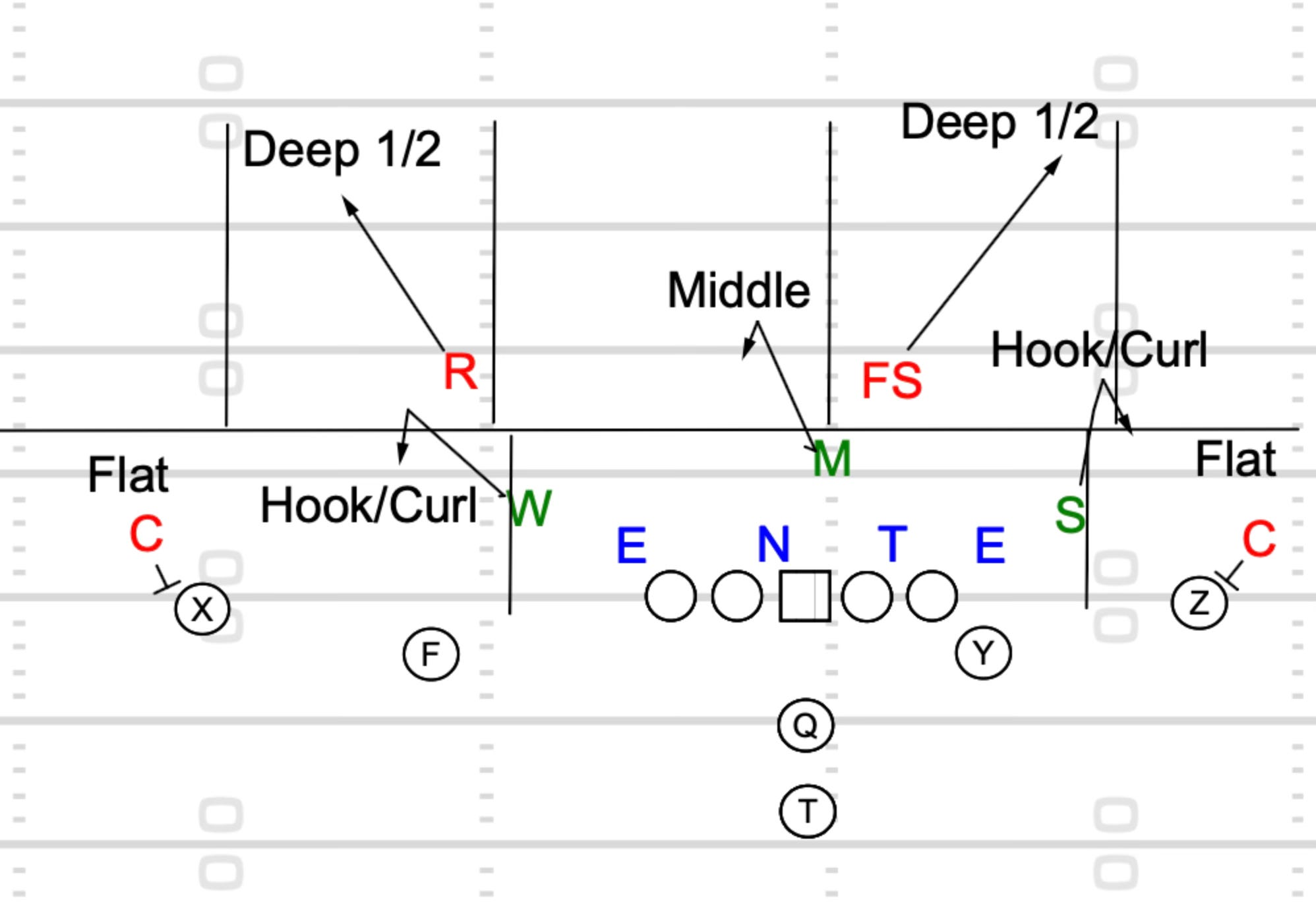
Safeties
Own the deep half of the field on their side
Typically align around 12 yards pre-snap, but this varies, you’ll see anywhere from 10 to 20 yards depending on the staff
Line up wider and deeper than Cover 4 safeties, this is one of the clearest pre-snap tells between the two coverages
At the snap, they work back and out, not straight back, expanding to their half rather than dropping straight deep
Corners
Responsible for the flat on their side
Play pressed or tight technique; some teams will align off and tighten just before the snap
Their primary job is to funnel the receiver inside, a clean outside release puts enormous pressure on the safety to expand across half the field
After the jam, corners can play hard flat (stay up) or sink (float deeper into the intermediate sideline area.) This varies by team and down and distance
Outside Linebackers
Responsible for the hook/curl zone
Typically align in the 4–6 yard range pre-snap
Will initially step up for run or reroute a slot receiver releasing vertical before getting to their zone
Mike Linebacker
Owns the underneath hole in the middle of the field
Will step up on run action and play-action before dropping, a good play fake can pull him out of his drop
Aligns anywhere from 3–6 yards pre-snap
What Cover 2 Does Well
Nine players underneath the hard deck make this coverage difficult to attack in the run game and quick passing game.
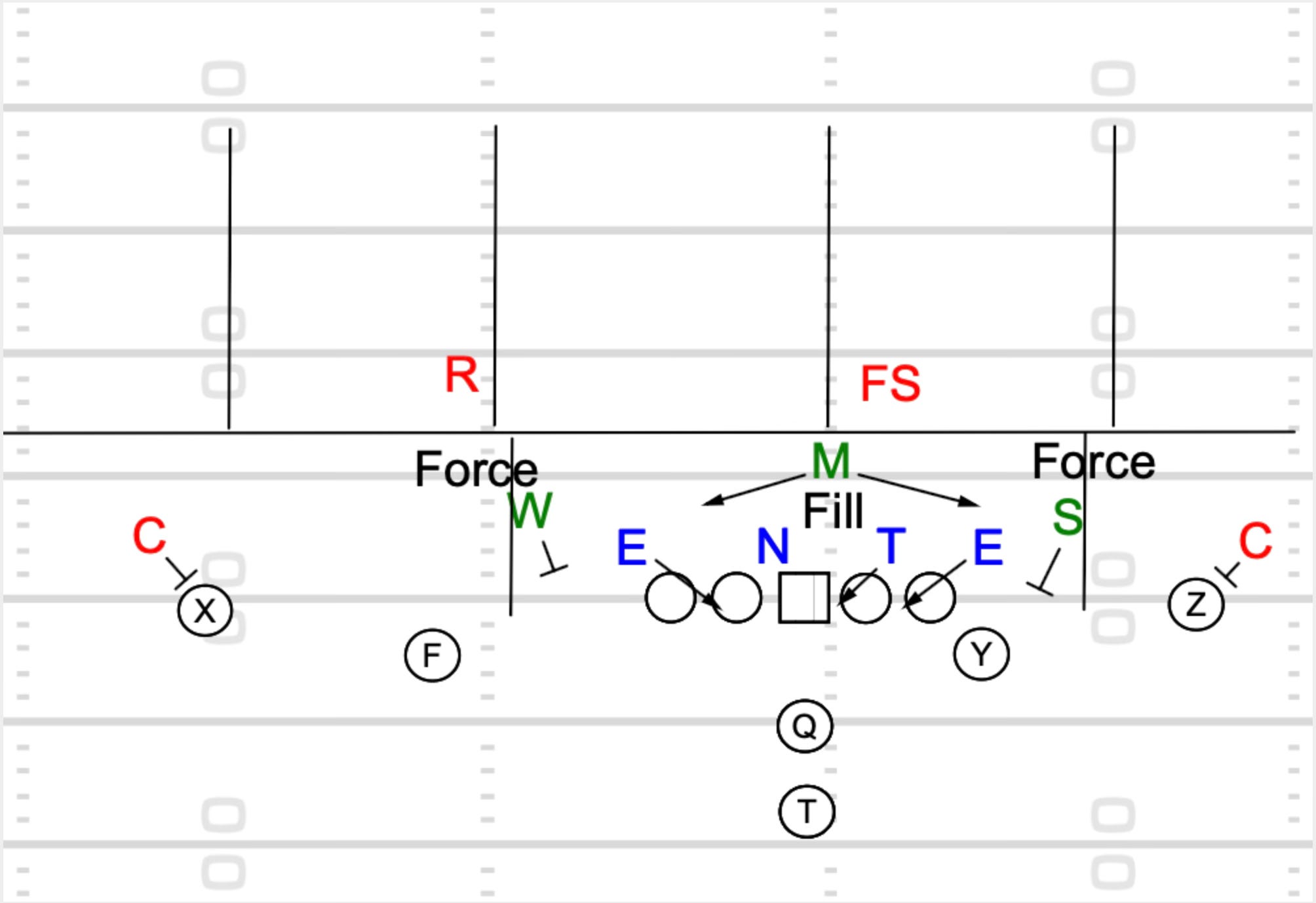
Against the run, most defenses using Cover 2 will try to spill runs outside to the outside linebackers. This keeps the Mike and inside linebackers clean to fill the alley.
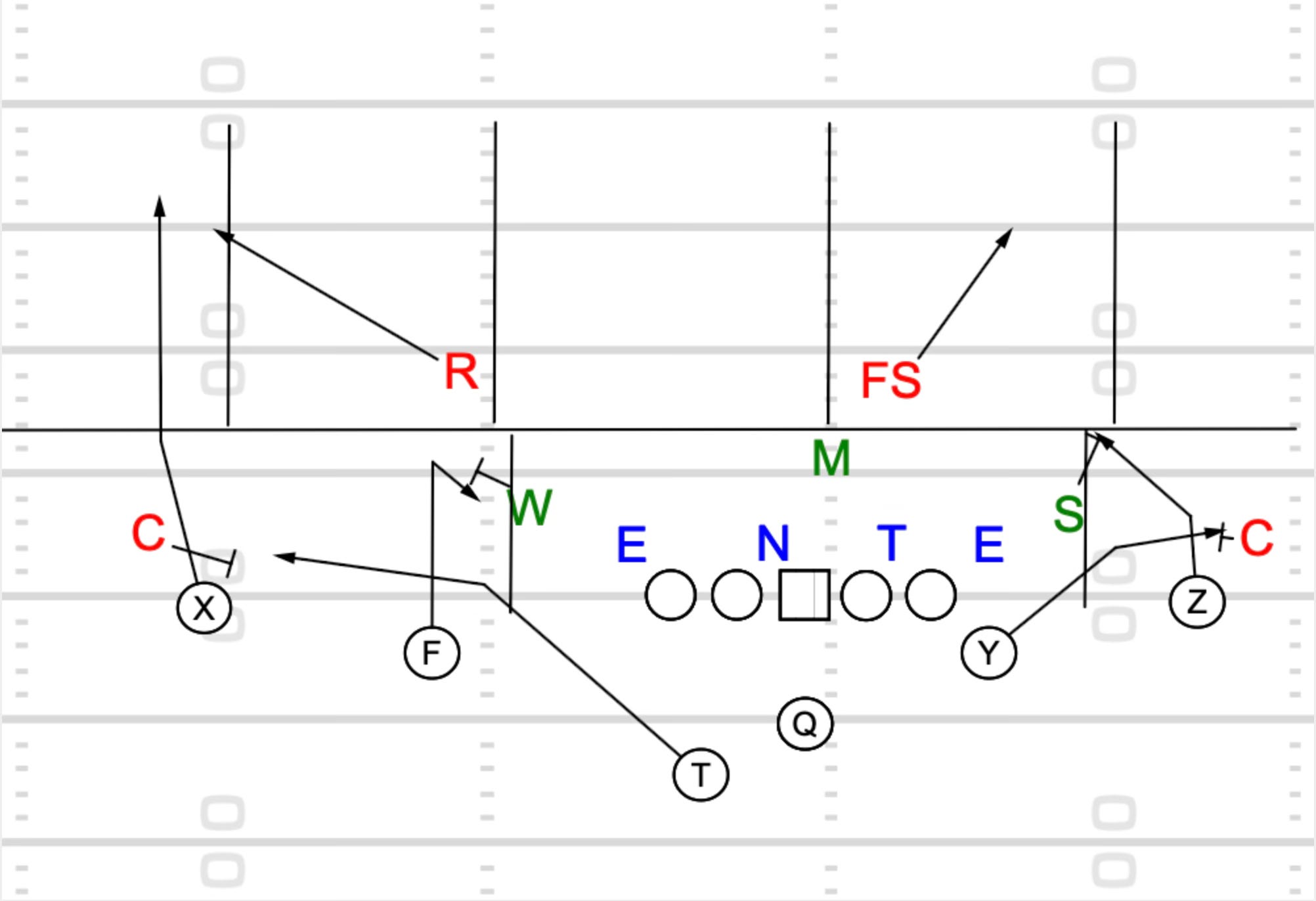
Against quick game it’s just as effective. The corner has outside leverage on any quick out. The outside linebackers and Mike eat up in-breaking routes underneath. It’s hard to get two routes into the same window to isolate a single defender.
That’s what makes Cover 2 difficult. The underneath structure is sound. You have to attack deep to find space.

Knowing where that space is starts with knowing your system.
If you’re still figuring out what your offense is built around, that’s the first problem to solve. Core Playbook walks you through it. One North Star play. Everything else built off that.
Where It Gets Stressed
The Mike linebacker
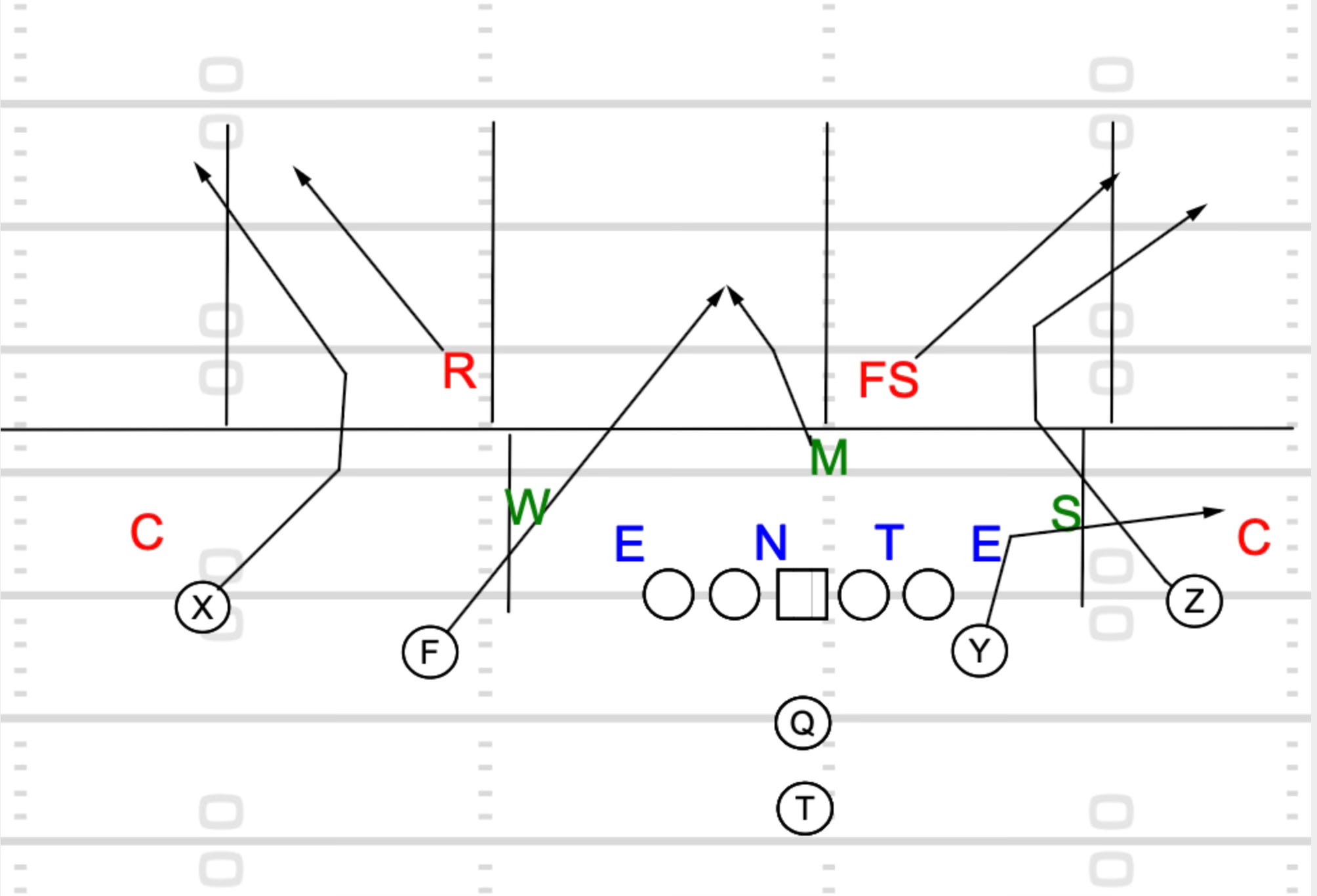
Cover 2 asks him to do something that is hard at every level and harder at the high school level. Wall a fast receiver running a seam or dig route, then carry him deep down the middle.
At the NFL level you see 240-pound linebackers who can run. At the high school level that player is rare.
If you can identify the Mike and get a fast slot receiver working against him vertically, that’s a problem for the defense.
The Corner
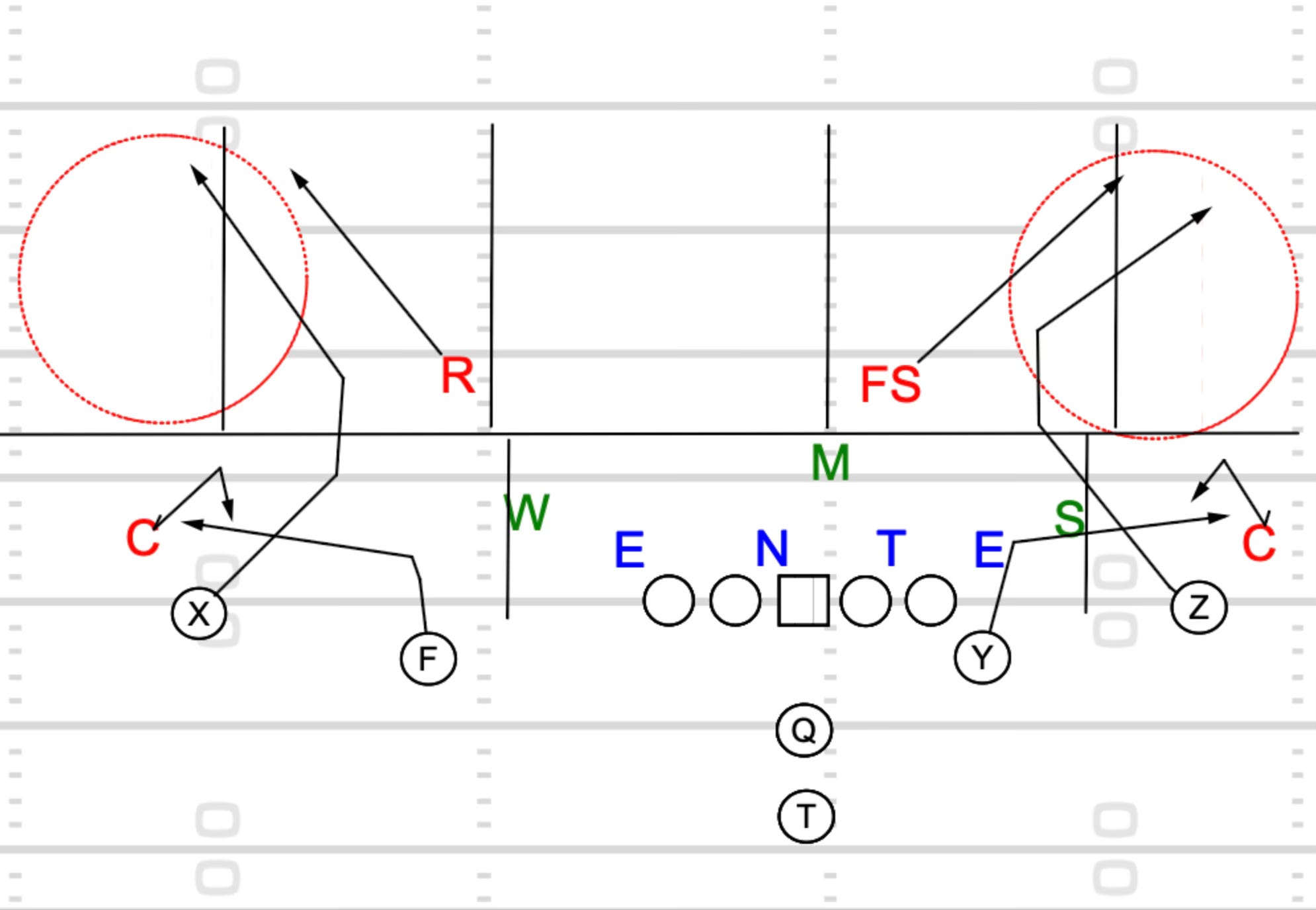
The other stress point is the space above the corner.
The corner is jamming and compressing. His technique limits it, but if a receiver can win vertically outside him quickly, the safety has to expand across half the field to get there. He will not always make it.
Also, an immediate flat route gets the corner to release his jam faster, opening the window above him.
The Safeties
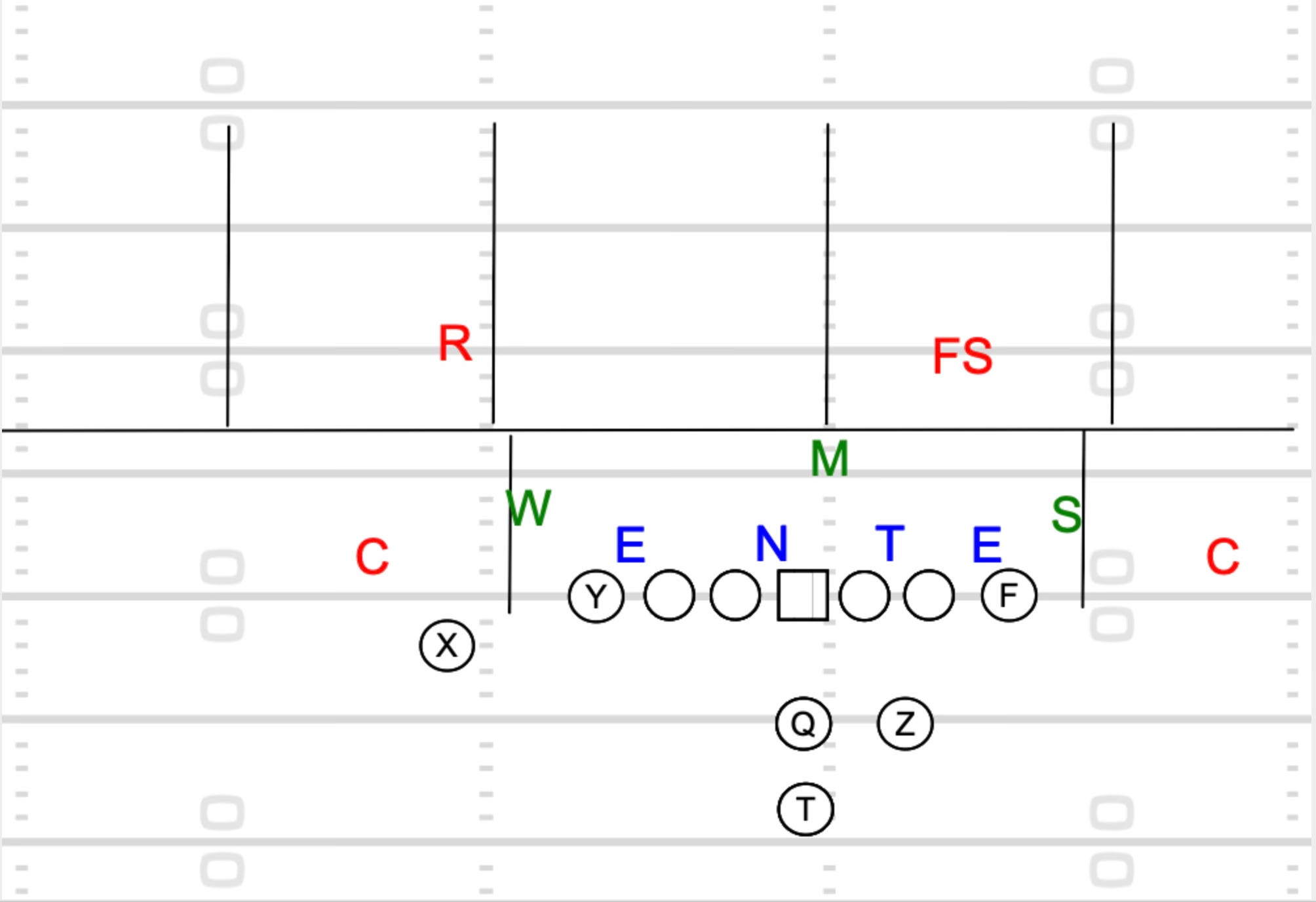
In cover 4 the safeties can play flatfooted and get into the run fit. In Cover 2, they are too deep to get involved in the run game unless it’s an explosive play.
Because of this your corners become the secondary run fit.
If defenses fails at spilling the ball, this can lead to big plays.
If the ball bounces all the way outside, your corner becomes the primary tackler.
Who are your better tacklers? Safeties or Corners?
Next…
We go into the Xs and Os. The specific concepts that attack Cover 2 and how to install them.
Paid subscribers get the Cover 2 cheat sheet.

If you’re not subscribed yet, that’s where to start.